
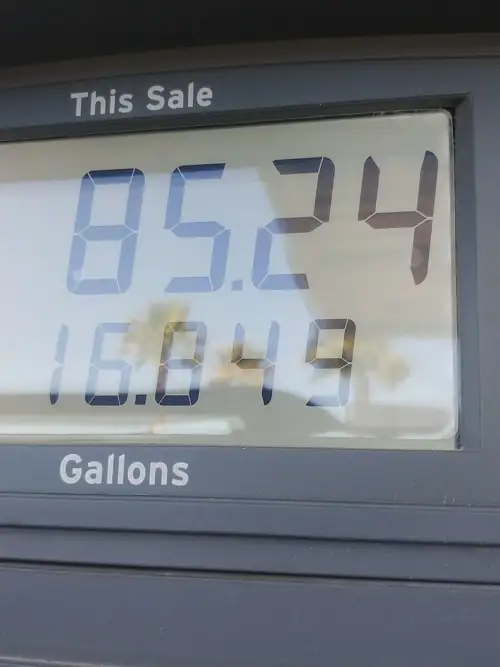
Diesel just broke six dollars a gallon, oil is trading above $100 a barrel, and the Federal Reserve is now almost certain to raise interest rates for the first time in over two years. August's inflation report came in hotter than expected, core prices accelerated, and roughly 90% of market watchers are now betting on a hike at the Fed's September 16 meeting. Enjoy your adjustable-rate mortgage.
The Numbers, and They Are Not Good
The Consumer Price Index rose at an annual rate of 3.4% in August, according to the Labor Department. That matched July's reading but came in above the 3.3% economists were forecasting. One third of the monthly increase came from gasoline prices, which have surged 27.4% from a year ago.
The more alarming number is the core reading. Core prices, which strip out food and gas to give a cleaner picture of underlying inflation, rose 0.3% from July. That beat expectations and accelerated from the previous month's 0.2% increase. CBS News reports that this suggests inflationary pressure is spreading beyond energy as higher fuel costs ripple through the broader economy. In other words, this isn't just a gas station problem anymore.
The Fed's Hand Just Got Forced
Before Friday's CPI release, markets put the odds of a September rate hike at around 70%. After the report dropped, that number jumped to nearly 90%, according to CME FedWatch. EY-Parthenon has officially changed its forecast from a hold to a 25 basis point hike, which would push the federal funds rate to a target range of 3.75% to 4%.
"We are changing our Fed call from a hold to a 25bps hike at the FOMC meeting next week," EY-Parthenon chief economist Greg Daco wrote in a Friday note, adding that some Fed officials will "argue in favor of a rate hike on the basis that the 'speed' of the disinflationary process is not satisfactory." Translation: prices aren't falling fast enough, and the Fed is losing patience. The decision lands at 2 p.m. ET on Wednesday, September 16.
Nationwide chief economist Kathy Bostjancic put it plainly. "The renewed march higher in oil, gasoline and diesel prices adds to concerns that higher energy prices could spill over to other goods and services and inflation expectations," she wrote Friday. "As such, we are now looking for the Fed to raise rates by 25 basis points at next week's policy meeting."
This Probably Isn't the Last One
CBS News reports that Capital Economics is already projecting a second 0.25 percentage point hike in December, followed by another in March 2027. So if you were hoping this was a one-and-done situation, that forecast is not for you.
The last time the Fed raised rates was July 2023, when it was trying to beat back the post-pandemic inflation surge. The Fed spent most of 2024 and 2025 holding steady, then cutting. Now it's back to hiking. We are, as a nation, doing this again.
A Committee Already Itching to Move
The Fed's rate-setting body, the 12-person Federal Open Market Committee, was already showing cracks at its July meeting. The committee held rates steady then, but three members dissented and voted to hike. Fed Governor Christopher Waller had signaled he would back a September increase if inflation didn't show meaningful progress toward the 2% target. It did not.
So the internal pressure was already there before Friday's report. This data just handed the hawks everything they needed.
Two Wars and $105 Oil
Here is the backdrop making all of this worse. The Iran war, which began at the end of February, has created a global oil shortage and driven a sustained spike in energy costs. CBS News reports that inflation is now a full percentage point higher than it was before the conflict started. Brent crude was trading around $105 a barrel on Friday.
And then there's Russia. Ukrainian drone strikes on Russian energy infrastructure have damaged refining capacity and contributed to a global fuel shortfall, adding more upward pressure on oil prices. The August CPI data was collected before the most recent run-up in fuel costs. Which means the September numbers could be worse. Diesel, the lifeblood of trucking, construction, and agriculture, broke above six dollars a gallon this week. Everything that moves or gets built in this country is about to get more expensive.
What This Means for You
A rate hike raises borrowing costs across the board. Mortgages get more expensive. Credit card interest rates go up. Auto loans get pricier. If you are trying to buy a house right now, this is not the news you wanted on a Friday morning.
The one silver lining, and CBS News notes this, is that savers will see better returns on CDs and high-yield savings accounts. So if you have a large pile of cash sitting in a savings account and no debt, congratulations. You are doing great. Most people are not doing that.
The Dingo Take
Two wars, $105 oil, diesel at six bucks a gallon, and the Fed about to raise rates for the first time in over two years. This is the economic environment that exists right now. It did not appear from nowhere. The Iran war started in late February and immediately began strangling global oil supply. Ukrainian strikes on Russian refineries layered on more pressure. Energy costs bled into everything else, which is exactly what always happens, and now the Fed is being forced to make borrowing more expensive for millions of Americans who are already getting hammered at the pump.
The Fed doesn't have good options here. If it hikes, it slows the economy and squeezes borrowers. If it holds, it risks inflation expectations becoming unanchored all over again, which is the thing that turns a bad inflation problem into a catastrophic one. With core prices accelerating and three committee members already voting to hike last month, the outcome Wednesday looks fairly obvious. The only real question is whether December brings another one.
Capital Economics says yes. And the oil market, right now, is not giving anyone a reason to think otherwise. The August data didn't even capture the most recent fuel price surge. September's inflation report, due out in October, could make this one look tame. Buckle up. Figuratively. You probably cannot afford the gas.



Comments