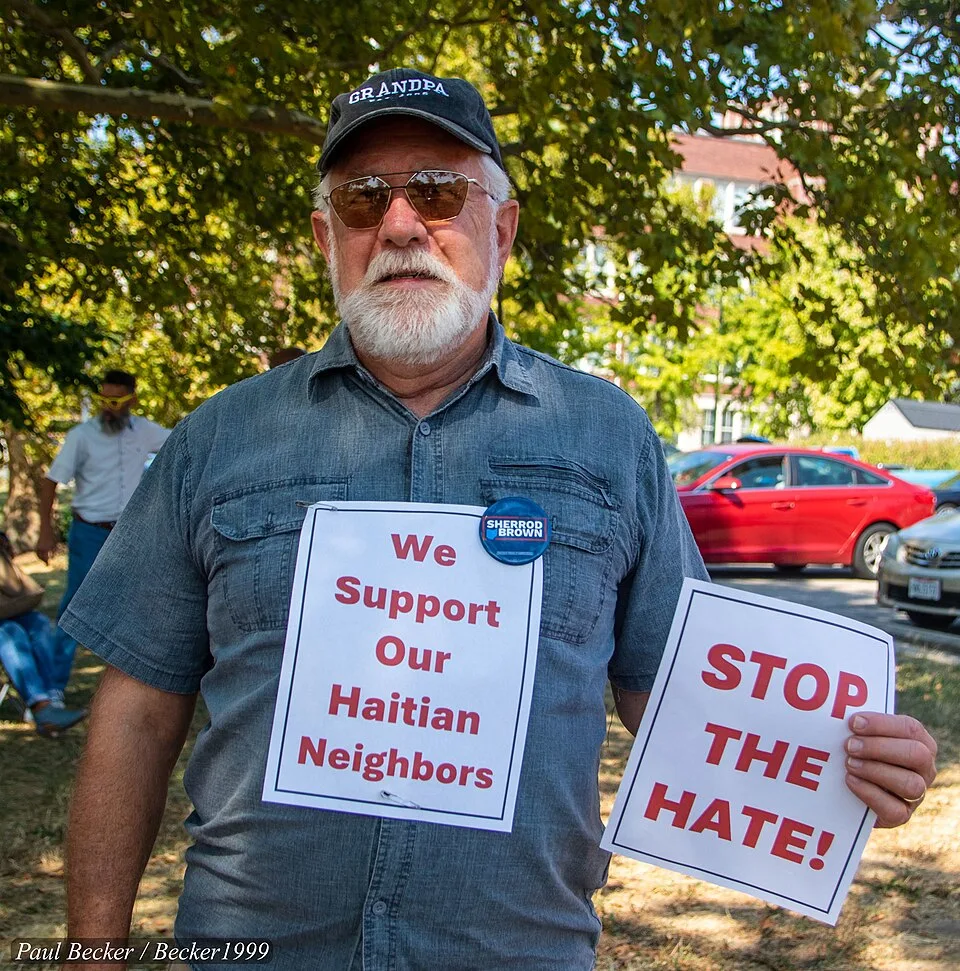
The Trump administration is stripping legal status from 300,000 Haitian immigrants on the grounds that Haiti is now safe enough for them to return. The State Department, meanwhile, is still telling American citizens not to go there. Haiti has been under a national state of emergency since March 2024. Both of these things are official U.S. government positions, held simultaneously, by the same government.
What the Supreme Court Just Allowed
Last month, the Supreme Court cleared the way for the Trump administration to terminate Temporary Protected Status for Haitians, ending protections that were first granted after Haiti's catastrophic 2010 earthquake. The legal rationale was simple: conditions in Haiti had improved enough to make it safe for return. The Department of Homeland Security put it plainly in a statement to NPR: "conditions in Haiti have improved sufficiently to support the return of Haitian nationals."
The State Department's current travel advisory for Haiti is Level 4: Do Not Travel. That is the highest threat level the agency issues. It is the same designation given to active war zones. Haiti has been under a national state of emergency since March 2024, and the advisory specifically cites the threat of being kidnapped, killed, or caught in gang violence. So the left hand of the U.S. government is telling its own citizens to stay away from Haiti. The right hand is telling 300,000 people who fled Haiti to go back or face deportation.
A Woman Who Covered Her Own Front Door
NPR's Reshma Kirpalani reported from South Florida this week, and the details of daily life for Haitian TPS holders right now are genuinely devastating. Farah Larrieux, a Haitian immigrant who has lived in the U.S. for roughly two decades, taped a sheet of white paper over the small glass panel in her front door because she is afraid ICE could show up at any moment. She stockpiled her refrigerator and cupboards so she would not have to leave the house. She memorized her attorney's phone number in case she gets detained before she can reach her phone.
Larrieux has been in this country for two decades. She runs her own communications business, works overnight hotel shifts, and has collected enough community service awards that they have run out of wall space and now sit in piles on her living room table. She has paused both jobs and plans to live off her savings while pursuing an asylum claim. She told NPR she cannot sleep. "I feel empty," she said. "Like I'm living a nightmare."
She also cannot go back. Larrieux has publicly criticized Haiti's government, and she told NPR she believes returning would be a death sentence. "If I don't get mistreated by ICE at the detention center, I may be killed in Haiti," she said. "My blood will be on Trump's hands."
South Florida Is Watching Its Workforce Evaporate
This is not a small-scale story. South Florida is home to roughly 500,000 people of Haitian descent. According to a recent fact sheet from FWD.us, UndocuBlack Network, and the Haitian Bridge Alliance, 158,000 Haitian TPS holders live in South Florida alone. These are people embedded in the health care system, the hospitality industry, construction, and senior care. Not as a demographic footnote. As the actual workforce keeping those industries running.
Miami-Dade County Mayor Daniella Levine Cava told NPR that terminating TPS "will separate families, hurt our workforce and weaken our economy." Paul Christian Namphy, political director for Family Action Network Movement, estimates that Haitian TPS holders contribute billions of dollars to metro economies, including Miami's. He called the economic impact of their removal "absolutely catastrophic." That word is not hyperbole when you are talking about the senior care sector in one of the oldest metro areas in the country.
Father Reginald Jean-Mary, pastor of Notre Dame D'Haiti Catholic Mission in Miami's Little Haiti neighborhood, told NPR that attendance at his church has dropped sharply because people are afraid to leave their homes to attend Sunday Mass. Let that land for a second. People are afraid to go to church.
DHS Says It Was Never Supposed to Last This Long
The administration's counter-argument, made in its statement to NPR, is that TPS "was never intended to be a de facto asylum program" and that "temporary protections cannot become permanent by default." This is technically true as a matter of immigration law, and it is the kind of thing that sounds reasonable until you think about it for more than thirty seconds.
TPS for Haitians has been renewed continuously since 2010 because the conditions that made it necessary in 2010 have never gone away. The earthquake was not the whole story. Gang violence, political collapse, a presidential assassination in 2021, a catastrophic earthquake again in 2021, a national state of emergency in 2024. Saying TPS cannot become permanent by default is a real legal argument. Saying Haiti is now safe enough for return while your own State Department disagrees in writing is something else entirely.
The Contradiction They Are Not Explaining
Father Jean-Mary put the core absurdity of this situation as plainly as anyone can. NPR quoted him directly: "The same breath you are breathing, that's what the Haitians are breathing. By asking them to go back to a place where people are being killed every day, that you yourself would never go, neither send your family, how would you ask somebody to do that? This is mean-spirited, and there is no humanity into that."
The Trump administration has not explained how both positions are simultaneously true. NPR noted that when they asked DHS whether it planned targeted enforcement against Haitian nationals following TPS expiration, the agency's response was cut off in the source reporting. Which is either a coincidence or a very on-the-nose metaphor for how this policy is being communicated to the people it will actually destroy.
The Dingo Take
You are supposed to believe that the United States government is acting in good faith here. That the same administration telling Farah Larrieux she must leave or face deportation is operating from an honest, consistent assessment of conditions in Haiti. You are supposed to ignore the State Department's Level 4 travel advisory, ignore the national state of emergency, ignore the fact that Haiti's gang violence has made whole neighborhoods inaccessible to humanitarian workers, and accept that DHS has determined Haiti is fine now, actually.
This is not a policy disagreement about the proper scope of temporary immigration protections. That debate is legitimate and worth having. This is the government holding two flatly contradictory official positions and enforcing only the one that results in deportation. If Haiti is safe enough to send 300,000 people back to, the State Department needs to update its advisory. If the State Department's advisory is accurate, DHS is lying. Those are the only two options on the table.
Three hundred thousand people are losing sleep. Taping paper over their front doors. Memorizing phone numbers in case they get grabbed before they can unlock their phones. Afraid to go to church. The administration's position is that this is a legal and administrative matter of tidy immigration categories, not a human one. Farah Larrieux, awake at six in the morning after an overnight shift with a headache and a covered door and a fridge she stocked because she is afraid to leave, is not an administrative category. She is a person. The cruelty here is not incidental. It is the point.




Comments