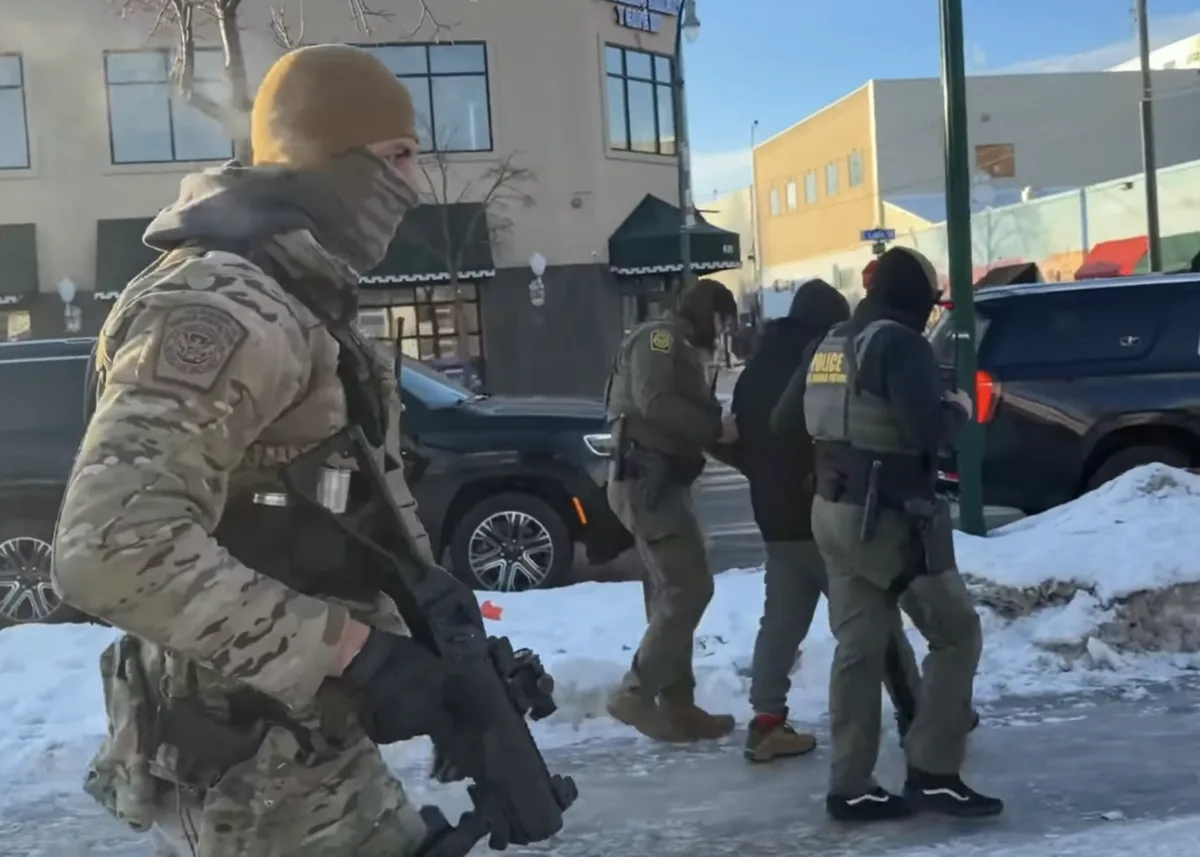
ICE employs about 11,600 deportation officers. It has also deputized more than 29,000 state and local cops to do immigration enforcement for it. The agency that was supposedly too understaffed to do its job has simply outsourced the job to your local sheriff, and then paid him for the privilege.
The Math Is Not Subtle
A new report from the immigration reform group FWD.us, drawing on ICE records and data from the Deportation Data Project at UC Berkeley and UCLA, found that the number of state and local officers working with ICE has doubled in the last eight months. Between January 2025 and October 2026, more than 29,000 officers were deputized under a program called 287(g).
Compare that to the 11,600 deportation officers ICE directly employs. The deputized force is roughly two and a half times the size of the actual agency. That is not a partnership. That is a hostile takeover of the local police blotter.
The program dates back to the 1990s, created under the Clinton administration. For decades almost nobody used it. Then Donald Trump came back to office and it became the main event.
From Street Sweeps to Highway Stops
Remember the big, ugly, televised urban surges in Chicago and Minneapolis? Those made for terrible headlines, so the administration found a quieter way to do the same thing. Felicity Rose, vice president of research and policy at FWD.us, put it plainly: they are trading splashy city operations for routine highway stops.
The most common and most aggressive version is called the Task Force Model. It lets police and sheriff's departments make immigration arrests themselves. A broken taillight becomes a deportation proceeding. A traffic stop becomes a federal enforcement action, with the same guy in the same cruiser and a completely different job description.
The optics improve. The arrests keep coming. That is the whole design.
Florida and Texas Do the Heavy Lifting
Between January 2025 and August 2026, deputized officers made more than 47,000 immigration arrests nationally. Florida and Texas together accounted for about half of them. Nobody should be shocked, because the governors of both states mandated that local police sign these deals. When the state house says sign, the sheriff signs.
But the more telling numbers come from places you don't associate with immigration crackdowns. In Wyoming, deputized officers made 77 percent of all immigration arrests in the state in April 2026, and more than 60 percent every month since November 2025. In New Hampshire, the program was behind 60 percent of immigration arrests in June. In Oklahoma, close to half.
Oklahoma went all in. Its Highway Patrol signed every one of its troopers up for 287(g), which means any state trooper who pulls you over on a state highway can potentially make an immigration arrest.
Life on the Other Side of the Traffic Stop
Gabriela Ramirez-Perez, an immigration and economic security policy analyst at the Oklahoma Policy Institute, described what that looks like on the ground. Oklahoma may not be in the headlines, she said, but it is definitely a hotspot for immigration enforcement, and it is producing a lot of fear in immigrant communities.
People are changing their daily routines. They are avoiding the highway. They are driving as little as possible. In a state where you cannot get to work, school, or the grocery store without a car, that is not a minor inconvenience. That is an entire population quietly rearranging their lives around the possibility that a routine stop ends with a family separated.
The Department of Homeland Security says 287(g) is a critical tool for cutting down on crime and illegal immigration. The people living with it say they have stopped driving to the store.
Follow the Money, Because Everyone Else Is
Participating agencies get paid. As long as a department stays in active and ongoing participation in 287(g) enforcement activity, it gets money for new cars, equipment, and other enforcement resources. Earlier this summer, the Justice Department offered $3 billion in funding for state and local agencies that join the program, to be spent on staffing and gear in the coming years.
Florida has already handed hundreds of millions of extra dollars to its law enforcement agencies in exchange for participation. Rose says the promise of cash appears to be a driving force behind the surge, and she expects it to produce even more partnerships.
So here is the pitch to a cash-strapped county sheriff: sign this paper, and you get a fleet of new vehicles. All you have to do is point your existing patrol cars at immigrants. Tell me how many departments say no to that.
The Dingo Take
Officials call 287(g) a critical tool to cut down on crime. The numbers show a program that turns traffic stops into deportation pipelines, with a $3 billion federal bounty attached. Wyoming, New Hampshire, and Oklahoma were not suddenly overrun by a wave of violent crime. They just have cops with new incentives and a federal agency that needs bodies it cannot hire fast enough.
This is the part where the administration gets to have it both ways. The big televised raids in Chicago and Minneapolis drew cameras, protests, and bad polling, so the machinery went quiet. It did not shrink. It got bigger, hid inside local police departments, and learned to look like ordinary law enforcement. Twenty-nine thousand deputized officers is not a retreat from mass enforcement. It is mass enforcement with a better PR strategy.
And the cost lands where it always does, on people who stop driving to work because a broken taillight might end their family's life in this country. A community that is too scared to use the highway has been policed into silence without a single raid. That is the real product here. The arrests are just the receipt.





Comments