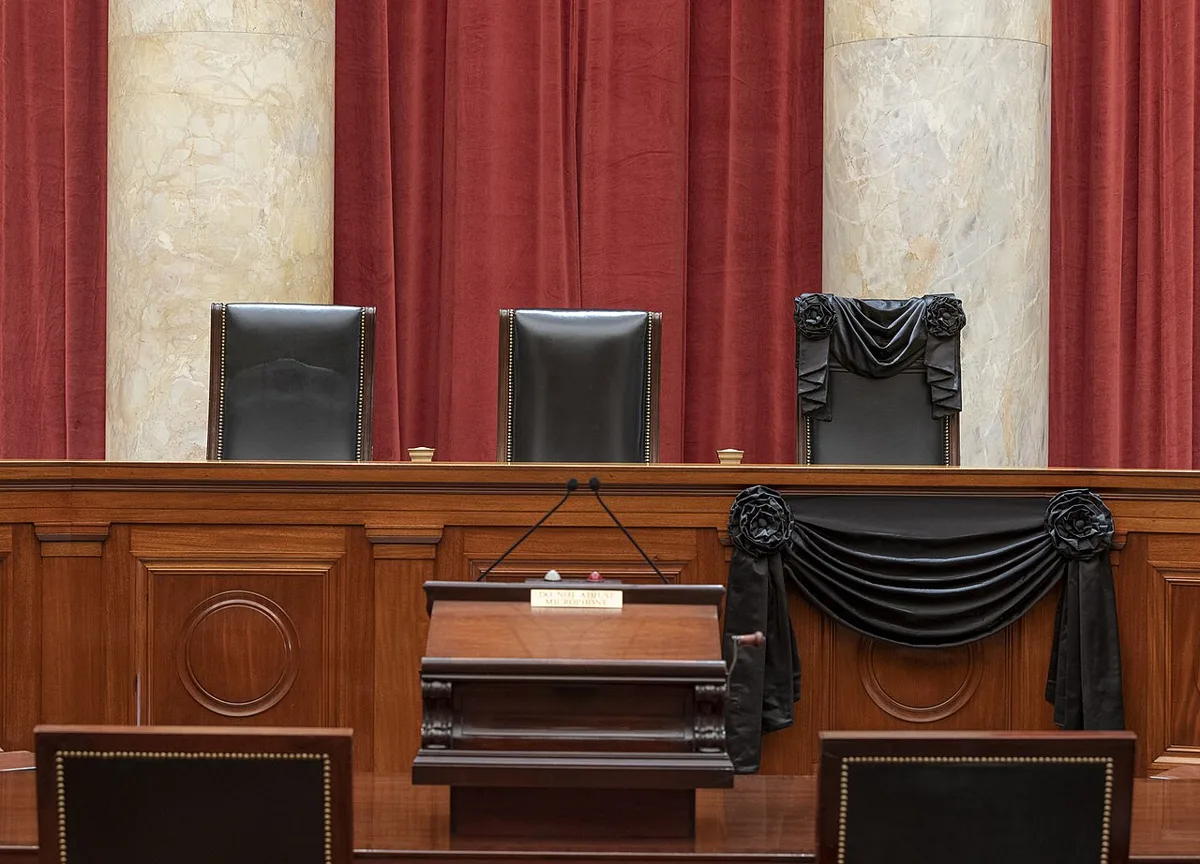
Congratulations are in order. For the first time in modern polling history, all three branches of the United States government are simultaneously drowning in public disapproval. The Supreme Court, long the last institution Americans could stomach, just hit a record-low 33% approval rating — and the country didn't even flinch.
The Number That Should Alarm Everyone
According to a Gallup survey of 1,200 adults conducted July 1-19, just 33% of Americans approve of the Supreme Court's performance. That is a six-point drop from 2025. It is the lowest approval rating the Court has recorded in Gallup's tracking.
To be clear about what that means: two out of every three Americans currently think the highest court in the land is doing a bad job. Not a controversial job. Not a politically complicated job. A bad one. The institution with lifetime appointments, no electoral accountability, and the final word on the Constitution has lost the public so completely that it now polls in the same territory as used car salespeople and Congress.
The timing matters. Gallup conducted this survey in the days immediately after the justices wrapped their latest term. This is not abstract frustration with some vague idea of the courts. Americans watched what the Court did this term and rendered their verdict.
The Full Trifecta of Institutional Collapse
Axios, which first reported the Gallup findings, framed the significance clearly: Americans are not simply unhappy with individual politicians. They are increasingly convinced the country's biggest institutions are not working for them. That is a different and considerably more dangerous thing.
Trump's approval ratings have been stuck in the low-to-mid forties at best for most of his second term. Congress, perennially the most loathed institution in American public life, has been hovering in the twenties for years. The Supreme Court used to be the exception. It used to be the one place where at least a majority of Americans thought something resembling legitimate governance was occurring.
That is gone now. All three branches, simultaneously, are polling like a failing product. The full set. The complete collection. Every branch of the federal government that the founders designed as a check on each other has managed to lose the public at exactly the same time.
How the Court Got Here
This collapse did not happen in a vacuum. The Court's credibility has been bleeding out for years, through a series of wounds both self-inflicted and politically engineered. The 2022 Dobbs decision overturning Roe v. Wade was the single biggest hit — Gallup and every other major pollster documented an immediate and significant approval drop after that ruling.
Then came the ethics scandals. ProPublica's reporting on Justice Clarence Thomas accepting millions of dollars in undisclosed gifts from Republican megadonor Harlan Crow landed like a grenade. Justice Samuel Alito had his own flag controversies and his own questions about undisclosed travel. The Court, run by people with lifetime appointments and essentially no enforceable ethics code, responded to the public scrutiny with a posture that could charitably be described as annoyed defiance.
And then the Trump immunity ruling in 2024 arrived — the decision holding that presidents have substantial immunity from criminal prosecution for official acts. Whatever one thinks of the legal reasoning, the political optics of a Trump-appointed supermajority handing Trump a sweeping legal shield in the middle of his criminal trials was not subtle. The Court asked the public to trust that this was just law, not politics. The public, apparently, has finished deliberating on that question.
What a 33% Approval Rating Actually Means
Here is the thing about approval ratings in the thirties: that is not a bad week. That is not a rough news cycle. Thirty-three percent is structural damage. It means you have lost not just the other side, but a meaningful chunk of people who should be your base.
For the Supreme Court, those lost supporters matter enormously. The Court has no army. It has no budget it controls. It cannot enforce its own rulings. Its power rests almost entirely on the public's belief that its decisions carry legitimate authority and should be followed. That belief is the whole product. When you're at 33%, you are telling a story about an institution whose product is falling apart.
Historians will point to other low moments — FDR's court-packing fight in the 1930s, the aftermath of Bush v. Gore in 2001. But those were specific controversies that receded. What Gallup is measuring now looks less like a controversy hangover and more like a settled public conclusion. Which is a very different and much harder thing to reverse.
Nobody Is Coming to Fix This
Congress could theoretically act. It could pass enforceable ethics rules for the justices, expand the Court, impose term limits, or do any number of things that legal scholars across the political spectrum have proposed as ways to restore credibility to the institution. It will not do these things, because Congress is also at historically low approval ratings and cannot agree on what day of the week it is.
Trump, who appointed three of the six conservative justices currently on the bench, has shown no interest in the Court's public standing except as a tool. His administration has pushed the Court hard this term on executive power questions, and by most accounts the conservative supermajority has been accommodating. The justices who might care about institutional legitimacy — Roberts most visibly — appear to be losing whatever internal argument they're having about it.
So the institution sits at 33%, with no external mechanism to force change and no internal appetite for the kind of visible course correction that might arrest the slide. The Court will continue issuing rulings. The country will continue ignoring or resenting them in growing numbers. That is a genuinely bad situation for a democracy, and it is where we are.
The Dingo Take
You are supposed to look at 33% and think: well, the Court is just doing unpopular things, and unpopular decisions sometimes require courage. That is the defense. That is the argument being made, quietly, by people who want you to stop paying attention to the ethics scandals and the immunity rulings and the pattern of a six-justice conservative supermajority behaving like a permanent political institution wearing robes. The problem is that the American public has been listening to that argument for four years and has collectively decided they do not buy it.
Thirty-three percent is not a protest. It is not a blip. It is the sound of a legitimacy crisis arriving not with a bang but with a Gallup press release on a Tuesday in July. The Supreme Court spent decades as the one branch that most Americans, regardless of party, begrudgingly accepted as something other than pure politics. That distinction is gone. It joins Trump and Congress in the institutional wreckage, and nothing about the current configuration of American politics suggests anyone with power is remotely interested in cleaning it up.
The founders were obsessed with checks and balances. They worried constantly about factions and corruption and the concentration of power. They did not design a system to handle all three branches cratering in public trust simultaneously, because they probably could not imagine that happening without something else already having gone catastrophically wrong. Here we are. The checks are broken. The balances are shot. And the approval rating is 33%.




Comments