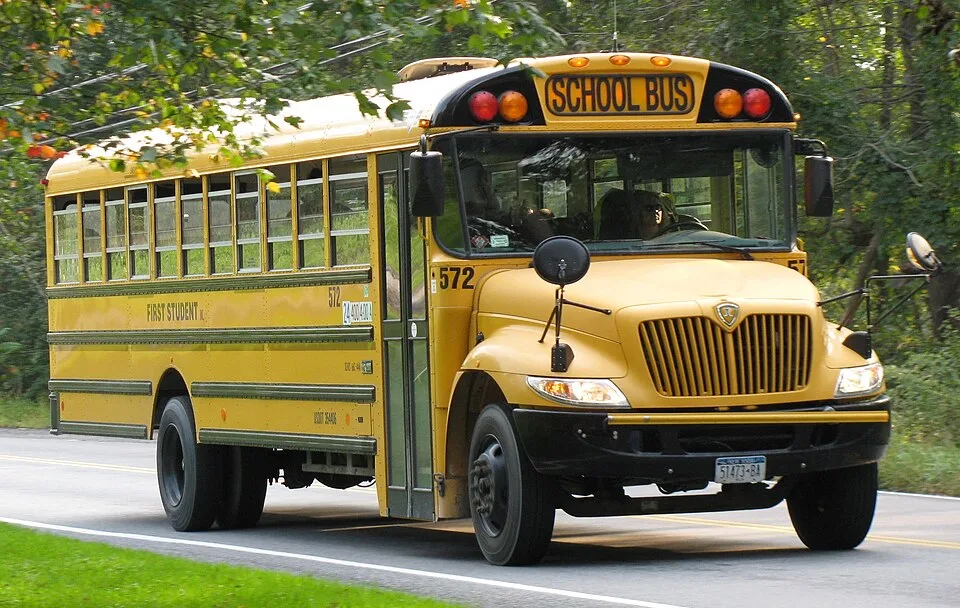
In 34 Ohio school districts, fewer than 10% of vacant bus driver positions have been filled. Across the country, nine states have already cut or proposed cutting student transportation this year alone. The yellow school bus, that most iconic symbol of American childhood, is quietly being driven off a cliff.
The Numbers Are Ugly
Let's start with the raw math. According to a 2025 report from the Associated Press-NORC Center for Public Affairs Research, 80% of US school districts have seen their transportation operations hit by bus driver shortages. Seventy-three percent have been hit by budget shortfalls. Both at the same time. That's not a crisis brewing on the horizon — that's a crisis that's been sitting in your driveway for years.
The driver shortage has a pretty clear origin story. When Covid hit and schools went remote, bus drivers found other work. Turns out, a lot of them didn't come back. The Economic Policy Institute reports there were more than 223,000 school bus drivers in August 2019. By August 2025, that number had dropped to 202,000 — a 9.5% decline. Nearly 21,000 drivers, gone.
Why would they come back? As Temple University associate professor Sarah Cordes told The Guardian, if you want to drive for money, Uber and Lyft are a lot easier than managing a vehicle full of kids. School bus driving requires extensive training, specific licensing, and a level of patience that the gig economy simply does not demand.
The Budget Side Is Just as Bad
Drivers are only half the problem. The money side is falling apart too. The Guardian reports that during the 2025-26 school year, more than half of school district leaders said their diesel fuel costs exceeded what they had budgeted, according to a survey from the School Superintendents Association. A quarter of those districts covered the overruns by pulling money from other programs. Nineteen percent burned through reserve funds.
That's not sustainable financial management. That's raiding the emergency fund to keep the lights on, and doing it year after year.
Ohio is a useful case study in how this spirals. Transportation cost Ohio districts an average of $1,273 per student in fiscal year 2026, nearly a 5% jump from the year before. Meanwhile, the Columbus Dispatch reports that public school enrollment in the state dropped by almost 100,000 students between 2016 and 2025, and 124 districts are projecting negative cash balances by 2029 — the worst rate since the Great Recession. Less enrollment means less tax revenue. Less revenue means fewer buses. Fewer buses means parents scrambling. Round and round it goes.
School Choice Is Quietly Making This Worse
Here is the part of the story that doesn't get enough attention. The school choice movement — charter schools, private schools, homeschooling — has accelerated enrollment declines in public districts. Jeremy Singer, an assistant professor of education at the University of Michigan-Flint who has specifically studied school transportation and absenteeism, told The Guardian that this enrollment drain directly costs districts tax funding.
But here's the cruel twist Cordes points out: you can't just cut bus routes proportionally to enrollment the way you might cut, say, an elective class. Kids are still spread across the same geographic footprint. Cut routes, and the remaining drivers have to cover more ground, which means kids ride longer. Cordes told The Guardian that if kids are on the bus for more than an hour, it hurts attendance. Push that to an hour and a half or two hours, and you're not just inconveniencing families — you're actively degrading educational outcomes.
So the school choice movement siphons students and funding away from public districts, and those districts can't even cut transportation costs cleanly in response. It's a trap with a familiar architect.
The Alternatives Are Complicated and Slow
Districts are experimenting. Rideshare companies specifically built for student transportation, like HopSkipDrive, have entered the market with smaller vehicles and app-based routing. The Guardian reports that some districts are exploring these options as a supplement or replacement for traditional buses.
But federal law is a significant obstacle. The School Bus Safety Amendments of 1974 require that any vehicle carrying 11 or more people meet the same safety standards as a school bus. That law exists for good reason — it has made student transportation substantially safer over the decades. The National Association of State Directors of Pupil Transportation Services argues, with considerable justification, that moving away from compliant school buses raises crash risk.
The Heritage Foundation has called for repealing the 1974 law, framing it as giving states more flexibility. You can file that under 'solutions that involve removing safety regulations so private companies can step in.' It's a familiar playbook, and it deserves the skepticism it typically earns. Singer told The Guardian that the regulations do create additional costs and limit flexibility, but that doesn't automatically make removing them the right answer.
Who Actually Gets Hurt
When bus routes disappear, it is not a minor inconvenience distributed evenly across a community. Singer is direct about this: the families who suffer most are those without reliable personal transportation or a network of people who can help. Working parents who can't easily adjust their schedules. Families without a second car. Kids in rural areas where the nearest school is fifteen miles away.
Singer told The Guardian that reducing school bus service means more families driving, more money spent on gas, more traffic, and more emissions. That's before you get to the attendance research, which consistently shows that transportation barriers lead to more absences, and more absences lead to worse academic outcomes. This is not a side effect. It is the direct, predictable consequence of cutting a service that lower-income families depend on in ways that wealthier families simply do not.
States currently grappling with cuts or proposed reductions include Arizona, Connecticut, Florida, Idaho, New Jersey, New York, Ohio, Oregon, and Virginia, according to The Guardian. That's a national problem wearing a patchwork of local disguises.
The Dingo Take
You are supposed to believe this is just a logistics problem — driver shortages, diesel prices, belt-tightening, the ordinary friction of public administration. It is not. It is the cumulative result of decades of decisions: chronically underfunding public education, supercharging school choice movements that drain enrollment and revenue simultaneously, doing nothing serious to address bus driver pay and working conditions, and then acting surprised when the system buckles. The surprise is not genuine. Nobody who has been paying attention is surprised.
The 1974 bus safety law is now being eyed as a deregulation target because the infrastructure has deteriorated to the point where districts can't afford compliant vehicles. That is the tell. When the answer to a safety standard is to remove the safety standard, what you're actually saying is that you have no intention of funding the underlying problem properly. The Heritage Foundation calling for repeal should be understood in exactly that context.
Kids who miss school because they have no way to get there will not recover those days. The research on chronic absenteeism is not ambiguous. This is a slow, grinding, entirely preventable harm being done to the children least positioned to absorb it, and the political will to fix it is nowhere to be found. The yellow bus wasn't glamorous. It was just necessary. And we are in the process of letting it disappear.




Comments