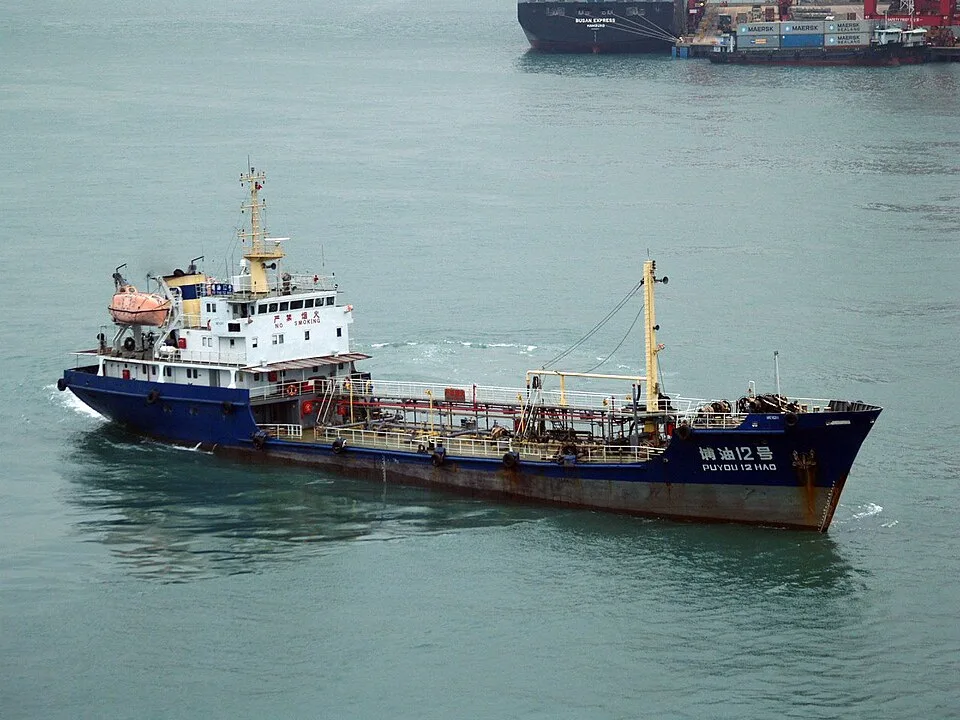
Nobody planned for China to be the adult in the room. And yet, when the U.S. and Israel launched their war on Iran on February 28th and oil markets started screaming, Beijing did something almost no one expected: it just stopped buying. According to Axios, that single act of economic restraint is what kept global oil prices from going completely off the rails after the Strait of Hormuz effectively closed.
The Strait Closes and the World Holds Its Breath
Here's the setup. The Strait of Hormuz is the narrow waterway connecting the Persian Gulf to the rest of the world's oceans. About 20 percent of the world's oil supply moves through it on any given day. When the Iran war started, that corridor shut down, and every energy analyst on the planet began drafting their worst-case scenarios.
The models all pointed the same direction: prices spike, economies reel, gas stations get ugly. That is the conventional playbook for a major Middle East conflict. It has played out, in various forms, in 1973, in 1990, and in every war-game simulation since. The closure of Hormuz was supposed to be the oil shock to end all oil shocks.
It didn't quite happen that way. Which brings us to China.
The World's Biggest Buyer Just... Walked Away
According to Axios, citing data from China's General Administration of Customs, Chinese crude oil imports dropped sharply in the weeks after the war began. As prices spiked, China pulled back from world markets in a substantial way. Not because of sanctions. Not because of any coordinated international response. Just because the price was too high and Beijing decided it wasn't going to pay it.
This is the part that should make your jaw drop. China imports more oil than any other country on earth. It is, by a significant margin, the single most consequential buyer in global energy markets. When China stops buying, demand falls off a cliff. And when demand falls off a cliff, prices cannot sustain their upward trajectory no matter how panicked the sellers are.
Axios reports that this Chinese pullback actively helped prevent the worst of the price spikes that experts had forecast. The country did not coordinate with Washington. It did not consult with the International Energy Agency. It just acted in its own economic self-interest, and in doing so, accidentally cushioned the blow for everyone else.
What This Actually Reveals About Power
Let's slow down and think about what this means, because the implications go well beyond oil charts.
The United States went to war. A major global waterway closed. The standard levers of the world economy were yanked hard. And the single most stabilizing force in the resulting crisis was China making a quiet purchasing decision. Not the Federal Reserve. Not OPEC. Not any international body. China's General Administration of Customs sitting on its hands.
That is an extraordinary concentration of market power in a single country's hands. Power that Beijing did not have to announce, did not have to threaten, and did not have to coordinate with anyone to exercise. It was just there, built up over decades of becoming the indispensable customer for the world's most critical commodity.
The U.S. Started a War China Helped Clean Up
There is an uncomfortable irony baked into this story that is almost too on the nose. The Biden and now Trump administrations have spent years trying to reduce China's global influence, restrict its economic reach, and build coalitions to contain its power. And then the U.S. and Israel launched a war that threatened to cause a global economic catastrophe, and it was China's passive market behavior that prevented the worst of it.
Axios frames this carefully, as it should. The pullback was not charity. China likely had its own strategic and economic reasons for standing back as prices climbed. Maybe it was drawing down existing reserves. Maybe it was waiting to buy at a lower price later. The point is that the effect, whatever the motive, was to take pressure off markets at exactly the moment they were most vulnerable.
This is what genuine structural power looks like. Not a speech at the UN. Not a sanctions package. Just the quiet, enormous weight of being the buyer everyone needs.
So What Happens Next Time?
Here is the question no one in Washington wants to sit with. If China's purchasing behavior is now a de facto variable in how global oil shocks play out, what happens when Beijing decides not to pull back? What happens when it decides a destabilized oil market serves its interests better than a stable one?
We just got a demonstration of how much leverage that position gives China over global economic conditions. The next demonstration might not be this accidental or this benign. A country that can dampen an oil shock by withdrawing from markets can, in principle, amplify one by flooding into them at exactly the wrong moment.
None of this is speculation about malice. It is just arithmetic. The power is there. The world just learned it exists in a way it probably did not fully appreciate before February 28th.
The Dingo Take
The United States launched a war and China stabilized the economic fallout. Sit with that for a second. Not because China is good or had good intentions or deserves a medal. But because that sentence describes the actual geometry of power in the world right now, and very few people in American politics seem ready to reckon with it honestly.
Every hawk who cheered the Iran strikes without thinking through the energy market consequences should be forced to read the Axios customs data until something clicks. The Strait of Hormuz does not care about your ideology. Oil markets do not grade on patriotism. When you close the world's most critical shipping lane, someone else gets to decide how bad the fallout is, and right now that someone is Beijing.
China did not save the global economy out of kindness. It saved it as a side effect of acting in its own interest. The fact that those two things lined up this time is not a policy. It is luck. And building your energy security strategy on the hope that Chinese purchasing decisions will keep bailing you out is not a strategy any serious government should be comfortable with. But here we are.


Comments