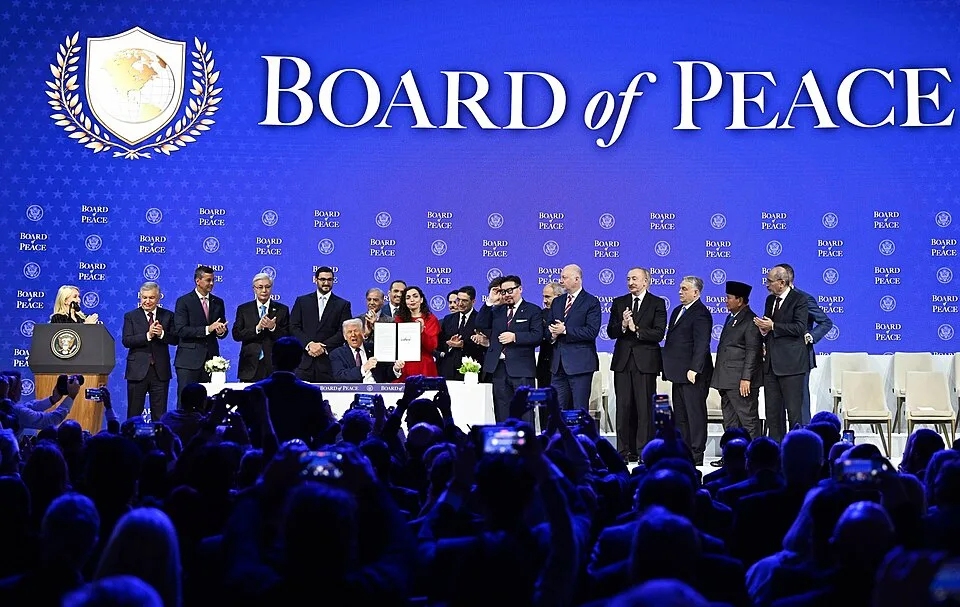
The White House believes Hamas is days away from signing an agreement to disarm and demilitarize the Gaza Strip. Four sources told Axios this with a straight face. Israeli officials, Western diplomats, and roughly anyone who has paid attention to the last several decades of Middle East history are reportedly less convinced.
What the White House Actually Believes
According to Axios, the Trump administration and what is officially called the "Board of Peace" think Hamas could put its name on a disarmament agreement within days. This would be, in the words of Axios, a "dramatic breakthrough" in implementing Trump's 20-point Gaza peace plan.
The Board of Peace, which sounds like something a sixth grader named during a Model UN exercise, is apparently treating this as a real and imminent possibility. The White House is presenting it that way, at minimum. Whether anyone outside the building shares that confidence is a different question entirely.
The answer, per the same Axios report, is no. Hamas has not actually approved any deal. Israeli officials are skeptical. Western diplomats are skeptical. The gap between "the White House thinks this is happening" and "this is happening" appears to be roughly the size of the Gaza Strip itself.
What Disarmament Would Actually Mean
This is not a minor bureaucratic checkbox. Axios reports that the decommissioning of Hamas' weapons is the key precondition for Gaza's new Palestinian governing structure to take hold. You don't get the political reconstruction without first getting Hamas to hand over its arsenal. That's the theory, anyway.
Hamas has been a militant organization since 1987. It fought a civil war against Fatah to seize control of Gaza in 2007. It has launched multiple wars with Israel, survived aerial bombardment, blockades, and an invasion that began in late 2023 and stretched well into 2024. The idea that it is now, in the summer of 2026, ready to voluntarily give up its weapons because Trump's peace board wants it to is a claim that deserves some scrutiny before it gets treated as settled fact.
To be fair to the reporting, Axios is not claiming this deal is real. It is reporting that the White House believes it could be real, and that nearly everyone else in the relevant diplomatic world thinks that belief is optimistic to the point of delusion.
The Skeptics Are Not a Fringe Group
When Axios writes that "Israeli officials and Western diplomats remain deeply skeptical," that is not a throw-away caveat. Those are the people who would actually need to implement and verify any such agreement. They are the ones with intelligence assets on the ground, with long institutional memories of Hamas negotiations, and with direct skin in the game if this goes sideways.
Israel has been militarily engaged with Hamas for years. They have watched the organization negotiate ceasefires, regroup, rearm, and resume operations more than once. Israeli skepticism about a Hamas disarmament pledge is not cynicism for its own sake. It is pattern recognition.
Western diplomats, for their part, have watched the Trump administration announce breakthroughs before that turned out to be considerably less than advertised. The Abraham Accords were real and genuinely significant. But the administration's habit of declaring victory in advance of actual results is well-documented. Both things can be true.
The 20-Point Plan Nobody Asked You About
Trump's 20-point Gaza peace plan exists, and this reported agreement would, according to Axios, represent a major step in implementing it. What is in the other nineteen points is not detailed in this particular report, but the very existence of a numbered list suggests someone in the White House spent real time on a structured proposal.
That is worth acknowledging. The Biden administration did not exactly crack the Gaza problem either. Criticism of the Trump approach does not require pretending the previous approach worked. The situation in Gaza has been catastrophic for civilians for years, and any serious diplomatic effort to end that, even an imperfect or partially delusional one, deserves to be covered and analyzed rather than dismissed outright.
But "a signed agreement" from Hamas promising disarmament and "Hamas actually disarming" are two different events separated by an enormous amount of hard, unresolved politics. The White House appears to be celebrating the former before the latter has happened, which is a move with a track record.
Days Away, They Said
The specific framing in Axios is that Hamas could sign in "the coming days." Coming days is a phrase with a very particular energy in diplomatic reporting. It means imminent. It means happening soon. It means hold your breath.
It also means that by the time you read this, the window will either have produced a signed agreement or it will have quietly expanded into "coming weeks" or "ongoing talks" or the kind of silence that settles over a negotiation that went nowhere. That is the nature of this kind of reporting, and Axios is transparent about the uncertainty. The sources say the White House believes it. Not that it is done.
We will find out relatively quickly whether this was prescient or whether it becomes another entry in the long list of almost-breakthroughs that the Middle East has been collecting for about seventy years.
The Dingo Take
You are supposed to believe that an organization that has spent nearly four decades building tunnels, stockpiling rockets, and fighting off one of the world's most capable militaries is now ready to disarm because the Trump administration's peace board sent the right paperwork. Hamas signing a disarmament agreement and Hamas disarming are not the same thing, and the White House either knows that and is playing for headlines or genuinely does not know that, which is its own category of problem.
The honest answer is that nobody outside the White House seems to think this is real. The Israelis who would have to verify it don't buy it. The Western diplomats who would have to back it don't buy it. And Hamas, crucially, has not actually approved anything yet, which is usually considered a relevant detail when you're describing a deal as imminent. What we have right now is one side announcing that the other side is about to agree to something. In most contexts, that's not a deal. That's a press release.
None of this means the effort is worthless. If Trump's team somehow pulls off a genuine, verifiable, durable disarmament process in Gaza, that would be one of the most significant foreign policy achievements in a generation and we would say so loudly. But we have been to this particular movie enough times to know that "coming days" can mean a lot of things, and "the Board of Peace is optimistic" is not the same as "peace." Check back in a week.





Comments