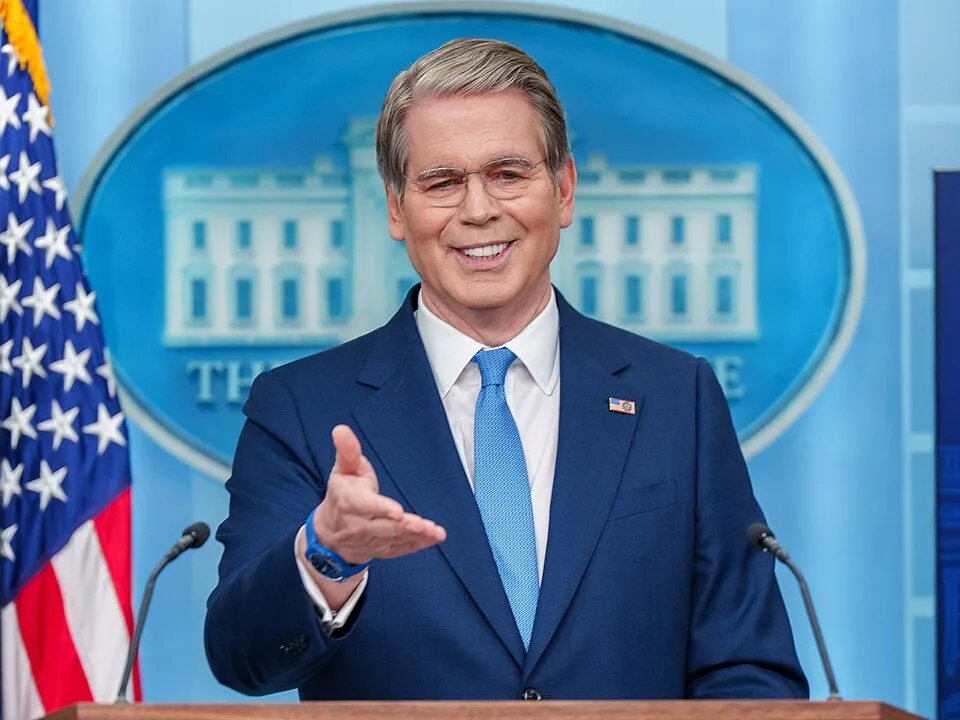
The United States Treasury Secretary wrote down his plan to spend up to $10 billion propping up the Japanese yen on a notepad, left it face-up on the conference table during a cabinet meeting open to journalists, and a Reuters photographer did what photographers do. Scott Bessent, keeper of America's financial secrets, apparently has not heard of shredders.
The Photo That Launched a Thousand Wire Stories
During a cabinet meeting at Camp David on Friday morning, a Reuters photographer captured an image over Bessent's shoulder showing a notepad with the words 'To Do' underscored at the top, followed by one very significant line: 'Buy Japanese Yen (JPY) $5-10 bil.' Bessent's name card was visible directly above the notepad, in case anyone needed confirmation.
The photo was taken at 11:33am local time, according to Reuters. The treasury department did not immediately respond to Reuters' request for comment on the notepad's contents or whether it had already moved to intervene in the currency market. The silence, as they say, spoke volumes.
This is a man who oversees the financial machinery of the largest economy on earth. His notepad was basically a press release. A very casual, handwritten press release.
What the Yen Is Actually Going Through Right Now
The Japanese yen has been having a rough year. The currency dipped last week to its weakest level since 1986, according to Bloomberg News, driven by a mix of factors including rising oil prices. When a currency falls that far, governments start paying attention, because currency collapse has a nasty habit of becoming contagious.
Japanese authorities had already stepped in earlier on Friday to prop up the yen, triggering a notable strengthening of the currency during early trading. Then, according to data from LSEG reported by The Guardian, the dollar dropped from roughly 158.9 yen at around 4:14pm ET to about 157.6 yen just before 5pm. That is a 0.8% swing in under an hour. In currency markets, that is not subtle.
The Financial Times reported later on Friday that the Federal Reserve Bank of New York had sold euros to buy yen specifically on behalf of the US Treasury Department, which confirmed what the notepad had already told the entire internet.
America Hasn't Done This Since the Earthquake and Tsunami Year
The last time the US Treasury intervened to prop up the yen was 2011, when the G7 countries coordinated a joint response after the catastrophic earthquake and tsunami that devastated Japan. That was a moment of genuine international solidarity in the face of a humanitarian disaster.
This time, apparently, the trigger was a slow-moving currency depreciation and a trip to Camp David. The Treasury had notified several banks earlier on Friday that it might intervene in the yen market that day, according to an unnamed source cited by Reuters, roughly two hours before Bessent's to-do list made the whole thing public anyway. The banks got the tip. The photographers got the tip too, just from a different angle.
The Part Where We Talk About What This Actually Means
Currency intervention is not a casual act. When the US government decides to buy billions in a foreign currency to influence exchange rates, that is a significant policy move with ripple effects across global markets, trade relationships, and the domestic dollar. It is the kind of thing administrations typically announce deliberately, on their own terms, with carefully worded statements.
Instead, the market learned about it partly because a Reuters photographer was standing in the right spot at 11:33 on a Friday morning at Camp David. The Treasury's notifications to banks earlier in the day were already an unusual amount of advance signaling. Then came the notepad.
The Trump administration has made a habit of chaotic information management, but this one has a special quality to it. This is not a leaked memo or a disgruntled staffer. This is the Treasury Secretary personally, in a room with cameras, leaving his handwritten financial strategy face-up on the table.
The Dingo Take
You are supposed to believe these are the most competent, business-minded people ever installed in American government. The 'killers,' as Trump has called his cabinet picks. The dealmakers. The adults who were going to bring ruthless private-sector discipline to the bloated mess of Washington. Scott Bessent ran a hedge fund. He knows, or should know, that in financial markets, information is the asset. Leaking a multi-billion-dollar currency intervention plan through a notepad at a press-accessible meeting is not dealmaking. It is the financial equivalent of leaving your poker hand face-up on the bar.
The action itself, buying yen to stabilize a currency that has cratered to 1986 lows, might be defensible policy. The coordination with Japan, the New York Fed selling euros, the bank notifications, those all suggest someone has been doing actual work. But the moment that work gets photographed on a Camp David notepad before the Treasury has even confirmed it publicly, the story stops being about currency stabilization and starts being about the sheer, staggering operational sloppiness of this administration.
Fifteen years ago, America intervened in the yen market because an earthquake killed nearly 20,000 people and the Japanese economy was in freefall. This time, we found out about the intervention because a cabinet secretary cannot keep his homework face-down. History does not exactly repeat, but it does occasionally get embarrassed.


Comments