Three climbers are dead, several more are missing, and one of the most celebrated mountaineers alive has not been heard from in days. An avalanche tore through a ten-person expedition on Pakistan's Broad Peak on Thursday, and as of Friday the mountain is still refusing to give most of them back.
What We Know, And It Is Not Good
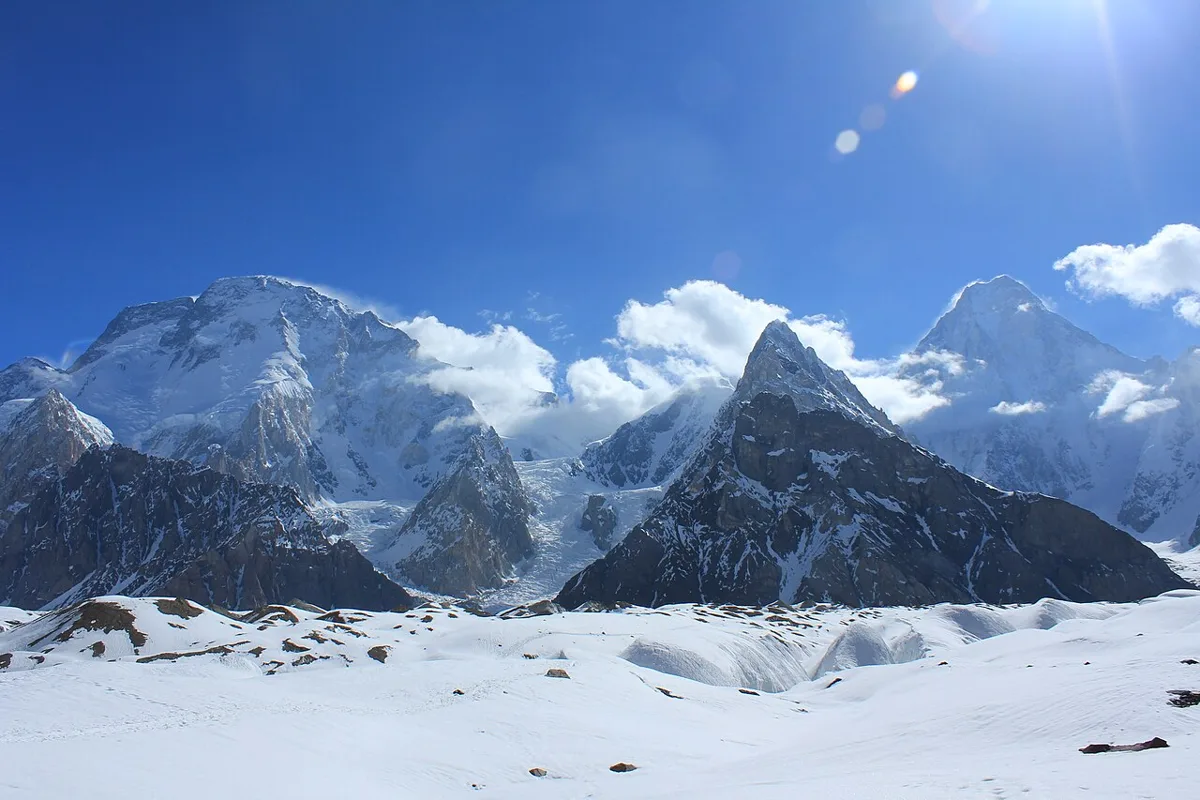
The avalanche hit Broad Peak, an 8,047-metre giant in the Karakoram range on the Pakistan-China border, on Thursday. According to the BBC, the multinational expedition was led by Nirmal Purja, the Nepal-born mountaineering legend who climbed all 14 of the world's 8,000-metre peaks in just over six months back in 2019. As of Friday, his location was unknown.
Three climbers have been confirmed dead. The BBC reports that rescuers found the remains of American Mallory Geis, 39, from San Antonio, Texas, along with Nadhira Ahmed Abdullah Al Harthy of Oman and Pur Bahadur Gurung of Nepal. All three bodies were transported by helicopter to a hospital for identification formalities. One climber, Pakistani national Sohail Sakhi, has not been spotted at all.
The Alpine Club of Pakistan initially reported four bodies had been located, then corrected itself to say rescuers had found two bodies and a body part. That distinction matters a great deal to the families waiting for news, and the club's correction, while necessary, tells you something about the chaos conditions on that mountain right now.
The GPS Tracker Story Is Haunting
Here is the detail that makes this story genuinely chilling. The Alpine Club of Pakistan told the BBC it had detected movement from the GPS trackers of three expedition members, including Purja. Helicopters were dispatched to those coordinates. The helicopters found nothing.
Rescuers later discovered that one of the trackers had been smashed. The movement they had been tracking was almost certainly a glitch, not a survivor. That tracker belonged to Sohail Sakhi, who remains the one team member with no confirmed sighting whatsoever.
Bad weather has been hammering the search operation, and the BBC reports that a ground search group could not reach the relevant area until Saturday at the earliest, a journey that could take several hours even once conditions allow. The Alpine Club's communications lead Naila Kiani told the BBC that survival chances after more than 24 hours in those conditions were "very slim," before adding that "miracles do happen." That is the kind of sentence you say when you are trying to be honest and kind at the same time, and it is brutal.
Who These Climbers Were
Mallory Geis posted on social media in mid-June that she had new boots ready for what she called "her first big kid climbing expedition in Pakistan," according to the BBC. It was her first attempt on Broad Peak. She was 39 years old and from San Antonio. That post is still up there somewhere.
Nirmal Purja is not some weekend adventurer who got in over his head. He joined the British Army in 2003, transferred to the Special Boat Service, the Royal Navy's special forces unit, in 2009, and then became one of the most accomplished high-altitude climbers in history. His record of 14 peaks in six months was considered physically impossible by many people in the mountaineering world until he did it.
Also among the missing is Kili Pemba Sherpa, who has summited Everest 15 times and in 2021 was part of the historic first winter ascent of K2. Pur Bahadur Gurung, whose body has now been identified, was close to completing his own 14-peak challenge and held a guide certification from the International Federation of Mountain Guides Associations. These were not inexperienced climbers. Broad Peak does not particularly care.
The Mountain's Track Record
Broad Peak is ranked the world's 12th highest mountain and, per the BBC, is considered one of the more challenging peaks for expeditions. Its first successful ascent came in 1957, when a four-member Austrian team made the summit. In the decades since, many more have climbed it, and dozens have died on it.
Its deadliest recent year was 2013, when at least six fatalities were recorded. The mountain sits in the Karakoram range, a part of the world where the weather can deteriorate with almost no warning and where a rescue operation is not a matter of calling for help and waiting an hour. Pakistan's army sent two helicopters with rescue personnel and specialized equipment, the BBC reports, but the terrain and the weather are dictating the pace here, not the rescuers.
The search was set to resume in earnest on Saturday. Whatever they find up there, the answers are not going to come quickly.
The Dingo Take
Three people went to climb a mountain and will not be coming home. Others are still missing on a remote peak in a range that treats human ambition as a minor inconvenience. There is no villain in this story, no policy failure to rage at, no grifter to expose. Sometimes the world just hands you a tragedy that is exactly what it looks like.
What stays with you is Mallory Geis and those new boots. Someone bought new gear, posted about it because they were excited, and headed to Pakistan for their first major expedition. She was 39. Sohail Sakhi's tracker was found smashed in the snow, and nobody knows where he is. Nirmal Purja, a man who survived special forces training and then did something most elite mountaineers said was physically impossible, has not been located. The mountain is keeping its own count.
The rescue teams are doing everything they can in conditions that are actively hostile to doing anything at all. The families are waiting. The Alpine Club of Pakistan is carefully, painfully correcting its own earlier statements as the picture gets clearer and grimmer at the same time. There is nothing more to say except that the people still on that mountain deserve every helicopter, every search team, and every hour of effort that can be thrown at this.



Comments