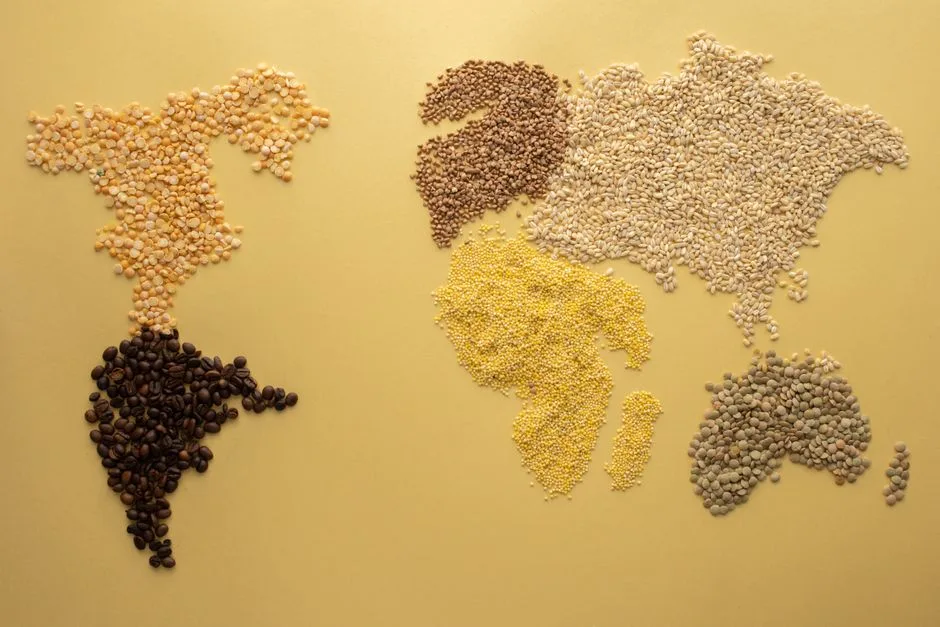
In a world that sometimes feels like it's held together with duct tape and bad faith, here is a number that deserves more than a passing glance: 7.8%. That's the share of the global population currently considered malnourished, according to the UN Food and Agriculture Organization's State of Food Security and Nutrition in the World 2026 report. It's the first time that figure has dropped below 8% since the pandemic, and it's part of a trend that has been quietly, stubbornly improving for decades.
The Third Year Running — And It's Not a Fluke
According to the Good News Network's coverage of the FAO report, this marks the third consecutive year that global hunger has declined as measured by malnourishment across continental populations. Three years is a trend. Three years means something is working.
The biggest engine behind the drop is Asia, which has seen a steep, sustained five-year decline in malnourishment rates. Latin America and the Caribbean also contributed to the improvement, if at a slower pace. Oceania chipped in a 0.4% drop over three years. These are not rounding errors. These are millions of people who are eating when they weren't before.
The FAO is projecting that the 7.8% figure will fall another 20% by the end of the decade. That would put global malnourishment at roughly 6.2%, the lowest level ever recorded in human history. Let that sit for a second.
Where the Gains Are Coming From
The regional numbers are where this story gets genuinely remarkable. The Good News Network reports that Southeast Asia and Central Asia have been the standout performers since 2010. Southeast Asia dropped from 11.6% malnourishment to 5.1%. Central Asia went from 7.7% all the way down to 2.8%, which the FAO notes is comparable to rates seen in high-income countries. A largely rural region of the world has, in fifteen years, effectively eliminated malnutrition at the level that wealthy nations managed.
That is not a small thing. That is one of the most significant public health achievements of the 21st century and it has received approximately zero percent of the media attention it deserves.
For context on how far we've come overall: in 1970, nearly 35% of the population outside Europe and North America was undernourished. Today the global rate across all regions sits below 8%. The direction of travel, across more than half a century, has been relentlessly toward fewer hungry people.
Africa and the Conflict Problem
The news is not uniformly good. The FAO is clear that Africa remains the world's most undernourished continent, with some regions averaging above 20% malnourishment. The worst clusters, according to the report's coverage by Good News Network, are concentrated in active conflict zones — West Asia, and Central and Eastern Africa are singled out as the hardest-hit areas.
Conflict is the overwhelming driver of hunger. That's not a controversial finding; it's one the FAO has documented repeatedly. Wars destroy agricultural infrastructure, displace farmers, collapse supply chains, and redirect resources from food production to killing. You can't fix hunger in a warzone with better seed varieties and improved irrigation.
The bleak upside, if you want to call it that, is what Central Asia's trajectory suggests. A region that not long ago had serious food insecurity problems has brought those numbers down to wealthy-nation levels. The FAO report implies the lesson is transferable: if the guns stop, the progress can follow.
Why This Doesn't Get the Coverage It Deserves
Here's a question worth asking. If 7.8% of the world being malnourished is news, what was it when the number was 35%? The answer, mostly, is that it wasn't news. Slow-moving improvements in human welfare rarely are. They don't have a moment, a single dramatic event you can point to. They're the result of decades of agricultural research, development aid, trade policy, infrastructure investment, and the unglamorous grind of institutional work.
The 24-hour news machine is not built to cover that story. It's built to cover the fire, not the fire code that prevented five other fires. Which means a lot of people consuming daily news have a functional picture of the world that is considerably darker than the data actually supports.
None of this means things are fine. Africa's hunger crisis is real. Climate change is a genuine threat to the agricultural gains of the last thirty years. The projection that hunger will hit its lowest recorded level by 2030 is a projection, not a guarantee. But the baseline trend, confirmed now three years running and backed by FAO data, is that fewer human beings are going to sleep hungry than at any point in recorded history.
The Dingo Take
You are supposed to believe, based on the general vibe of the internet in 2026, that everything is getting worse all the time and the only rational response is escalating despair. That's not entirely wrong as a read on certain specific areas of human endeavor, several of which we cover extensively on this site. But it is wrong as a description of global hunger, and the gap between perception and reality here is wide enough to drive a truck through.
The FAO's number is 7.8%. Down from 35% in 1970. Down for the third consecutive year. Projected to fall further. Driven in significant part by Central Asia, a largely rural region that brought its malnourishment rate down to wealthy-nation levels without being a wealthy nation. These facts exist. They are inconvenient for certain political narratives that require the world to be irredeemably broken, and they are also inconvenient for engagement-bait content farms that need your amygdala firing at all times.
The hunger that remains is concentrated in conflict zones. That is both the most solvable and the most politically intractable part of the problem. The lesson of the last fifty years is that when war recedes, food security tends to follow. The lesson of the last fifty years is also that war is very hard to stop once it starts. So: real progress, real remaining catastrophe, and a clear map of what's causing the gap. That's the story. It's a better one than most people are walking around with.



Comments