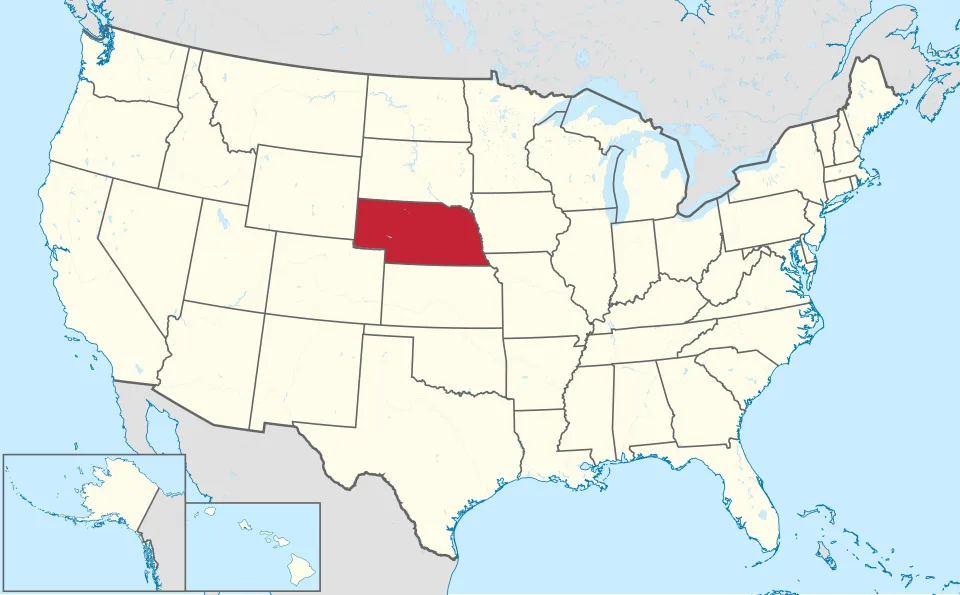
On August 1st, Nebraska became the first state in the country to strip Medicaid coverage from residents who failed to comply with the work requirements buried inside Trump's big budget law. About 200 Nebraskans lost their health insurance on Saturday morning. And this is just the opening act.
How This Actually Works
Under the rules created by Trump's budget law, signed last year, roughly 20 million Medicaid recipients across 44 states will need to prove they are working, volunteering, attending school, or participating in job training for at least 80 hours per month to keep their coverage. States have until January 1st to implement the requirements. Nebraska decided not to wait.
The state's Medicaid Director, Drew Gonshorowski, told the health policy outlet Tradeoffs that Nebraska launched early because he believes the requirements will help people "move toward economic stability." His exact words: "Why wait?" Good question, Drew. The 200 people who woke up uninsured on Saturday morning might have some thoughts on that.
Certain groups are exempt: people with disabilities, those with serious illness, parents of young children, and caregivers. Everyone else subject to the rules needs to document their compliance, or their coverage disappears. Nebraska has about 70,000 people subject to the new requirements, and the state estimates as many as 30,000 of them could ultimately lose coverage.
The Numbers Behind 'Saving Money'
Supporters of work requirements, including Gonshorowski, argue the policy will save the federal government $325 billion over ten years. That is a real number. Here is another real number: estimates from health policy researchers suggest between 3 million and 8.6 million Americans will lose Medicaid coverage by 2028 as a result of these rules. The range is wide because the chaos is hard to model.
NPR reports that research into previous work requirement experiments found they did not actually lead to more people getting jobs. What they did lead to was people losing coverage because they were unaware of the rules or got buried in paperwork. So the "savings" come not from helping poor people find work, but from dropping them from the rolls when they fail an administrative obstacle course.
Nebraska's Rollout, Honestly Assessed
Gonshorowski says Nebraska is well-positioned to lead on this because the state runs its own eligibility system. He told Tradeoffs that Nebraska can verify compliance for about three-quarters of people subject to requirements without even contacting them directly. That sounds efficient. The other quarter still needs to jump through hoops.
The state sent tens of thousands of letters, texts, emails, and ran radio and TV ads to inform residents. But Amy Behnke, who leads the Health Center Association of Nebraska, told NPR the notices were confusing and left many low-income people unsure whether the new rules even applied to them. NPR also tested Nebraska's Medicaid help line directly and ran into long wait times, a dropped call, and trouble reaching the Spanish-language line. The state says the average wait is ten minutes. The state is also the one grading its own homework here.
Gonshorowski did say his team holds near-weekly meetings with federal officials to improve outreach and communication. He also said he will be watching appeal numbers closely as a measure of whether the rollout was handled correctly. His words: "That is the one scary number." He said this. The guy running the program said appeals are the metric that keeps him up at night. Sit with that.
What Comes Next
Nebraska is a small state with a relatively small Medicaid population, and even Gonshorowski acknowledged that his state's size makes a careful implementation more manageable. That advantage disappears when larger states with millions of affected residents start rolling out their own versions of this by January 1st.
The range of projected coverage loss, 3 million to 8.6 million people, reflects just how many variables are in play. How aggressively do states implement? How many people successfully navigate the paperwork? How many people with disabilities or other exemptions get incorrectly flagged and have to fight their way back? The infrastructure for all of that does not exist at scale. What does exist, starting right now, is a system that terminates coverage first and asks questions later.
The Dingo Take
You are supposed to believe that making sick and poor people fill out monthly compliance forms is a hand extended in fellowship, not a boot on a throat. Gonshorowski used almost exactly that framing with Tradeoffs: "an opportunity to reach out a hand to our membership." Research on previous work requirement programs says that hand mostly just pushed people off the rolls. The jobs did not materialize. The coverage did.
The $325 billion in projected savings is not magic money conjured from efficiency. It is money the federal government will stop spending on healthcare for people who get lost in paperwork, who never understood the rules applied to them, or who are working but cannot prove it in the format the system demands. Nebraska's own help line dropped a call when reporters tested it. The Spanish-language line was difficult to reach. But sure, 30,000 Nebraskans are going to smoothly document 80 hours of monthly activity to a state bureaucracy that can barely answer the phone.
This is a policy designed to produce a specific outcome while maintaining plausible deniability about intent. The intent is to shrink Medicaid. The mechanism is paperwork. The justification is self-sufficiency. And starting August 1st, it is no longer a future threat or a policy debate. It is a present-tense reality for 200 people in Nebraska who needed a doctor and woke up this morning with nothing.



Comments