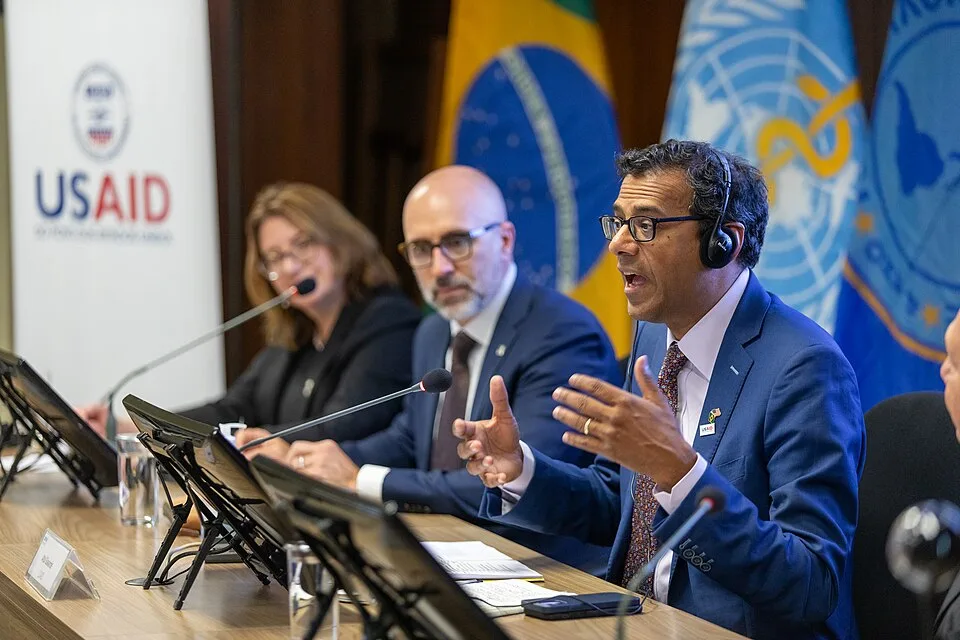
While the rest of the world was still processing the collapse of USAID like it was some kind of surprise, Brazilian HIV advocates were at the AIDS 2026 conference in Rio essentially saying: yeah, we told you so. They've been watching the warning signs since the early 2000s, and they have the receipts.
The Country That Didn't Need the Money
Brazil occupies a genuinely unusual position in the global HIV story. Its prevention and treatment programs run entirely through the country's Unified Health System, with zero dependence on foreign aid. According to The Guardian, that independence allowed Brazil to hit a milestone that most countries aren't close to: the elimination of HIV transmission to newborns, achieved in 2025.
That's not an accident. It's the direct result of a political fight that civil society members won in the late 1980s, when they pushed to get HIV prevention and treatment written into the framework of Brazil's new constitution. The right to healthcare became constitutional in 1988, and HIV programs came along for the ride into the national budget.
"It has been earmarked into our budgets. We have to make sure that we have enough money for that," Juliana Cesar, political liaison coordinator at the Brazilian HIV NGO Gestos, told The Guardian. When your health system doesn't depend on Washington's mood, you don't have to panic when Washington has a mood.
They Were Watching the Clock Turn
Cesar didn't wake up in January 2025 alarmed about USAID. She's been tracking what she describes as warning trends at the UN since the early 2000s. The Guardian reports that Cesar first began seriously suspecting a dramatic reduction in foreign aid funding more than a decade ago, as the language around HIV funding grew steadily more restrictive.
After 2012, she was watching funding come attached to conditions "that would exclude the very communities that we should serve," she said. The communities she means: LGBTQ+ people and those accessing sexual and reproductive health services, both of which are central to HIV prevention and both of which make certain donor governments deeply uncomfortable. Countries kept trying to find common ground in international negotiations, but the common ground, as Cesar put it, "would become stricter and stricter."
This isn't hindsight. This is an advocate who read the room, watched the pattern over twenty-plus years, and drew the obvious conclusion while everyone else was still pretending the system was stable. The dissolution of USAID might "feel like a rupture," Cesar said at the AIDS 2026 conference, but for people paying attention, it was a long time coming.
Foreign Aid Was Never Really Free Money
Here's a detail that deserves more attention than it usually gets. Ailish Brennan, a policy analyst at Harm Reduction International, told The Guardian that foreign aid agreements frequently require recipient countries to purchase HIV medications specifically from donor countries like the United States. So the money goes out and then it comes right back, laundered through another country's health crisis.
"It's sort of like pumping money back into the donor country economy," Brennan said. Domestic production of HIV medications, she argued, could be part of a genuine shift toward what she calls "health sovereignty," where countries actually own their own health systems rather than renting access to them from Washington.
That framing matters. A lot of the coverage around USAID's collapse treats it as a story about American generosity being withdrawn. But if the aid was structured to benefit American pharmaceutical and political interests from the jump, the picture gets considerably more complicated.
A Billion Dollars That Went to Cops Instead of Clinics
Brennan also pointed out that some of the money that could have funded HIV prevention instead went toward something considerably less useful. A report from Harm Reduction International, as The Guardian notes, found that nearly $1 billion in foreign aid, including USAID money, was directed toward policing and criminalization of drug-related offenses between 2012 and 2021.
The dark irony here is not subtle. Incarceration concentrates high-risk populations, including people who inject drugs, and cuts off their access to healthcare. Criminalizing the people most vulnerable to HIV and then underfunding the programs that serve them is a strategy so counterproductive it barely seems real. Brennan said that billion dollars could have instead funded hundreds of thousands of sterile syringes and other harm reduction measures that directly prevent HIV transmission.
The money was there. The choice about where to spend it was political, and it was wrong.
Running on Goodwill and Empty Pockets
Anton Basenko, executive director of the International Network of People Who Use Drugs, put the current situation plainly. The Guardian reports that in the wake of the USAID cuts, HIV prevention organizations worldwide are "surviving on the goodwill, unpaid labor, and extraordinary commitment of their staff and volunteers."
"But resilience should never be mistaken for sustainability," Basenko said. That line deserves to be read twice. The global health NGO world has a long habit of treating frontline workers' dedication as a structural funding solution, which is another way of saying it exploits people who care too much to walk away.
Brennan and Basenko both flagged that this dynamic predates the USAID collapse. HIV prevention funding has long depended on underpaying the people doing the most critical work, banking on their commitment to the communities they serve. Burnout, when it comes, doesn't announce itself. It just means fewer people show up one day and don't come back.
Brazil's Model Has Its Own Cracks
To its credit, The Guardian's reporting doesn't let Brazil off completely clean. Even Cesar acknowledges the limits of the model she's been advocating. Brazil's Financial Transaction Tax, which directed money from every transaction into the public health system, is now being phased out as the country has shifted politically rightward. And Cesar admitted the tax was never perfectly designed, applying the same percentage to every citizen regardless of income.
There are also structural gaps that independence from USAID can't fix. The Guardian reports that pharmaceutical company negotiations still limit Brazil's access to the latest HIV prevention and treatment options. And NIH funding cuts, a separate casualty of the current American political moment, could curtail HIV-related research in Brazil regardless of how the country funds its treatment programs.
So the lesson isn't that Brazil figured out a perfect system. It's that Brazil built something resilient enough to survive a shock that is currently devastating health programs in countries that didn't.
The Dingo Take
A decade ago, Juliana Cesar was sitting in UN negotiations watching donor countries quietly attach conditions that excluded the communities HIV prevention exists to serve. She drew the obvious conclusion and spent years urging other countries to build independent health systems. They didn't, mostly. And now we're watching the consequences play out in real time across sub-Saharan Africa, Southeast Asia, and anywhere else that built its HIV response around the assumption that American foreign policy would stay consistent.
That assumption was always a gamble. Foreign aid from a democratic superpower is still foreign aid, still subject to election cycles and ideological whims and the political convenience of defunding things that help gay people or drug users or anyone a donor government finds embarrassing. Brazil locked HIV treatment into its constitution because advocates understood that rights written into law are harder to cut than line items in a foreign policy budget. That's not a radical idea. It's just a durable one.
The organizations still running on unpaid labor and staff who are too committed to quit deserve better than to be called resilient as if that's a compliment. Resilience, in this context, is what happens when a system fails the people holding it up. The billion dollars that went to drug policing instead of sterile syringes tells you everything about whose suffering was ever considered worth preventing.



Comments