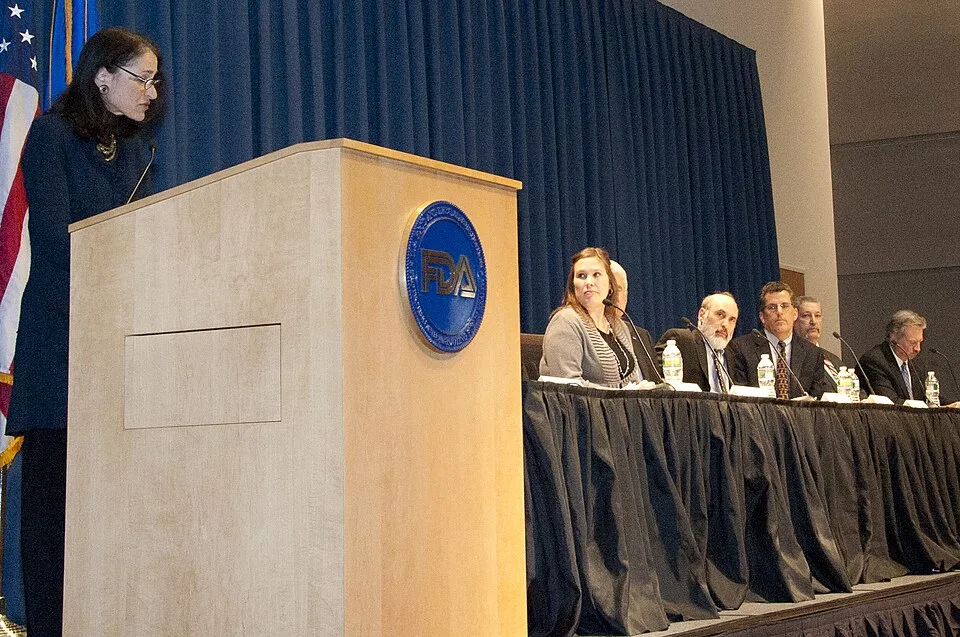
A 69-year-old cancer survivor wrote Robert F. Kennedy Jr. a personal letter explaining that an mRNA vaccine had saved his life and asking him to reconsider his war on the technology. Kennedy never wrote back. This Wednesday, the FDA has a deadline to decide whether to approve Moderna's mRNA flu shot — the first of its kind — and the answer will tell us exactly how far the most powerful health official in the country is willing to take a vendetta built on vibes.
The Rejection Letter That Rocked an Entire Industry
Back in February, Moderna president Stephen Hoge was touring one of the company's manufacturing sites when his head of regulatory affairs tracked him down with what Hoge described to NPR as a very nervous look on his face. They rushed to a conference room and pulled up a letter from the FDA on a screen. The agency said it would not review Moderna's application for its mRNA flu shot. Full stop. Application rejected before anyone had even looked at it.
The problem, which Hoge spelled out clearly to NPR, was that the FDA had told Moderna before the filing that they could go ahead and submit and that a review would follow. The agency then broke its own word. The pharmaceutical industry was shaken. The news spread fast. There was, to put it mildly, an outcry.
About a week later, the FDA reversed course and agreed to review the vaccine after Moderna agreed to conduct a confirmatory post-market study if the drug is approved. In June, an FDA advisory panel recommended approval. Now the agency has until this Wednesday to make it official. So we are sitting here watching a federal regulator sprint toward a self-imposed deadline after a two-step that would embarrass a first-year law student.
Five Hundred Million Dollars, Gone
The FDA's flip-flop didn't happen in a vacuum. It happened inside an administration where the Department of Health and Human Services, under Kennedy, canceled nearly $500 million in mRNA vaccine research funding last summer, as NPR reports. That is not a budget trim. That is a targeted strike on an entire category of science.
When NPR asked HHS about all of this, a spokesman delivered a statement so slathered in corporate non-speak that it deserves to be read twice slowly: HHS is, apparently, "advancing President Trump's commitment to strengthen public health through gold-standard science." Right. Cutting half a billion dollars in research funding and then refusing to review a vaccine application before reversing yourself is, sure, gold-standard something.
Rena Conti, a health economist at Boston University, told NPR what this looks like from the industry side: investors depend on the FDA being consistent and fair because the U.S. market is where they make most of their money. Without that predictability, the math on research funding falls apart. Nobody pours money into a pipeline if they can't trust the regulator at the end of it.
The Ripple Hits the Smallest Boats Hardest
Moderna is a giant. It can weather a two-week regulatory gut punch, conduct a press tour about it, and still make payroll. The rest of the mRNA world is not so lucky. Jeff Coller, a professor at Johns Hopkins University who has spent decades studying mRNA technology, told NPR that most of the companies in this space are tiny biotechs with 20 or 30 people on staff.
"When you see the FDA rejecting a product that comes from Moderna, why is it that my little company would be able to push through?" Coller asked NPR. It's a straightforward question and the answer is obvious: they probably can't. Coller says the FDA's actions combined with the HHS funding cuts have already spooked the venture capital firms backing smaller biotechs working on mRNA therapies for conditions ranging from Lyme disease to rare cancers. Not theoretical future cancers. Current ones. Right now.
Moderna itself told NPR it is holding off on some planned mRNA research until the regulatory picture clears. When the biggest player in the field is pausing its own pipeline to wait and see what a politically compromised agency is going to do, you are not looking at a healthy ecosystem for medical innovation. You are looking at a chilling effect doing exactly what a chilling effect is supposed to do.
The Man Who Wrote the Letter Kennedy Ignored
Janusz Racz is 69, a retired computer scientist, a runner and sailor who lives in London. Two years ago, his doctors found a tumor in his lungs the size of a golf ball. He had no symptoms. If he did nothing, they told him, he would be dead within months. He enrolled in a clinical trial and became the first person in the United Kingdom to receive an mRNA cancer vaccine made by BioNTech, Pfizer's partner on the original COVID-19 shot.
After a year of regular vaccinations, as NPR reports, the cancer is gone. He is making plans. Traveling. Running, presumably. Alive in the specific way that you are alive when something that was supposed to kill you did not.
Because Racz is an American citizen, he wrote Kennedy a letter. He told him his story. "This is a new hope for people, for millions of people," he told NPR. "And they cut off the hope." Kennedy, the Secretary of Health and Human Services of the United States, never wrote back. Not a form letter. Not a staffer's acknowledgment. Nothing. A man who got his life back from the technology Kennedy is actively working to undermine reached out directly, and the response was silence.
Wednesday's Decision Is a Test the FDA Shouldn't Have to Take
If the FDA approves Moderna's mRNA flu shot by Wednesday's deadline, it will be the first mRNA-based flu vaccine to ever reach the market. That's a genuine scientific milestone. And it will have arrived covered in the fingerprints of a regulatory process that already tried to block it once, got embarrassed publicly, reversed itself, and is now under the watch of a health secretary who has made questioning mRNA vaccines a cornerstone of his public identity for years.
The advisory panel recommended approval in June. The science cleared the committee. On the merits, this should be a formality. But formalities have a way of becoming political events when the man nominally overseeing the FDA has spent years casting doubt on the very technology in question and is sitting on an unanswered letter from a cancer patient who credits that technology with keeping him alive.
The Dingo Take
Janusz Racz wrote a letter to the Secretary of Health and Human Services explaining that an mRNA vaccine saved his life. Kennedy didn't respond. That single fact tells you everything you need to know about what this administration thinks the job of HHS actually is.
This is not a story about regulatory caution. Caution involves reading the letter. Caution involves engaging with the science, or at minimum acknowledging the person who wrote to you. What happened here is not caution. It is ideology dressed up in the language of rigor, backed by half a billion dollars in canceled research and an FDA that already tried to reject a vaccine application it had previously agreed to review. And then had to walk it back. In public. Because the backlash was too loud to ignore.
Wednesday's deadline is coming. If the FDA approves the vaccine, good. It will deserve to be approved. But let's be clear about what we are celebrating if it happens: a scientific milestone that nearly got killed by institutional cowardice and a health secretary who has decided that his priors matter more than a retired computer scientist's lungs. The bar is on the floor. We are about to find out whether anyone in this administration can clear it.


Comments