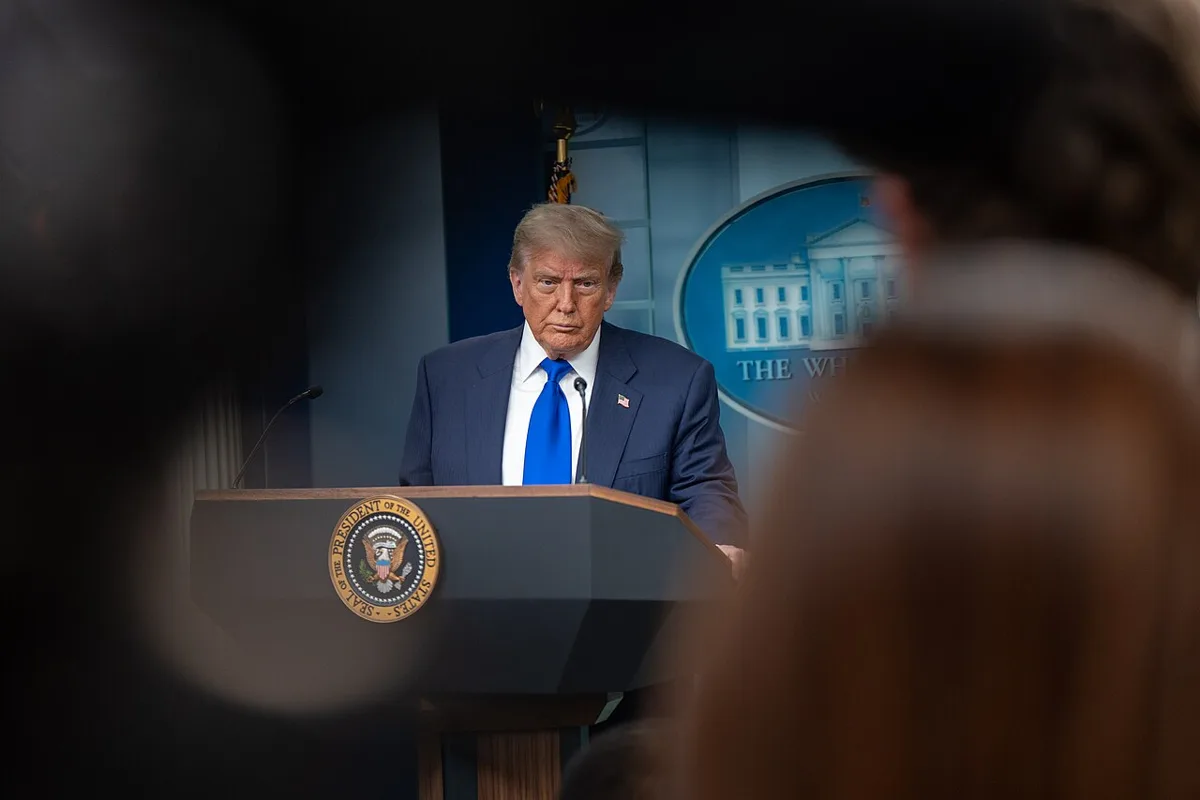
The State Department is telling Americans across ten Middle Eastern countries to get out or be ready to run, and a Trump ally just confirmed to NBC News that nobody in the administration actually had a plan for how this war was supposed to end. Six months in, with oil prices surging and Kuwait intercepting Iranian drones, the world's most powerful military is being directed by a man who promised this would all resolve itself 'shortly.'
Pack Your Bags, America
On Saturday, the State Department issued a regional advisory urging Americans throughout the Middle East to either leave now or be ready to leave fast. According to NBC News, the warning went out through U.S. embassies in ten countries: the United Arab Emirates, Bahrain, Iraq, Israel, Jordan, Kuwait, Lebanon, Oman, Qatar, and Saudi Arabia.
"Americans currently in the Middle East should exercise caution and heightened vigilance and should be prepared for flight cancellations, periodic airspace closures, and potential travel disruptions," the statement read. "Americans in the region should consider departing, or be prepared to depart should there be escalation."
This is not boilerplate. The State Department had issued a similar advisory earlier in July, but that version did not tell Americans to think about leaving or to cancel upcoming trips. The language got sharper because the situation got worse. That's how this works.
Meanwhile, Drones Over Kuwait
While the State Department was drafting its evacuation advisory, the Kuwait Army announced its air defense systems were actively intercepting Iranian drone attacks. "Kuwaiti air defenses are currently engaging hostile drone attacks following the Iranian aggression," the army said Saturday, reassuring its citizens that the explosions they were hearing were interceptions, not hits.
Kuwait. A country that is not Iran and not Israel and not directly a party to this war, now watching drone attacks get knocked out of its airspace. That is what regional escalation looks like in practice, not in think-tank white papers.
Two days before the Kuwait intercepts, the U.S. military confirmed it had executed what it called a "heavy wave of strikes" on Iran. NBC News reports that this came hours after Fox News broke the news that Trump, in a phone call, had vowed to "beat the f---ing s---" out of Iran. The strategy, apparently, is the phone call.
No Plan, Confirmed by a Friend
Here is the part that should make your coffee go cold. According to NBC News, a Trump ally, someone in his orbit who presumably wishes him well, admitted the quiet part at full volume: "There was not a real strategy for how long or what they should do to get to the endpoint."
No real strategy. For a war. That the United States is actively fighting. In a region where Americans are now being told to flee.
Trump spent months promising the conflict would resolve itself "shortly." It has now been six months. The word "shortly" is doing a lot of heavy lifting for a situation that has involved heavy bombing runs, a collapsed ceasefire, soaring global oil prices, and rising gas prices hitting American wallets at home.
The Ceasefire That Wasn't
There was a moment, briefly, in June, where something resembling a path forward existed. The U.S. and Iran signed a memorandum of understanding outlining the process for talks to end the war. NBC News reported it at the time as a potential off-ramp.
Then July arrived. Trump declared the ceasefire "over" and the bombing resumed. No explanation. No counteroffer. Just done.
So now both nations are trading what U.S. officials are describing as "heavy" strikes. Iran has vowed to "punish" the United States. Trump responded Friday by promising the U.S. will be "hitting them very hard." Regional allies are scrambling air defenses. Americans are being told to get out. And the man running all of this has, per his own ally, no defined endpoint in mind.
What This Costs Back Home
The war's consequences are not staying in the Middle East. NBC News notes that the protracted conflict has driven oil prices higher globally, with the downstream effect showing up as rising gas prices across the United States.
That's the part that tends to focus political attention in a way that moral or strategic arguments sometimes don't. Americans who have never looked at a map of the Persian Gulf will feel this at the pump every week. Six months of no endpoint, no strategy, and escalating strikes translates into a very specific number on a gas station sign.
Trump is reportedly growing "increasingly exasperated" with the state of the war, according to his ally who spoke to NBC News. Exasperated. The president of the United States, who initiated and is directing this conflict, is frustrated that it isn't going better. The feeling is, one imagines, mutual among the Americans being told to book an exit flight.
The Dingo Take
A Trump ally just told NBC News, on background, that there was never a real strategy for how this war ends. Sit with that. Not an opponent. Not a critic. Someone in Trump's corner watched six months of escalating strikes, a signed-and-then-trashed ceasefire, Iranian drones over Kuwait, and Americans scrambling for outbound flights, and decided the honest answer was: yeah, nobody actually thought this through.
This is the defining pattern of the Trump approach to everything, applied to actual warfare. Announce the win early. Declare it solved. Get bored. Blow up the agreement. Get angry that it isn't solved. Hit harder. Repeat. The difference between doing this with trade deals or immigration policy and doing it with a military conflict in the world's most volatile region is that people die in the second category, oil markets convulse, and the State Department ends up emailing ten countries' worth of Americans to tell them to run.
Trump promised this would be over 'shortly.' He said it repeatedly and with confidence. The war is now six months old, the ceasefire is dead, Kuwait is shooting down drones, and the guy promising swift resolution has, by his own ally's admission, no defined idea of what the endpoint looks like. If a Democratic president were presiding over this exact scenario, the word 'quagmire' would already be on every front page and Fox News would be running a ticker. The ticker would be correct.





Comments