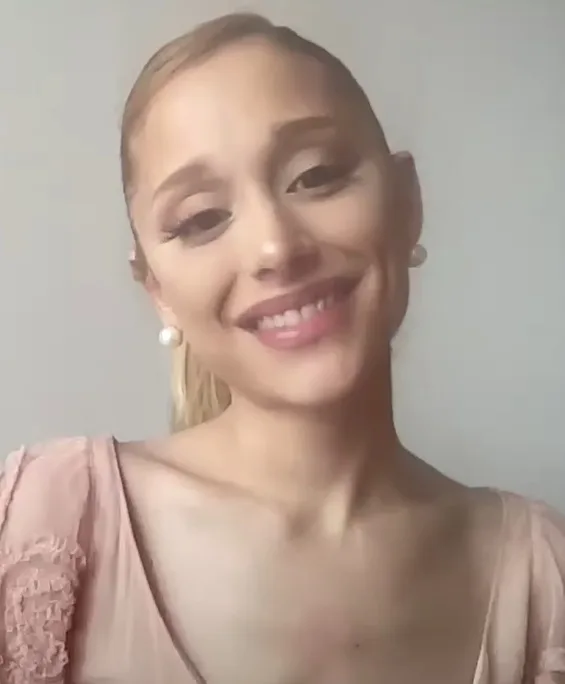
Ariana Grande is done with public life, at least for now, and honestly who could blame her. The 33-year-old singer announced Sunday that she will withdraw from public appearances after completing her Eternal Sunshine tour next month, citing "endless, ongoing public scrutiny" of her body as the reason. She is also out of the 2027 West End revival of Stephen Sondheim's Sunday in the Park with George at London's Barbican Centre, a production she had been set to headline alongside her Wicked co-star Jonathan Bailey.
What Her Team Actually Said
Grande's representative told People magazine that she "will be taking a step back from visibility" once the tour wraps. The full statement is worth reading closely: "She looks forward to finishing the tour and ending it on a high note, both healthily and happily, and then taking a much-deserved break from public-facing work and appearances, which has led to endless, ongoing public scrutiny."
The rep went further, explicitly pushing back on any suggestion that Grande's performances are suffering. "She performs a very physical show, and there is a lot of athleticism involved. She performs healthily and successfully at a very high level night after night." The language is careful, deliberate, and pretty clearly written for an audience that has been speculating loudly about her health for months.
The company behind Sunday in the Park with George, Empire Street Productions, confirmed to the BBC that the show will go ahead without her. Their statement was gracious and brief: "We know this cannot have been an easy decision, and she makes it with our complete understanding and support. We wish her nothing but the best."
What Triggered the Latest Wave
Grande released her new album, Petal, two days before this announcement, along with a music video for the title track. In it, she plays someone auditioning before a panel of men in an office, wearing black leggings, an off-the-shoulder top, and a scarf, described by Page Six as a "Grease-inspired" look. The internet did what the internet does.
Social media comments ranged from the bluntly concerned to the outright invasive. "She is extremely thin and it's concerning," read one widely shared comment. Another declared that her "bones are literally popping out." These are the kinds of observations that people post publicly about another human being as if she will never read them, or as if reading them would somehow be fine.
This has been building for years. Grande's physical appearance has been a recurring topic of online speculation since at least 2024, when she was doing press for Wicked. The Petal rollout simply poured gasoline on an already smoldering pile.
She Has Warned This Community Before
This is not the first time Grande has had to address her fans' fixation on her body. Back in November 2025, she reposted a 2024 interview to her Instagram Stories in which she emotionally addressed body commentary, warning followers that such remarks were "dangerous." She described how difficult it is to "protect yourself from that noise" when you are young and absorbing constant commentary about how you look.
She also made a broader point that stuck. According to Page Six, she said: "I think in today's society, there is a comfortability that we shouldn't have at all, commenting on others' looks, appearance, what they think is going on behind the scenes or health or how they present themselves." That was nine months ago. The scrutiny continued anyway. So now here we are.
What She's Walking Away From
The Sunday in the Park with George withdrawal is not a small thing professionally. Sondheim's 1984 musical is one of the most celebrated and demanding works in the American musical canon. The Barbican revival, set for 2027, would have been Grande's West End debut, paired with Bailey, who has become one of the most acclaimed British stage and screen actors of his generation.
She is giving that up. A performer who, by her own team's account, is currently pulling off a physically demanding arena tour eight while maintaining a high level night after night is walking away from what would have been a major career moment. The fact that she is choosing her own peace over that opportunity tells you something. Several things, actually.
The Internet's Problem, Not Hers
Let's be precise about what is happening here. A woman who has spent her entire adult life in public, since she was a teenager on a Nickelodeon set, is being driven partly out of public life by a relentless, collective commentary about whether her body looks acceptable to strangers. The people doing this largely believe they are expressing concern. Some of them probably are.
But there is a gap between genuine concern and the thousands of public posts dissecting a celebrity's frame in minute detail, measuring what is "popping out" and cataloguing what looks wrong. That is not care. That is consumption. Grande has been saying so for at least two years. The audience listened, nodded, and kept going.
The Dingo Take
You are supposed to believe this is complicated. That fans are just worried, that public figures accept scrutiny as part of the deal, that commenting on someone's visible health is different from ordinary body-shaming. It is not that complicated. A 33-year-old woman who has been famous since she was a child is stepping away from a dream professional role and retreating from public life because the sheer volume of people commenting on her body became intolerable. That is the outcome. That is what all the "concern" produced.
The cruelest part is the loop it creates. Grande posts promotional material for her own album and the story becomes about her appearance. She responds to the commentary and the story becomes about her response to commentary about her appearance. She announces she needs a break and the story, including this one, is still partly about her appearance. There is no move she can make that does not feed the machine. Stepping back is the only exit.
Sunday in the Park with George is a musical about an artist so consumed by his work that he loses everything around him. The lead character, George Seurat, cannot stop seeing the world as a canvas to be observed and arranged. It is, at its core, about what happens when observation becomes a substitute for actual human connection. The irony of Grande withdrawing from that specific production, for these specific reasons, is almost too on the nose. The audience never stopped staring. She just finally stopped performing for them.


Comments