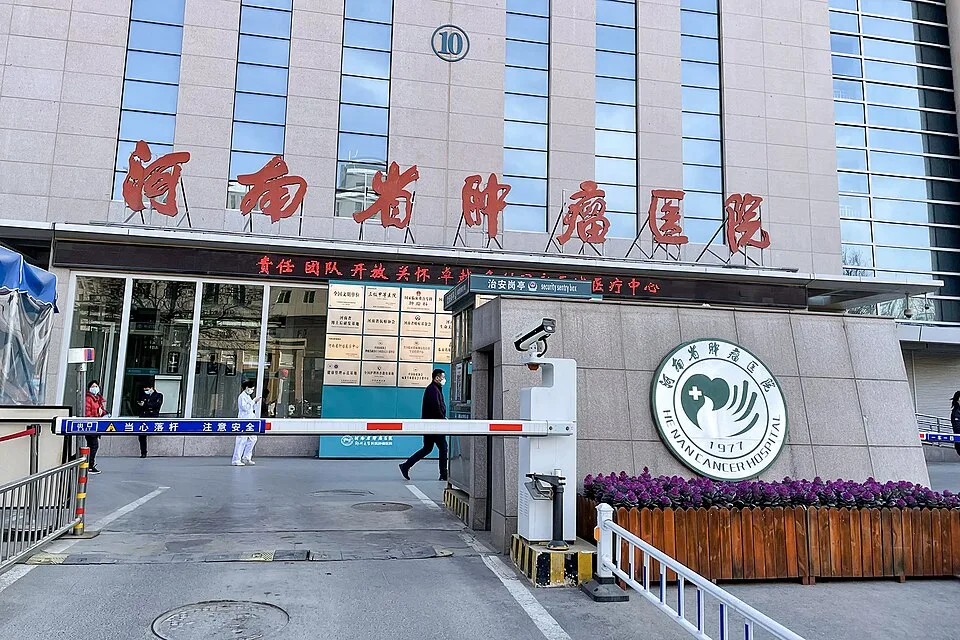
China might beat the United States to a cure for cancer. That sentence should stop you cold. According to a 12-page investigation by Evan Osnos in The New Yorker, America is not just falling behind in an abstract geopolitical sense — it is actively ceding the future, industry by industry, while the Trump administration hands Beijing exactly the opening it was waiting for.
The New Yorker Piece That Should Wake Everyone Up
Osnos's piece, titled 'The Future, Made in China,' is the kind of long-form reckoning that deserves to be read in full and probably won't be, because we live in a broken attention economy. So here is the short version: China spent decades building toward this moment, and America just rang the dinner bell.
As Axios summarizes the piece, 'For China, America's retreat comes just as decades of state investment, industrial policy, and diplomatic planning are paying off.' That is not spin. That is the compound interest on a very long bet, coming due right now.
The timing is not accidental. It is not bad luck. It is the predictable result of a set of deliberate policy choices made by an administration that treats expertise as a threat and long-term planning as something for suckers.
Trump's Policies Are Doing Beijing's Homework for It
The New Yorker's reporting identifies three specific levers the Trump administration has pulled that are directly accelerating China's advantage: trade policy, immigration policy, and budget cuts. Each one of these, in isolation, would be damaging. Together, they function as a gift basket delivered to Beijing with a bow on top.
Start with trade. The tariff wars that Trump has championed as a sign of American toughness have disrupted supply chains, rattled American manufacturers, and driven up costs for domestic producers who compete globally. China has spent that time deepening relationships with the countries Trump has alienated and locking up the raw materials the next century of industry will run on.
Immigration policy is doing its own damage. America built its technological edge, in no small part, on the backs of brilliant people who came here from everywhere including China, India, and Eastern Europe, got educated at American universities, and then built companies and labs and research programs that made this country the envy of the world. The Trump administration has spent years making that pipeline harder to access, more hostile to navigate, and frankly terrifying to attempt. Those people are not disappearing. They are going somewhere else. Sometimes that somewhere else is home.
Budget Cuts Are Gutting the Research That Keeps America Competitive
The budget piece is where things get genuinely grim. Federal investment in basic research — the kind of unglamorous, long-horizon science that doesn't produce a product tomorrow but produces the breakthroughs that reshape industries in twenty years — has been a target of the current administration's austerity drive.
This is not abstract. The cancer research angle that Osnos raises in the piece is the most visceral illustration of what is actually at stake. China is pouring state resources into biomedical research at exactly the moment the United States is cutting NIH funding, gutting federal science agencies, and treating public investment in research as ideologically suspect. You do not have to be a policy expert to understand what happens next. Whoever cures cancer first will not just save lives. They will own an industry.
And right now, according to The New Yorker's reporting, the United States is bringing a budget ax to a lab race.
America Was Napping. China Was Not.
Axios describes the situation with admirable bluntness: America has been 'napping or distracted by trivialities' while China races toward the future. That framing is charitable. A nap implies passivity. What the Trump administration has done is more active than that — it has made a series of choices, each one cheered by a political base that views international competition as a fake problem invented by elites.
China's strategy is not a secret. It has been published, announced, broadcast, and analyzed for years. The 'Made in China 2025' plan laid out the sectors Beijing intended to dominate. Artificial intelligence. Advanced manufacturing. Biotechnology. Clean energy. Semiconductors. The plan was public. The investment was real. The execution has been relentless.
What has America's response been? A trade war that hurt American farmers. Immigration crackdowns that emptied graduate programs. Science budget cuts that sent researchers overseas. And an administration that treats 'industrial policy' as a dirty phrase, even as China demonstrates what a country can accomplish when it treats industrial policy as a national religion.
This Is Not a Partisan Fantasy. Ask American Executives.
Osnos is a serious reporter, not a polemicist. His New Yorker piece includes the perspective of American executives who are watching this unfold from the front row. The Axios summary notes that business voices are part of the reckoning the piece presents, which matters because 'China bad' and 'American workers first' are easy slogans until the people actually running American companies start describing what they are seeing on the ground.
When American business leaders — not exactly a group known for reflexive left-wing politics — are the ones ringing the alarm about falling behind China, maybe it is time to stop treating this as a culture war talking point and start treating it as what it is: a concrete, measurable, economically consequential problem that is getting worse in real time.
The New Yorker piece is twelve pages. It reportedly unfurls a reality that is, in Axios's word, 'eye-opening.' Whether anyone in a position to do something about it will read it is a different question entirely.
The Dingo Take
You are supposed to believe that tariffs are strength, that cutting federal research budgets is fiscal responsibility, and that turning away foreign-born scientists and engineers is protecting American workers. China is betting that you believe exactly that. Every day you believe it is another day Beijing gains ground on cancer research, semiconductor manufacturing, artificial intelligence, and clean energy. These are not peripheral industries. They are the entire game.
The cruelest part of this story is that China's advantage is not primarily a product of Chinese genius or American laziness. It is a product of American policy choices, made deliberately, celebrated loudly, and now delivering results — just not for America. Trump's trade war, his immigration crackdowns, his budget cuts to science and research: Beijing could not have designed a better competitor-suppression strategy if it tried. And it did try. It just didn't have to, because we did it ourselves.
Osnos's piece runs twelve pages in The New Yorker. The cure for cancer could come from a lab in Shenzhen in ten years. Those two facts are related. Someone should probably care about that.





Comments