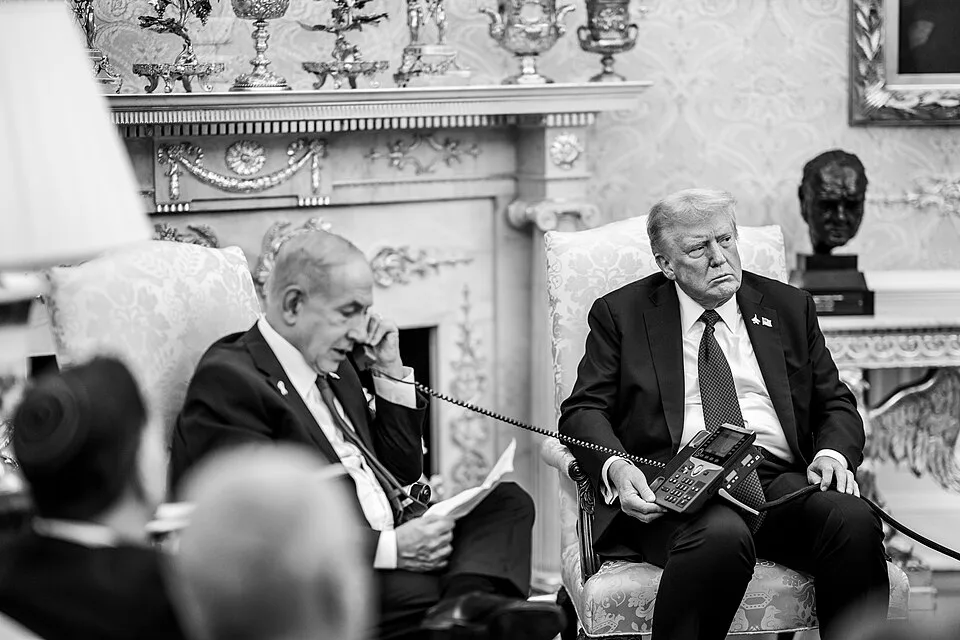
Donald Trump announced a landmark deal for Hamas to disarm. Israel, the country whose security the whole thing is supposedly designed to protect, promptly told the White House the deal won't work. We are, as they say, off to a great start.
Trump Announces the Deal. Israel Announces Its Problems With the Deal.
On Thursday, Trump took to social media to announce a major breakthrough: Hamas had agreed to disarm as part of a U.S.-brokered ceasefire framework, with the process unfolding in what he called 'carefully structured phases.' The announcement landed like a thunderclap. A historic turning point. Peace in our time, maybe.
By Sunday, Doron Spielman, spokesperson for Benjamin Netanyahu's office, was telling the Associated Press that Israel had shared 'serious security concerns' with the White House about the whole thing. Not minor quibbles. Not bureaucratic friction. Serious. Security. Concerns. About the deal the U.S. just told the world was done.
The White House, asked specifically about Israel's assessment that Hamas remains committed to rebuilding its military, did not provide additional comments. So we've got that going for us.
What Israel Is Actually Saying
Spielman didn't sugarcoat it. According to the AP, Israel's intelligence assessment is that Hamas remains committed to rebuilding its military rather than genuinely demilitarizing. The Israeli military, which currently controls more than 60% of Gaza's territory, will not withdraw before Hamas physically surrenders its weapons. No Israeli pullback, no process.
'Our assessment is that if we redeploy before Hamas is truly disarmed, it will quickly expand its presence throughout Gaza, rebuild its terrorist infrastructure, once again threaten Israeli communities, and seek to carry out another Oct. 7-style attack,' Spielman said. He was not subtle about the bottom line either: 'Disarming means physically giving up the weapons. Nothing less.'
That's a fairly direct contradiction of an agreement Trump announced to the world four days ago. The gap between the vibes of Thursday's announcement and the substance of Sunday's response is roughly the size of the Gaza Strip itself.
What the Deal Actually Says
A copy of the agreement obtained and verified by the AP lays out a phased process that, on paper, sounds comprehensive. Weapons held by Hamas-run police get transferred to a U.S.-backed Palestinian technocratic committee called the National Committee for the Administration of Gaza. Heavy weapons get decommissioned. Military production sites and tunnels get dismantled. Israeli forces withdraw in stages.
The catch, and it is a significant catch, is that almost none of this happens until the Palestinian committee actually arrives in Gaza, international forces deploy, and various other preconditions are met. The AP notes it is not clear when the committee would arrive since its arrival is itself contingent on other steps. So the whole thing is contingent on contingencies, which is a diplomatic way of saying the timeline is held together with hope and string.
Trump's 20-point ceasefire plan also envisions a new technocratic Palestinian government and the rebuilding of the battered enclave, where most of Gaza's 2 million Palestinians are currently living in tent camps and destroyed neighborhoods after Israel's nearly three-year military offensive.
The Background That Makes This Even More Complicated
Let's put some numbers on the table. Hamas-led militants attacked Israel on October 7, 2023, killing around 1,200 people, mostly civilians, and taking 251 hostage. Israel's military response has killed more than 73,000 people, according to the Gaza Health Ministry. The ministry, which the AP notes maintains detailed records viewed as generally reliable by United Nations agencies, says women and children make up around half of all fatalities. Israeli strikes overnight into Sunday alone killed at least 17 people, including children.
Meanwhile, Israeli politics are doing what Israeli politics do. Netanyahu faces a tough reelection battle ahead of October elections, with far-right coalition partners demanding he maintain military pressure and keep forces in Gaza. The AP reports that Israel appears unlikely to pull back significant forces or make major concessions before those elections. Which, if you're trying to broker a phased withdrawal deal, is a somewhat inconvenient variable.
Two people with knowledge of the deal told the AP that among the points Israel raised with Tony Blair, who is part of Trump's so-called Board of Peace, was Israel's desire to retain the freedom to conduct military operations in Gaza. Israel also reportedly wants Qatar and Turkey excluded from verifying the agreement's stages. These are not small asks.
Hamas Has Its Own Version of Events
Hamas officials, for their part, have cast doubt on Trump's framing that a disarmament deal has actually been reached. So to recap: Trump announced a deal, Israel said it has serious problems with the deal, Hamas questioned whether the deal exists in the form Trump described, and the White House declined to comment on any of it over the weekend.
U.S. officials told reporters last week that Israel had been consulted at every step of the negotiations and was not being asked to do anything beyond what it had already committed to in the ceasefire agreement signed last October. Israel's public response to that characterization has been, essentially, to disagree loudly through a spokesperson in a statement to the Associated Press.
Hamas disarming has been the central sticking point deadlocking negotiations for months. The fact that it remains the central sticking point after Trump announced it was resolved suggests something has been lost in translation somewhere along the way.
The Dingo Take
Trump announced a done deal. It is not a done deal. This is not a small distinction. When the country whose security architecture the entire agreement is built around responds to your announcement of a breakthrough by issuing a formal list of 'serious security concerns' to your White House, the breakthrough has not broken through. It has stalled in the driveway.
What's actually happening here follows a familiar pattern: Trump wants an announcement, and announcements he gets, polished and posted to social media before the details are anywhere close to settled. The problem is that the Israeli-Palestinian conflict does not care about Trump's posting schedule. The people living in tent camps in Gaza do not care about the framing. And the 73,000 dead do not care that the deal was announced in 'carefully structured phases.'
Israel has an election in October. Netanyahu has a coalition that needs Hamas kept in villain status. Hamas has no incentive to hand over weapons to a committee that doesn't exist yet in a process they're already disputing publicly. And the White House won't comment. Everyone in this story is playing a different game, and the people paying the price for that aren't in any of the negotiating rooms.




Comments