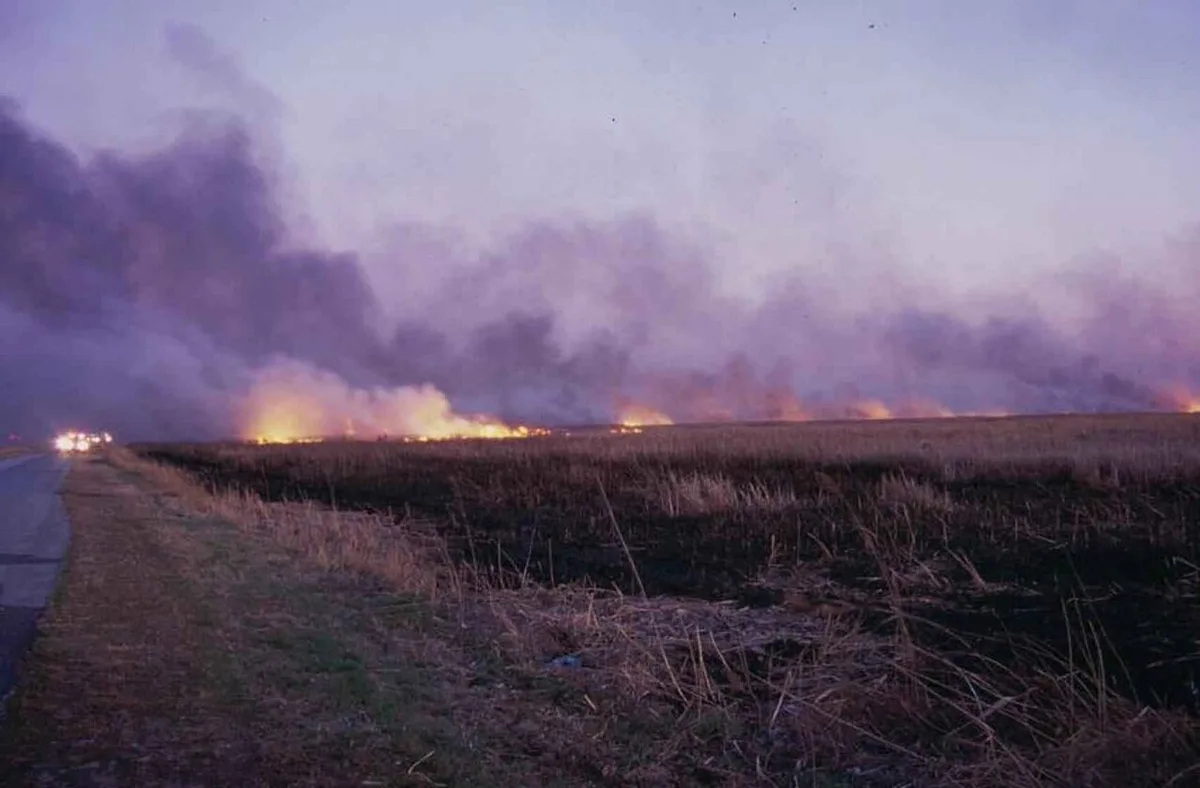
Three wildfires are tearing through Spokane, Washington right now, and the numbers are staggering in the worst possible way. More than 7,000 acres burned. Roughly 600 homes gone. About 60,000 people told to get out. This is not a distant rural fire story — this is happening inside the second-largest city in Washington state.
Three Fires, One City, Zero Good Options
The Old Trails Fire, the Autumn Lane Fire, and the Fairview Fire are all burning simultaneously in and around Spokane, a city of more than 230,000 people. According to NPR, the three fires together have scorched more than 7,000 acres as of early August.
Think about what that actually means on the ground. These are not fires burning in some remote stretch of forest where the primary concern is timber. They are burning through neighborhoods. Through streets with names like W. Tiffany Ave. and N. Victor St. Through the Balboa neighborhood, where AFP photographers captured burned cars still smoldering in front of the charred shells of houses.
Spokane firefighters have been working around the clock. Photos from the scene show exhausted members of the Spokane Fire Department sitting on curbs in front of homes that no longer exist. That image does not need editorial comment. It is already saying everything.
600 Homes. Gone.
NPR reports approximately 600 homes have been destroyed. Six hundred. That is not a statistic to skim past. Each one of those structures was someone's everything — their mortgage, their kids' bedrooms, their dog's favorite spot on the couch.
The human reality is already surfacing in the reporting. AP photographer Young Kwak captured Dan Munson and his wife Suzi standing in the backyard of their burned home on W. Tiffany Ave., just looking at it. What do you even say in that moment? Another photo shows Chris Mutton, whose house burned, talking with a neighbor in the street. Regular people standing in the wreckage of their regular lives.
Around 60,000 people have been evacuated, NPR reports. One of those photos shows Andrew Rowley watching the Old Trails Fire from the Dwight Merkel Sports Complex after being forced out of his home. Watching your neighborhood burn from a sports complex parking lot is a sentence that should not exist in 2026, and yet here we are.
This Is Not a Fringe Location
Spokane is not a tiny rural outpost. It has over 230,000 residents. It is Washington's second-largest city. It has a downtown, universities, hospitals, a whole functioning metropolitan infrastructure. And right now it has three simultaneous wildfires chewing through its residential neighborhoods.
The scale of what is happening here does not fit neatly into the mental image most people have of a wildfire. The Camp Fire that destroyed Paradise, California in 2018 permanently rewired how the country thinks about fire and urban communities. That was 85 people dead and nearly 19,000 structures gone. Spokane is not there yet, but the trajectory of these events is a familiar and devastating one, and the early numbers are already brutal.
What We Know and What We Don't
As of NPR's August 3rd reporting, the fires were still active. The full scope of the damage, including casualty figures and containment percentages, was still developing. What was already confirmed: three named fires, more than 7,000 acres burned, roughly 600 homes destroyed, and 60,000 residents evacuated from Washington's second-largest city.
We do not yet know what sparked these fires, though August heat and dry conditions across the Pacific Northwest have set up exactly the kind of environment where ignition sources, natural or otherwise, get catastrophic fast. What we do know is that the images coming out of the Balboa neighborhood look like a war zone, and nobody is using that description as hyperbole.
The Dingo Take
Six hundred homes. Sixty thousand evacuees. Three simultaneous fires inside an actual city. At some point the phrase "unprecedented" stops being adequate and starts being an insult to the people watching their neighborhood turn to ash.
We are watching the consequences of decades of decisions stack up in real time. Hotter summers, drier conditions, urban sprawl pushing deeper into fire-prone terrain — none of this is a surprise to anyone who has been paying attention. Scientists have been saying exactly this would happen for years. What they could not predict was the precise week a city like Spokane would wake up surrounded by three fires at once, or the exact names of the families who would be left standing in their backyards staring at cinders.
There will be time for the political argument about climate, forest management, housing policy, and emergency preparedness. That argument is necessary and it should be loud. But right now, 60,000 people are displaced, hundreds of families have nowhere to go home to, and exhausted firefighters are sitting on curbs in front of rubble. If you can help, find a reputable organization serving Spokane and do it.


Comments