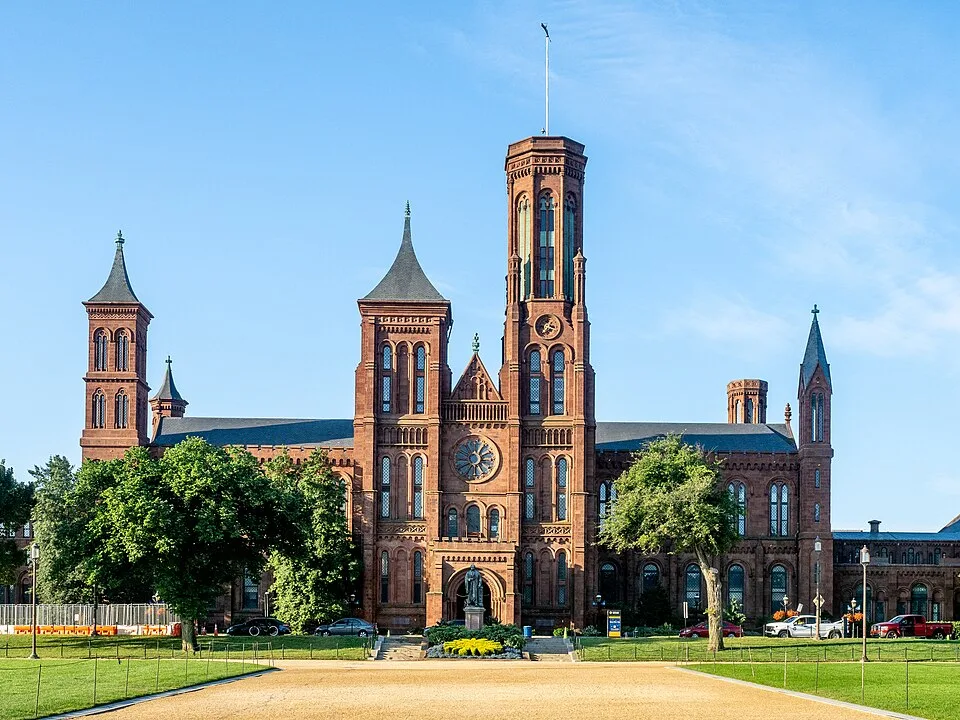
The Trump White House has spent sixteen months — sixteen — investigating the Smithsonian Institution for the crime of presenting American history in a way that doesn't make the administration feel good about itself. According to Fox News, the effort involved document demands, curator interrogations, on-site walkthroughs of museum galleries, and ultimately produced a 162-page report recommending that the nation's largest museum complex be restructured to better "celebrate American exceptionalism." Your tax dollars, hard at work policing the vibes at the natural history museum.
What the Smithsonian Actually Is (Before We Talk About Torching It)
Quick background, because context matters. The Smithsonian Institution runs 21 museums, maintains the National Zoo, and holds custody of nearly 157 million objects and specimens. It receives more than $1 billion annually in federal funding, on top of private donations. It is, by any reasonable measure, one of the great public institutions on the planet.
It is also, apparently, a nest of ideological subversion that required a multi-agency White House investigation, multiple formal letters threatening its leadership, and the personal attention of the Vice President of the United States. JD Vance, who sits on the Smithsonian's Board of Regents, was specifically tasked by Trump's executive order with helping oversee the review. This is what he has been doing with his time.
The institution's secretary, Lonnie Bunch, has been on the receiving end of this pressure campaign for over a year. Bunch, who founded the National Museum of African American History and Culture, has become the face of what the administration frames as institutional resistance. The White House frames it as a failure to cooperate. Bunch has a different read, presumably.
It Started With an Executive Order Called 'Restoring Truth and Sanity'
On March 27, 2025, two months into his second term, Trump signed an executive order titled "Restoring Truth and Sanity to American History." That title alone tells you everything. The premise baked into the document is that American history, as currently presented by federally funded institutions, is neither truthful nor sane. The solution, naturally, is more patriotism.
The order directed the White House Domestic Policy Council to review Smithsonian exhibits and programs. Fox News reports that investigators focused heavily on the National Museum of American History, combing through exhibits, educational materials, strategic plans, leadership speeches, and public statements. They were looking for evidence that the museum was prioritizing what the administration calls "divisive ideological narratives" over what it calls a "patriotic telling" of American history.
Those two phrases are doing a lot of work here. "Patriotic telling" is not a historical methodology. It is a preference for stories that feel good over stories that are complete. Historians have a word for this. It's called propaganda.
The Smithsonian Didn't Do Enough for Flag Day, Apparently
Things escalated quickly. By August 2025, the White House formally put Smithsonian Secretary Lonnie Bunch on notice with a letter directing him to hand over exhibition plans, educational materials, internal policies, and other records. Fox News reports that the letter outlined a review of eight Smithsonian museums, with instructions for each to start revising public-facing content within 120 days. The museums were told their exhibits needed to "celebrate American exceptionalism" and strip out what the administration called divisive material.
By late 2025, the White House had added a new grievance to its list: the Smithsonian had held no special Independence Day programming in 2025 despite being open on July 4. It had also, the administration noted with apparent horror, discontinued its traditional Flag Day ceremonies. The administration was also unhappy with how the Smithsonian was planning exhibits for America's 250th anniversary, arguing the planned installations emphasized the country's flaws while giving short shrift to the Founders and the Declaration of Independence.
Let that sink in. Senior White House officials were in meetings, discussing Flag Day ceremony cancellations at a museum. This is the executive branch. This is what it is doing.
The Smithsonian Didn't Hand Over Its Files. The White House Got Annoyed.
By December 18, 2025, the relationship had curdled completely. Fox News reports that the White House sent Bunch another letter informing him that the Smithsonian had failed to produce most of the requested records, including exhibition plans, curatorial documents, and governance materials. The administration set a new deadline of January 13, 2026, and reminded the institution that federal funding must be used in a way consistent with Trump's executive order.
That last line is the threat behind the whole operation. The Smithsonian receives over a billion dollars a year from the federal government. The implication in every letter, every deadline, every walkthrough is the same: comply, or that money becomes a conversation.
Early 2026 brought the on-site phase. White House investigators physically walked through Smithsonian galleries, reviewed digital content, examined internal planning documents, and interviewed museum staff. Fox News reports that investigators identified exhibits they argued emphasized restorative history, decolonization, immigration activism, DEI initiatives, and social justice, while claiming the institution was downplaying America's founding achievements. A 162-page report followed, recommending sweeping reforms and announcing new executive actions.
A 162-Page Document About Museum Vibes
The report is the culmination of sixteen months of investigative work by the White House Domestic Policy Council. One hundred and sixty-two pages. About a museum. About whether the signage next to historical artifacts strikes the correct emotional tone toward the United States of America.
The Smithsonian holds 157 million objects. It runs the zoo where kids go to see pandas. It is also now subject to a formal federal reform process because some exhibits apparently made White House officials feel that America was being criticized. This is the government we have built.
For context: the 9/11 Commission Report, which investigated the largest terrorist attack in American history and produced a comprehensive restructuring of the entire U.S. intelligence community, ran 585 pages. The White House report on Smithsonian exhibit tone is 162 pages. These numbers are not a joke. They are just the numbers.
The Dingo Take
You are supposed to believe this is about history. It is not about history. It is about control over which stories get told inside buildings that the federal government funds, and what emotional conclusions visitors are permitted to draw from those stories. The Smithsonian does not manufacture history. It holds it. The bones are real. The documents are real. The artifacts from periods of American life that were not uniformly glorious are real. What the Trump administration is asking, through sixteen months of pressure and a 162-page report, is that the presentation of those real things be adjusted until they produce the correct feelings.
This is also, it bears saying out loud, a staggering waste of institutional energy at a moment when the executive branch has approximately ten thousand actual crises it could be addressing. White House investigators walked the halls of the National Museum of American History looking for insufficiently patriotic signage. Senior officials wrote formal letters complaining that the museum skipped Flag Day. The Vice President of the United States was formally tasked with overseeing this effort. Whatever you think about the Smithsonian's programming choices, you should find the deployment of federal investigative resources for this purpose at least slightly alarming.
The endgame here is not better history. It's history that doesn't make certain people uncomfortable. And the specific people it's designed not to make uncomfortable are the ones currently controlling a billion dollars a year in Smithsonian funding. That's not a cultural debate. That's leverage. Call it what it is.



Comments