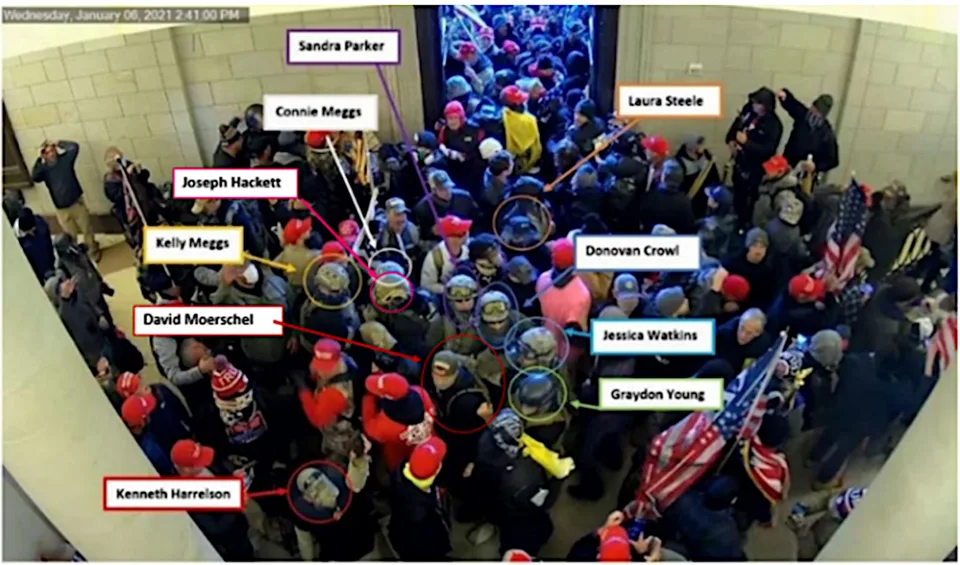
A federal judge just wiped out the seditious conspiracy convictions of Stewart Rhodes and eight other Oath Keepers who stormed the Capitol on January 6, 2021 — not because they didn't do it, but because the Justice Department asked him to. Judge Amit Mehta did it. He hated doing it. He said so, in writing, on the way out the door.
What Actually Just Happened
US District Judge Amit Mehta, based in Washington, granted the Department of Justice's motion to dismiss the remaining January 6 cases against Oath Keepers militia members, according to a court filing reported by The Guardian. That means the seditious conspiracy convictions of founder Stewart Rhodes and eight others are now gone. Vacated. As if they never existed.
These were not minor charges. Seditious conspiracy is about as serious as American criminal law gets short of treason. Rhodes and his co-defendants were convicted of plotting to stop the lawful transfer of presidential power after Donald Trump lost the 2020 election. A jury looked at the evidence, heard the arguments, and said: yes, these people tried to overthrow the government. That verdict is now in the trash.
The Pardons Already Happened. This Is the Cleanup.
To be clear about the timeline: all nine defendants were already out of prison before Tuesday's ruling. Trump issued sweeping pardons covering nearly all 1,600 people charged in connection with January 6, and commuted the sentences of those who weren't fully pardoned. The Guardian confirmed that the Oath Keepers were among those freed.
So why bother dismissing the cases at all? Because a pardon doesn't erase the conviction itself. It just says the government won't punish you for it anymore. The DOJ's motion, and now Mehta's ruling, goes one step further. It wipes the legal record. It says, officially, that these men were not convicted of seditious conspiracy. It is the paper-shredding phase of the operation.
The Judge Had Something to Say About That
Mehta did not go quietly. His ruling, as reported by The Guardian, included a statement that will be quoted in history books, assuming history books survive the next few years. "Today's epilogue diminishes the gravity of that day, denigrates the work of the prosecutors and law enforcement officers who secured these convictions, and excuses criminal acts that caused a centuries-long pillar of our democracy — the peaceful transfer of presidential power — to buckle."
Then, five words that land like a verdict of their own: "The court cannot write a different ending."
Read that again. A sitting federal judge, appointed to interpret and apply the law, just told the public that he was being compelled to do something that damages democracy, and that he had no legal power to stop it. That is not a routine judicial opinion. That is a judge screaming into the void while being forced to sign the document anyway.
Who Is Stewart Rhodes, and Why Does This Matter
Stewart Rhodes founded the Oath Keepers, a militia group that recruits heavily from military veterans and law enforcement. He was at the Capitol on January 6 and coordinated members who entered the building in military-style "stack" formations. Prosecutors argued he had planned for violent resistance to the transfer of power well before that day. A jury convicted him of seditious conspiracy in November 2022, and he was sentenced to 18 years in prison, the longest sentence handed down to any January 6 defendant.
Eighteen years. Gone. Conviction vacated. Man is free.
This is not a case where new evidence emerged. No witness recanted. No prosecutorial misconduct was uncovered. The government that won the conviction simply became a different government, one that considers what Rhodes did on January 6 either acceptable or praiseworthy, and acted accordingly.
The Broader Picture Is Worse Than You Think
Rhodes is one of nine Oath Keepers defendants whose cases were dismissed Tuesday. But zoom out and the scale of what has happened since Trump returned to office is staggering. Nearly 1,600 people were charged for their roles in the January 6 attack. Trump pardoned almost all of them. The DOJ is now systematically asking courts to formally close out the remaining legal proceedings.
What this means in practice: the federal government has officially decided that an organized, armed attempt to prevent Congress from certifying a presidential election result did not warrant punishment. Not for the planners. Not for the people who beat police officers with flagpoles. Not for the man who was convicted of seditious conspiracy and sentenced to nearly two decades behind bars. Nobody. The slate is clean.
The Dingo Take
You are supposed to look at this and think it's a legal technicality. A paperwork thing. The guys were already pardoned, so what's the big deal about the convictions being vacated too? Here's the big deal: a conviction is a statement of fact, arrived at by a jury of citizens after a formal process designed over centuries to determine what actually happened. Erasing it is not a legal technicality. It is the government officially rewriting what occurred on January 6, 2021.
Judge Mehta knew exactly what he was doing and said so. He did not hide behind procedural language or neutral judicial phrasing. He called it an epilogue that diminishes the gravity of that day. He said it excuses criminal acts. He said a pillar of democracy buckled. And then he signed the dismissal order because the law gave him no choice. That is the part that should keep you up at night: the system worked exactly as designed, and this is the result.
Stewart Rhodes plotted to stop the peaceful transfer of power. A jury of his peers said so. He went to prison. Then the man whose transfer of power he tried to stop got re-elected, pardoned him, had his Justice Department ask the courts to erase the conviction, and a judge — furious, on the record, for history — had to comply. If you are looking for a single image that captures what has happened to American democratic accountability since January 2025, this is probably it. A judge saying the court cannot write a different ending, while being forced to write the ending someone else chose.

Comments