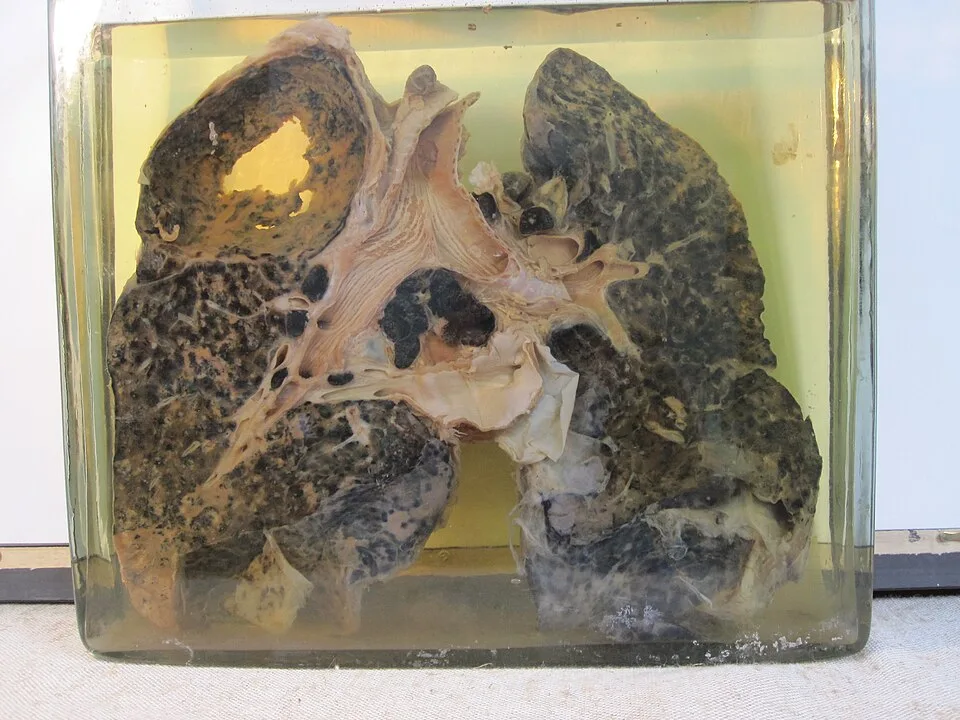
One in three veteran underground coal miners in central Appalachia now has black lung disease. That is the worst rate since 1978. And the federal agency tasked with protecting those miners couldn't even be bothered to answer questions about it.
The Numbers Are Staggering. Literally.
New peer-reviewed data published Wednesday in the American Journal of Respiratory and Critical Care Medicine shows that 32.5% of working veteran underground coal miners in Kentucky, Virginia, and West Virginia — men with at least 25 years underground — tested positive for coal workers' pneumoconiosis, better known as black lung disease. According to NPR, which obtained a draft of the research letter before publication alongside Kentucky Public Radio and Public Health Watch, that rate has not been this high since 1978.
To put that in context: in 1999, the prevalence of the disease had fallen to just 7%. Fifty years of supposed progress. Gone. The new rate represents a fourfold increase from that low point, and a sharp jump even from 2018, when the National Institute for Occupational Safety and Health last reported a rate of 20.6%.
The research letter also found that miners with as few as 15 years underground are showing rates of disease not seen in nearly 40 years. This is not a crisis creeping up on us. It has already arrived, and it has been building for a long time.
What Black Lung Actually Does to a Person
Black lung is incurable. It is fatal. It is caused by breathing in coal mine dust and silica dust, and it destroys lung tissue until there is nothing left that works. NPR reports that more than 1,700 coal miners died from black lung between 2020 and 2023 alone, according to an earlier NIOSH study.
Respiratory therapist Marcy Freeman works at a pulmonary rehabilitation clinic in Norton, Virginia. She has kept a stack of more than 150 funeral programs, every one of them for a former patient. "These are husbands. These are brothers," she told NPR. "These men were just hardworking men, and the only thing they did was go to work and provide for their families. And it cost them everything."
Tim Balthis, a miner from Pound, Virginia, looks healthy sitting on his porch. His lungs tell a different story. According to NPR, a scan showed so much fibrotic tissue that a doctor told Balthis he was surprised he was still alive. This is what the numbers actually mean, behind the percentages and the policy debates.
The Scientists Are Not Being Subtle About Their Anger
Scott Laney, the NIOSH research epidemiologist who led the study, did not mince words when NPR asked him about the findings. "I'm disgusted," he said. "This is not going to get better because of all the disease that's already in the pipeline. These guys are being treated like disposable widgets, not human beings. We're watching them die right before our eyes."
Celeste Monforton, a former federal mine-safety regulator and workplace-safety academic, was equally blunt. The findings, she told NPR, "should stagger and shock anyone who has compassion for hardworking people." She added: "This is the consequence of their work and the consequence of us wanting cheap electricity. We're back where we were nearly 50 years ago."
These are not fringe critics. Laney is the lead author of a peer-reviewed letter published in a major medical journal. Monforton spent years inside the regulatory apparatus. When the people who built the safety systems are calling them a failure, that is news.
The Agency That Refused to Comment
Here is where it gets worse. NPR reports that Kentucky Public Radio and its reporting partners provided the federal Mine Safety and Health Administration, or MSHA, a summary of the NIOSH findings before publication. MSHA's response? The agency declined to comment or answer questions until it had seen the published report itself.
The agency responsible for protecting the men dying in these numbers could not be reached for comment on data showing those men are dying at a 50-year high rate. There is a word for that. Several words, actually, most of them unprintable.
Meanwhile, NIOSH used a sample of 280 working veteran underground miners screened over the past five years to estimate the regional rate, with 91 testing positive. Akshay Sood, a clinical and research pulmonologist at the University of New Mexico School of Medicine who reviewed the draft letter at the request of NPR and its reporting partners, told NPR the methodology is valid and that the study "reinforces prior observations that disease prevalence continues to increase despite modern dust-control regulations."
Fifty Years of Supposed Progress, Reversed
Congress passed strict limits on exposure to coal mine dust in 1977, the year before the rate was last this high. The rate fell steadily for two decades. Then it started climbing again, driven largely by miners cutting through thinner coal seams into the silica-heavy rock surrounding them, generating a more toxic dust that destroys lung tissue faster than coal dust alone.
NPR has been covering this crisis for years. New federal safety rules on silica dust were proposed, debated, and partially implemented. But the NIOSH data published this week shows those rules, whatever progress they represent on paper, have not stopped the disease from accelerating. Thousands of new cases have been diagnosed by black lung clinics in the last decade alone, according to the NIOSH letter.
The current administration has shown no particular enthusiasm for strengthening worker protections in extractive industries. Quite the opposite. DOGE's slash-and-burn approach to federal agencies has targeted the regulatory bodies that are supposed to enforce exactly this kind of protection, while the White House has framed coal as a patriotic energy source worth reviving. You can see where this is heading.
The Dingo Take
You are supposed to believe that America takes care of its workers. That we have OSHA and MSHA and NIOSH and a whole alphabet of agencies precisely so that men who spend their lives underground producing energy for this country do not die slowly of a disease their employer knew they were at risk of contracting. One in three. That is the number. One in three veteran coal miners in central Appalachia. Tested positive. For a disease that is incurable and fatal. At the highest rate since before Jimmy Carter was president.
And the agency responsible for mine safety, when handed the findings before publication and asked to respond, said no thanks, we'll wait. That is not bureaucratic caution. That is an agency that has already decided what matters and what doesn't, and underground coal miners with disintegrating lungs didn't make the cut. Meanwhile, the political movement currently in charge of the federal government has spent years wrapping itself in the imagery of the coal miner as the embodiment of hardworking America, the forgotten man the coastal elites abandoned. The forgotten man is now dying at a 50-year record rate. Where's the outrage?
Marcy Freeman has 150 funeral programs in a stack on her desk. Scott Laney, a federal researcher whose entire career is dedicated to keeping workers alive, says he is disgusted. These are not activists with an agenda. These are the people inside the system watching it fail in real time. The disease is in the pipeline, as Laney put it, which means the men already exposed will keep getting sick regardless of what happens next. But what happens next will determine how many more programs end up in that stack.





Comments