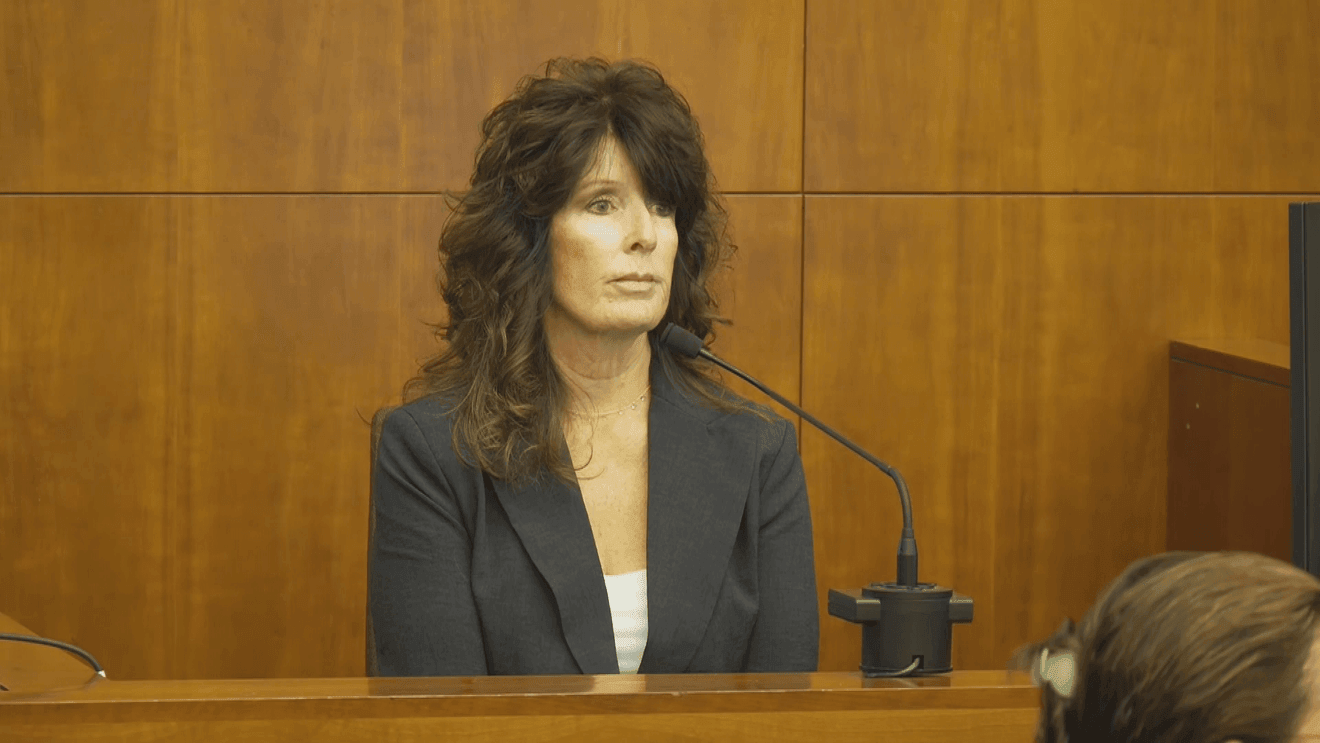
Nineteen days after being discharged from a psychiatric hospital — where she had told a doctor she was hearing a man's voice commanding her to kill her children so she could kill herself — Lindsay Clancy strangled her three kids. Now a jury is being asked to decide whether that is a crime or a catastrophic medical failure. On Wednesday, a forensic toxicologist, the family's nanny, and Clancy's own diary entries all took the stand in different ways, and none of it was easy to hear.
What Was in Her Blood
Justin Brower, a forensic toxicologist with NMS Laboratories, testified Wednesday about the four psychiatric medications found in Clancy's blood after she allegedly strangled her children and jumped from a window in a suicide attempt. According to The Guardian, those drugs were mirtazapine, lamotrigine, trazodone, and quetiapine — an antidepressant, a mood stabilizer, another antidepressant, and an antipsychotic used to treat schizophrenia and bipolar disorder.
Of the four, Brower said only quetiapine appeared slightly elevated above her prescribed dose. But he was careful to put that in context. It was not, he testified, at a "toxic concentration" or a "suicidal concentration." He described how people who actually attempt to overdose typically take "handfuls of pills," and said what he found in Clancy's system was "not consistent with that."
Under questioning from the defense, Brower acknowledged that the toxicology results "don't tell the entire story." Which, in a trial about postpartum psychosis, is doing a lot of work as an understatement.
A Revolving Door of Prescriptions
The medication picture here is not a simple one. In the three months before the January 2023 killings, The Guardian reports that clinicians cycled Clancy through a shifting lineup of antidepressants, sleep aids, an antipsychotic, and other drugs — all while she reported worsening insomnia, anxiety, confusion about what was real, and deepening despair. A civil lawsuit filed against her caregivers argues they should have recognized that both Clancy and her children were in danger.
Her defense attorneys argue this pharmaceutical whack-a-mole was part of what pushed her over the edge. She had undiagnosed bipolar disorder, they say, and was suffering from postpartum psychosis — a severe, acute condition distinct from the far more commonly known postpartum depression. The trial, The Guardian notes, has exposed significant gaps in how the medical system diagnoses and treats both.
What makes this particularly damning for the caregivers named in that civil suit is the timeline. Clancy told a psychiatrist she was hearing a voice telling her to kill her children. She was discharged anyway. Nineteen days later, her children were dead.
The Journals
The diary entries entered into evidence earlier this week are brutal to read. On November 18, 2022, Clancy wrote: "I'm so desperate to get a mental break from taking care of everyone that my mind is trying to find something physically wrong with me." In another entry, she wrote that she had "crazy brain fog" and lived "moment to moment waiting for the next nap time."
She wrote about her terror over her infant son Callan's sleep schedule, about her inability to breastfeed, about returning to work as a labor and delivery nurse while feeling completely disconnected from her family. She wrote that listening to Callan cry for over an hour "just about killed me" and that she had told her husband Patrick, "I want to die."
And then, with the clarity of someone who knew exactly what was wrong and was not getting the help she needed: "I want help. I want to be well." The fact that she wrote that, clearly and plainly, months before the killings, is going to haunt this trial.
The Nanny, the Husband, and the 911 Call
The family's nanny, Elaine Rossi, took the stand Wednesday and was asked whether she ever had concerns about how Clancy cared for her children. Her answer, per The Guardian: "Not at all. She was a wonderful mom. I observed a wonderful mom who loved her kids." That is the defense's entire case in one sentence, and it landed exactly as intended.
Patrick Clancy, Clancy's ex-husband, has already testified and has said publicly that he forgives Lindsay and believes the killings were driven entirely by her mental illness. He described coming home to find the house quiet, their bedroom door locked, and then breaking through it to find blood everywhere and an open window. His wife was on the ground below. She had jumped. He asked where the children were. She told him they were in the basement.
The jury heard the 911 call Patrick made that night. Several jurors, The Guardian reports, were visibly holding back tears. The defendant is now paralyzed from her fall. When she woke up in the hospital and a forensic psychologist asked how she felt, she said: "Horrified."
What She's Actually Charged With and What Could Happen
Clancy is charged with three counts of murder. If convicted, she faces life in prison without the possibility of parole. The prosecution's position is that she acted intentionally. Full stop.
The defense is pursuing a not-guilty verdict by reason of lack of criminal responsibility, which in Massachusetts would likely result in placement in a state psychiatric facility rather than prison. That is the narrow path her attorneys are walking: not that she didn't do it, but that she was so profoundly ill that she had no meaningful ability to control her actions.
Dr. Jhilam Biswas of Brigham and Women's Hospital testified that when Clancy regained consciousness after her fall, one of the first things she asked was whether she could have visitors and where her family was. Make of that what you will.
The Dingo Take
A woman tells her psychiatrist she is hearing a voice commanding her to kill her children. The psychiatrist discharges her. Nineteen days later, three children are dead. Whatever you believe about Lindsay Clancy's criminal culpability, that sequence of events is a systemic failure so complete and so catastrophic that the criminal trial feels, in some ways, like it's prosecuting the wrong defendant.
That is not a get-out-of-jail-free argument. Postpartum psychosis is real, severe, and wildly under-recognized, but "the system failed her" and "she should face no consequences" are not the same sentence. The jury has to decide whether she had meaningful criminal responsibility for what she did. That is the question in front of them, and it is a genuinely hard one. But the caregivers who discharged a woman hearing homicidal voices and then watched from a distance as her mental state continued to collapse — those people are answering for their conduct in civil court, and they should be.
What is almost impossible to sit with is the picture that keeps emerging from these diary entries and from the nanny's testimony and from Patrick Clancy's forgiveness: a woman who desperately wanted to be well, who loved her children, who asked for help repeatedly and in writing, and who was failed at every single turn until the worst possible outcome happened. There is no verdict in this case that fixes any of that.





Comments