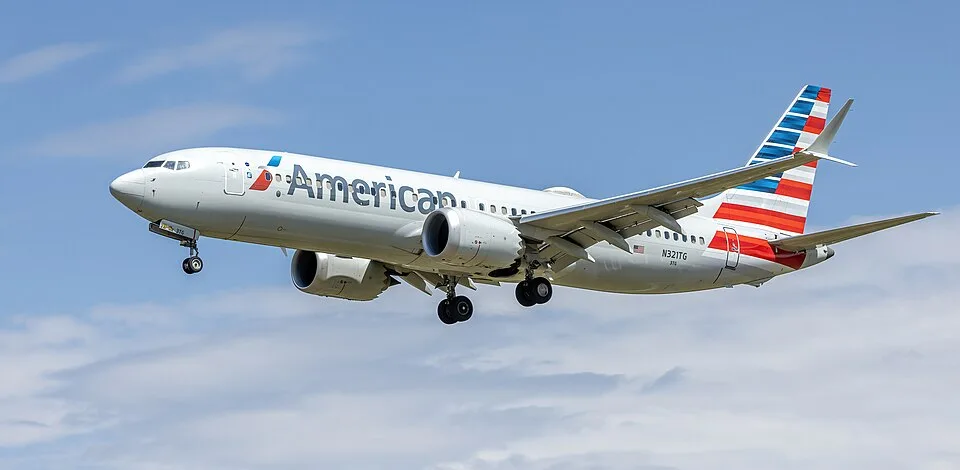
Boeing's latest gift to the flying public: cracks. Specifically, cracks in the structural reinforcement around the forward service door of some of its planes, which is exactly the kind of sentence that makes you want to drive everywhere forever. The FAA has now ordered mandatory inspections of 471 U.S. planes and 1,429 aircraft worldwide, covering certain 737 Max 8, 737 Max 9, and 737-8200 models.
What's Actually Cracking
According to CBS News, the FAA issued an airworthiness directive Thursday ordering fuselage inspections after cracks turned up in a component called the "bear strap," which reinforces the area around doorways and emergency exits on older generation Boeing 737 planes. The stress of repeated takeoffs and landings, over time, can cause cracking near door corners. This is, to use the technical term, bad.
No cracks have been found in the 737 Max fleet specifically. The FAA's order is preemptive, setting a mandatory inspection timeline to catch any cracks before they develop into something catastrophic. That is how safety regulation is supposed to work, and credit where it's due: this is the agency doing its job.
The directive covers specific older-model 737 Max variants. If you fly frequently on Southwest or United, which together operate enormous fleets of Boeing 737s, there is a reasonable chance you have been on one of the planes now subject to this order.
Boeing Knew About This in 2019
Here is the part that deserves a second read. In a statement provided to CBS News, Boeing acknowledged it first notified operators of its 737 Next Generation planes about this cracking issue back in 2019, when it provided "detailed instructions for conducting the recommended inspections." That was seven years ago.
Boeing says it extended those inspections to the 737 Max fleet in 2024, because the Max shares a "similar design and build process" with the Next Generation model. So the company identified a structural cracking issue in one aircraft family, recognized that a related aircraft family shared the same design, and took five years to formally extend the inspection guidance. Boeing would like you to know it is also currently "conducting analysis to determine the root cause of the cracks." In 2026. For a problem it first flagged in 2019.
The company says it is working to prevent similar issues in future aircraft, which is comforting if you plan to fly primarily on planes that do not exist yet.
The Airlines Are Calm, Which Is Either Reassuring or Not
Southwest Airlines told CBS News it is "reviewing" the FAA directive and will complete inspections "according to the schedule specified by the FAA." That is a very airline way of saying they will do the minimum required by law on the timeline the government sets, which is honestly all you can ask for.
United Airlines was slightly more detailed. A spokesperson told CBS News the airline does not anticipate near-term operational disruption and plans to handle inspections during scheduled heavy maintenance visits, adding that its oldest Max jets by total flight cycles aren't due for inspection "for some time." United's message is essentially: don't worry, our planes aren't old enough yet to need the cracking check for a while. Comforting!
No airline has grounded any planes. No flights have been canceled as a result of this directive. The FAA's order is structured as a preventive measure with a mandatory timeline, not an emergency stop-flying-now situation. That distinction matters, and it's worth keeping clearly in mind.
The Longer Boeing Story This Fits Into
It would be irresponsible to write about a Boeing structural safety issue without acknowledging the context: this company has had a very bad few years. The 737 Max was grounded globally for nearly two years after two fatal crashes killed 346 people. A door plug blew off an Alaska Airlines 737 Max 9 mid-flight in January 2024 with passengers seated next to the gaping hole. Federal prosecutors and regulators have been in and out of Boeing's facilities for years.
Boeing has insisted, repeatedly and at great length, that it has overhauled its safety culture. The FAA under the current administration has had its own staffing and leadership turbulence. Against that backdrop, a new airworthiness directive covering nearly 1,900 planes for structural cracks around doors lands differently than it might have a decade ago.
None of this means those planes are falling out of the sky tomorrow. What it means is that Boeing's structural quality issues have a documented, years-long history, and the 2019 origin date on this particular problem is a data point that fits a very recognizable pattern.
The Dingo Take
You are supposed to find it reassuring that no cracks have been found in the Max fleet yet. That the FAA is being proactive. That the airlines are cooperating. And look, mechanically, that framing is not wrong. Preventive airworthiness directives exist precisely to catch problems before they kill people. The system is technically working.
But Boeing identified cracking in the structural reinforcement around aircraft doors in 2019, noted that the 737 Max shared the same design, and formally extended the inspection guidance to that fleet in 2024. Five years. And the root cause analysis is apparently still ongoing as of right now, in 2026. That is not a company operating with urgency on safety issues. That is a company moving at the pace of legal liability management.
The FAA ordered these inspections. Boeing is cooperating. Southwest and United will comply. Everything is technically fine. But "technically fine" has been Boeing's operating standard for years, and the gap between technically fine and actually fine is where 346 people died. So yeah, fly your trip. Just know what you're boarding.





Comments