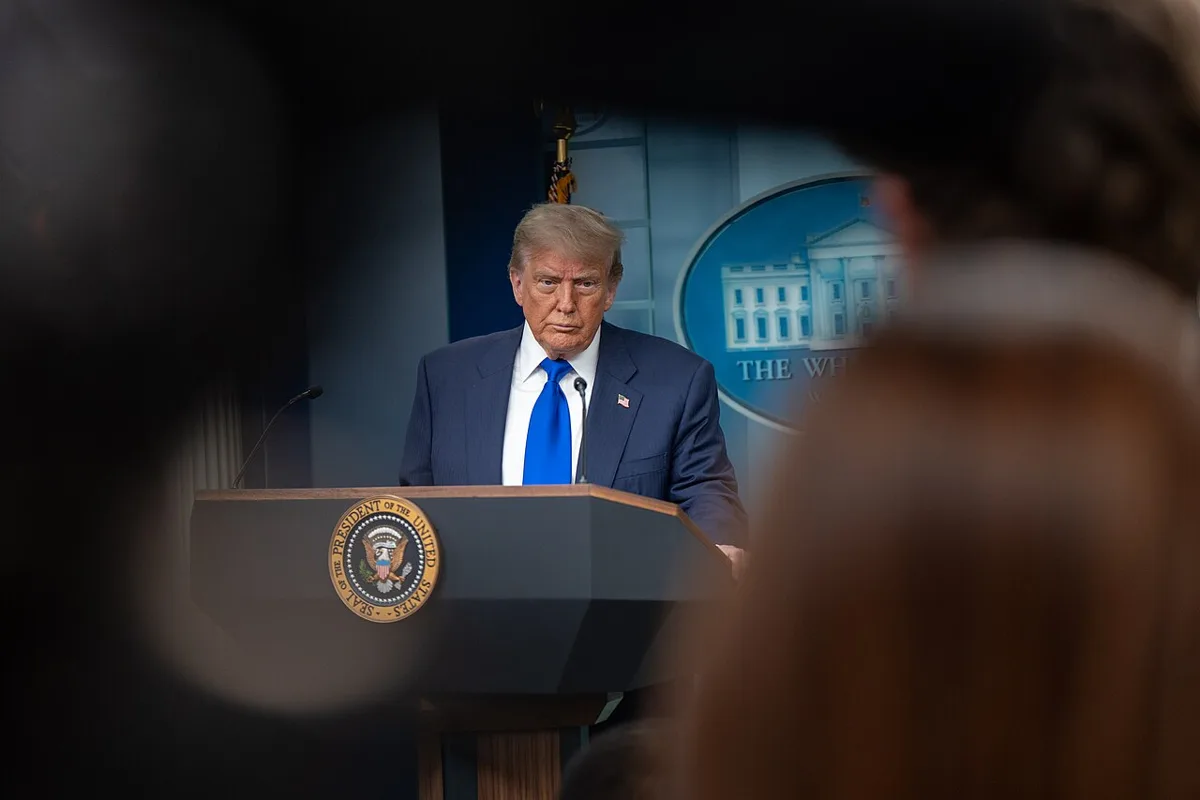
The United States has burned through virtually its entire stockpile of long-range precision missiles in the war with Iran, and the man responsible for that decision wants you to know that the real problem is whoever told you about it. On Thursday morning, President Trump took to Truth Social to threaten "long term jail sentences" for the people leaking news of the shortage, which is exactly the kind of energy you want from someone who just ran out of missiles.
What 'Virtually All' Actually Means
Reuters was first to report that the U.S. had used "virtually all" of its long-range precision missiles during Operation Epic Fury. CBS News then confirmed, via two sources with direct knowledge of the situation, that this means the country has burned through nearly its entire global stockpile of Army Tactical Missile Systems, known as ATACMS, and Precision Strike Missiles.
These are not defensive party favors. ATACMS are the long-range precision strike weapons the U.S. relies on to hit hardened targets from safe distances. Running out of them isn't a supply chain inconvenience. It's a fundamental constraint on what the military can actually do next.
CBS News had previously reported that the U.S. cannot sustain the rate at which it expended precision munitions early in the war. That report also flagged a separate, arguably more alarming problem: the country is also burning through its missile defense interceptors faster than industry can replace them.
The Patriot Numbers Are Genuinely Alarming
A July report from the Center for Strategic and International Studies put hard numbers on what "dwindling" actually looks like. Before the war, the U.S. had 2,330 Patriot interceptors. By late July, that number was somewhere between 759 and 827. The U.S. also entered the war with 452 THAAD interceptors and was down to between 234 and 278 as of July 27.
THAAD and Patriots aren't offensive weapons. They're what shoot down incoming missiles aimed at U.S. forces and allies. Burning through them faster than factories can produce replacements is not a messaging problem. It is a physical reality with physical consequences.
The same CSIS analysis estimates it could take until at least mid-2029 to return to pre-war inventory levels for both systems. The war, for context, is happening right now.
The Official Response, Which Is Something
Trump's Truth Social post hit all the notes you'd expect. "The U.S. has massive amounts of 'munitions,' especially of certain types," he wrote, deploying scare quotes around the word munitions in a post about munitions. He added that defense companies are building "the largest number of plants and factories in our country's history" and closed with the threat: "The 'leakers' of these treasonous statements are being hunted down. Long term jail sentences will be sought!"
Chief Pentagon spokesperson Sean Parnell issued a statement to CBS News calling the U.S. military "the most powerful in the world" with "everything it needs to execute at the time and place of the President's choosing." That statement contains exactly zero numbers.
Defense Secretary Pete Hegseth made his position clear back on June 14, telling CBS News's Face the Nation that concerns about stockpiles were "a manufactured story that the media wants to peddle" and that "our stockpiles are great, and they're only getting stronger." That was before the CSIS report came out showing Patriot inventory had dropped by roughly two-thirds.
Hunting the Messenger While the Arsenal Empties
The people Trump is now threatening with prosecution are not spies. They are officials with direct knowledge of military readiness who told journalists that the country is running low on weapons during an active war. In any functioning government, that information would trigger urgent internal debate, emergency procurement, and hard strategic questions about the pace of operations.
Instead, the president is threatening to jail them. The Pentagon is issuing statements about being the most powerful military in the world. And the Defense Secretary is calling the whole thing manufactured.
The ATACMS and Precision Strike Missiles are still gone. The Patriot numbers are still what they are. Threatening leakers does not put missiles back in the stockpile.
The Dingo Take
You are supposed to believe that the officials confirming a munitions shortage are the threat to national security, not the shortage itself. That is what the President of the United States is explicitly arguing on a social media platform he owns, in a post that uses scare quotes around the word for the weapons he claims to have plenty of.
This is the logic of someone who has broken something expensive and is furious at you for looking at it. The CSIS numbers are not a media narrative. They are an accounting of physical objects in specific warehouses. Before the war: 2,330 Patriots. Late July: somewhere around 800. That math does not change because Pete Hegseth goes on television and says the stockpiles are great.
The genuinely dark part isn't even the shortage, which wars produce and which can theoretically be addressed with money and time. It's that the administration's entire response has been to suppress the information, discredit the reporters, and threaten the sources. If you can't say true things about the state of your own military's arsenal without risking federal prosecution, you have built a system that cannot correct its own mistakes. And the missiles are still gone.





Comments