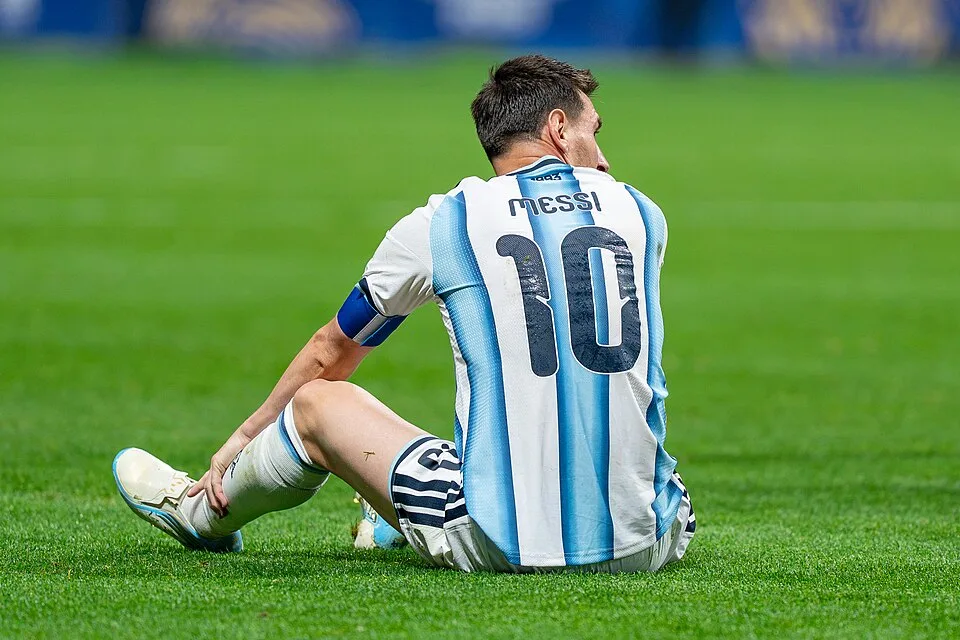
Jorge Messi, the father who carried his son from the youth fields of Rosario to the pinnacle of world football and never really left his side, died early Saturday morning at age 68 after a prolonged illness. His death came just three weeks after Argentina lost to Spain in the World Cup final, a tournament that Lionel Messi visibly, tearfully struggled through while carrying the weight of his father's deteriorating health. The man who built the greatest soccer career in history is gone.
A Death That Was Announced Twice
The death was confirmed by Sanatorio Centro, the Argentine clinic that treated Jorge Messi, through a statement from its director. He died around 2 a.m. Saturday, according to NBC News. CONMEBOL, the South American football federation, and the Argentina National Football Team both issued statements shortly after, and the family confirmed the news through Reuters.
If the announcement felt familiar to some, that's because it was. A previous false report of Jorge Messi's death became a minor scandal in June, just before the World Cup began. Argentine TV host Florencia Peña incorrectly reported his death on air, citing bad information fed to her through an earpiece. She resigned. The Messi family responded at the time by confirming Jorge was ill but alive, saying he was 'recovering and showing favorable progress given his condition.' That favorable progress, it turns out, had limits.
The Architect Behind the Greatest Player of All Time
Jorge Messi was not some passive father who showed up for the trophies. By every account, he was the person who made Lionel Messi's career possible in the most literal sense. As CBS News reports, Jorge took his son to Barcelona in 2000 for a tryout, then packed up and moved the entire family to Spain when the club signed him. Lionel debuted for Barca at 16. Jorge became his agent and shepherded every major deal that followed: Barcelona, Paris Saint-Germain, and eventually Inter Miami in MLS.
Newell's Old Boys, the first Argentine club where Lionel played as a child, put it plainly in a statement Saturday. 'Jorge was the pillar of strength and the person who, along with his wife, Celia Cuccittini, supported the career of the greatest player of all time with vision, rigor, and affection,' the club said. 'His constant support and behind-the-scenes leadership were fundamental in backing every step of Lionel's journey, from his beginnings in the Falklands to the pinnacle of world football glory.'
Beyond football, Jorge Messi had a long association with UNICEF. 'We regret the passing of Jorge Messi, father of our Goodwill Ambassador Lionel Messi and a person always committed to the rights of boys and girls,' the organization wrote on X Saturday morning. He was, by every measure, more than a football dad.
The Shadow Over the World Cup
Anyone paying attention during the 2026 World Cup saw something different in Lionel Messi. He was 39, still the best player on the pitch, but emotionally raw in a way that felt beyond the usual tournament pressure. After scoring a hat trick against Algeria in Argentina's opening match, he broke down on the field. At a press conference afterward, he said the tears were over 'something unrelated to football' and refused to elaborate further.
The family confirmed shortly after that Jorge was dealing with a health issue and under medical care. It was meant to reassure. It did not entirely succeed. Questions about the severity of his condition hovered over every Argentina match that followed, according to NBC News. Jorge Messi, who had been a constant presence in the stands at his son's games for decades, was not there the way he always had been. Argentina made it to the final and lost to Spain on July 19. Whatever Lionel was carrying through that tournament, he was carrying it without his father healthy in the stands.
What Happens Tonight in Miami
Inter Miami CF was scheduled to play Monterrey in a Leagues Cup match in Miami on Saturday night. As of the news breaking, it was unclear whether Lionel Messi would take the field. CBS News reports the club had not made an announcement on his availability. NBC News notes that Inter Miami did not immediately respond to requests for comment.
That a professional sports league match is even a relevant question in this moment says something about the relentless machinery Lionel Messi has been operating inside his entire life. Tonight, there is a stadium waiting. There is a schedule. There is a game. The man who built all of it died at 2 in the morning.
The Dingo Take
You are supposed to treat the death of a famous person's father as a sports story, a scheduling question, a matter of team availability. That framing is doing a lot of work right now and none of it is honest. Jorge Messi was not a footnote. He was the reason any of this existed. He moved continents for his kid. He sat in the stands for thirty-plus years. He managed the business, absorbed the pressure, and let his son be the player instead of the CEO of his own career. That is not nothing. That is, in many ways, everything.
The World Cup stretch is the part that will stick. Lionel Messi played the biggest tournament of his final years, lost in the final, and did all of it while watching his father die slowly from a distance he couldn't close. He cried on the pitch after a hat trick against Algeria and told reporters it had nothing to do with football. He was right. It had nothing to do with football. Nobody pushed him on it. Everyone just watched and moved on to the next match.
Jorge Messi was 68. The clinic that treated him won't say what killed him, citing patient privacy, which is their right and their obligation. CONMEBOL called it 'a moment of profound grief.' Newell's Old Boys said, 'Thank you for teaching him to love these colors.' That last one lands the hardest. Because before any of it was business, before Barcelona and PSG and Inter Miami and the World Cup, a father in Rosario taught a kid to love a game. Everything else followed from that.



Comments