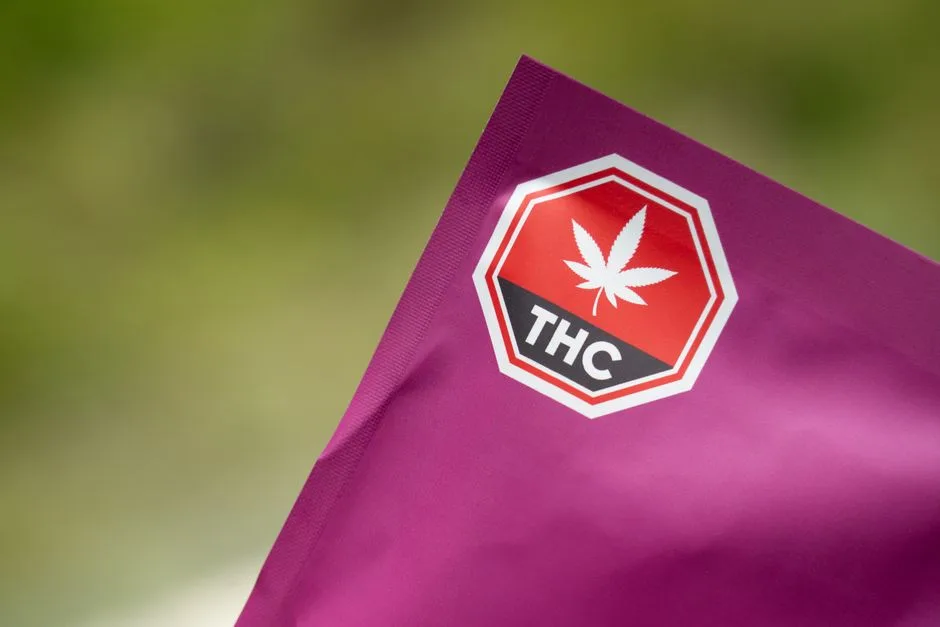
Here is something that should make you furious: in Idaho, more than a thousand women who just gave birth have been placed on child abuse registries because they tested positive for THC, the active compound in marijuana, which is legal in more than 40 states. They didn't hurt anyone. They had a baby. And now they're on a list. A joint investigation by CBS Sunday Morning and the Marshall Project pulled back the curtain on a system that is systematically punishing new mothers while the laws protecting them vary wildly depending on which side of a state line they delivered on.
What the Investigation Actually Found
CBS Sunday Morning and the Marshall Project, a nonprofit newsroom that covers the U.S. criminal justice system, spent considerable time documenting exactly what is happening to women in the postpartum period when hospitals report THC-positive drug screens to state authorities. The short version: in Idaho, over a thousand new mothers have been flagged and placed on child abuse registries. In other states, according to the reporting, women have been sent to jail.
Let that sit for a second. Jail. For using a substance that is legally sold in the majority of American states, used widely for pain management, and consumed by millions of people every day without criminal consequence. The primary difference between a woman who faces zero repercussions and a woman who ends up on a child abuse registry is, in many cases, nothing more than her zip code.
The investigation, reported by CBS News correspondent Erin Moriarty, raises pointed questions about who, exactly, gets caught in this net. Because if history is any guide, and it always is, the answer is not "everyone equally."
The Legal Mess Underneath All of This
Federal law still classifies marijuana as a Schedule I controlled substance, which means states are largely writing their own rules in a legal vacuum, and those rules are not consistent, not coherent, and in many cases, not fair. More than 40 states have legalized marijuana in some form, whether medical, recreational, or both. Idaho is one of the handful that has not.
So a woman in Colorado can use cannabis to manage pregnancy-related nausea or pain, deliver her baby, test positive for THC, and go home to her family. A woman in Idaho does the same thing and potentially ends up flagged with child protective services and placed on a registry designed for people who harm children. These are not meaningfully different situations. They are being treated as if they exist in entirely different moral universes.
The legal framework here involves Idaho's Department of Health and Welfare and child and family services. The investigation also found South Carolina's Horry County solicitor Jimmy Richardson involved in these enforcement decisions, suggesting this is not purely an Idaho problem. The geography of punishment is sprawling and inconsistent, which is precisely what makes it so damning.
Pain Management, Pregnancy, and Who Gets the Benefit of the Doubt
Childbirth is painful. This is not a controversial statement. Pregnant women and new mothers manage pain in all kinds of ways, and many have turned to cannabis, particularly in states where it is legal and accessible, as an alternative to opioids and other pharmaceuticals. The medical community's guidance on cannabis use during pregnancy is still evolving, and there are legitimate clinical conversations to be had about risks. That conversation is not what is happening here.
What is happening here is that women are being subjected to drug surveillance at one of the most vulnerable moments of their lives, their results are being reported to state agencies, and the consequences are landing on a registry that carries real, lasting stigma. As Dr. Richard Hearn of Hearn Law PLC and attorney Erin Bailey are noted as resources in connection with this story, there are clearly legal battles already being fought on behalf of these women. That people need lawyers to protect them from a child abuse designation after giving birth tells you everything about how badly this system has gone sideways.
The question of who faces these consequences and who does not is one the investigation raises explicitly. It is a question with a depressingly predictable answer if you have spent any time looking at how drug enforcement works in America.
The Broader Pattern Nobody Wants to Say Out Loud
American drug enforcement has never been neutral. Study after study, decade after decade, shows that low-income women and women of color face disproportionate scrutiny during pregnancy and childbirth, including more frequent drug testing and harsher consequences when those tests return positive results. The Marshall Project has documented this pattern extensively across its coverage of the criminal justice system.
What the CBS and Marshall Project investigation adds to this picture is the specific, concrete mechanism: a postpartum THC test that functions as a tripwire, routing certain women into a child welfare system that was ostensibly designed to protect children from abuse. Using a substance legal almost everywhere, and using it for pain, is being treated as evidence of abuse in states that have refused to modernize their drug laws. The cruelty is not incidental. It is baked into the structure.
If a thousand women ended up on a child abuse registry in Idaho alone, the national number, across every restrictive state, is almost certainly much larger. We do not have that full count yet. Someone should find it.
The Dingo Take
A thousand women. One state. A child abuse registry. Because of weed that is legal in the state they might have driven through on the way to the hospital. If you are looking for a single story that captures how American drug policy manages to be simultaneously archaic, cruel, and grotesquely uneven in its application, congratulations, you found it.
This is not a story about protecting children. Children are not being protected by putting their mothers on abuse registries. Families are not made safer when a new mother faces the legal and social fallout of a child abuse designation because she used cannabis to manage pain. This is a story about states that lost the national argument on marijuana legalization deciding to fight a rearguard action through the maternity ward, using child welfare infrastructure as a cudgel against women who already have no power in the room.
The CBS Sunday Morning and Marshall Project investigation deserves a much wider audience than a Sunday morning news program. Read the Marshall Project's full reporting. Share it. Because the follow-up question to "how did a thousand mothers end up on a child abuse registry" is "how many more are we not counting" and that answer is going to be ugly.





Comments