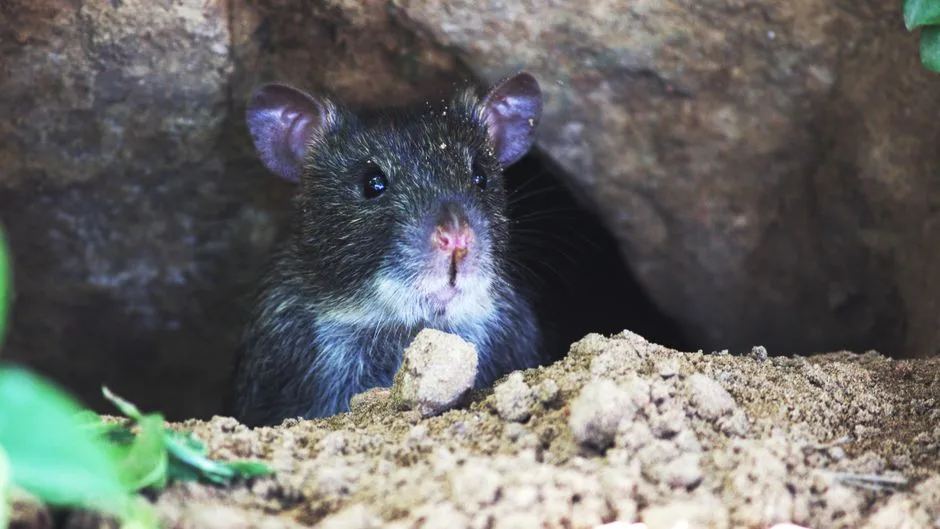
New York City is winning its war on rats, if your definition of winning is 'the rats have learned to hide better.' The city is on track to record the fewest reported rat sightings since the pandemic, down 22% in the first seven months of 2026. The rodents are still there. They have simply adjusted their schedules.
The Numbers Are Good, The Rats Are Not Gone
Bloomberg reported last week that rat sightings are at their lowest point since before Covid, a drop that city officials are crediting to the trash containerization push that began under former mayor Eric Adams. With an estimated one rat for every three people in New York, that still leaves roughly 2.7 million rats, which is not exactly a victory parade situation.
The city's rat population had exploded during the pandemic. Uncollected trash, a surge in delivery food, and those outdoor dining sheds that everybody loved and nobody thought about hygienically combined to create what pest consultants are now calling, with remarkable understatement, rats going 'wild.' Covid sheds are gone. The rats largely remain.
Gil Bloom of Standard Pest Management, which consults for local and federal agencies, says rat sightings hit a record low in 2019 before the pandemic rearranged everything. 'Covid rearranged the topography and rats went wild,' he told the Guardian. The numbers are improving. They are not back to where they were. The topography, apparently, stays rearranged for a while.
Eric Adams: Rat Czar Enthusiast, Future Defendant
Whatever else you want to say about Eric Adams, and there is quite a lot you could say about Eric Adams at this point, the man had a genuine and very specific hatred of rats. His administration posted a job listing for a 'rat czar' requiring applicants to be 'highly motivated and somewhat bloodthirsty' and possess 'a swashbuckling attitude, crafty humor and general aura of badassery.' This is a real government job posting that existed.
When Adams appointed Kathleen Corradi to the post in early 2023, he delivered the kind of mayoral wisdom that gets carved into marble: 'Rats impact how you feel about the city you're in.' He also, at some point, told reporters with a straight face, 'Everyone that knows me, they know one thing: I hate rats.' The man contained multitudes. Mostly criminal indictments, but also genuine rat hatred.
The measures Adams put in place included 'Rat Pack' enforcement teams, specialized squads targeting the estimated 600,000 rats living in the city's street tree beds, and a mandatory containerization program requiring all businesses and low-density residential buildings to ditch plastic trash bags on the curb for sealed bins. Around 70% of the city's trash falls into that category. Full containerization citywide is expected by 2031, which means a decade-long war with a rodent population that, per the experts, is actively learning countermeasures.
Mamdani Drops the Czar, Keeps the Bins
Current mayor Zohran Mamdani has apparently decided that the 'rat czar' branding was one Adams-era legacy too weird to carry forward, and quietly dropped the position. He has, however, expanded the containerization program to six new districts, bringing oversized 'Empire Bins' to 25,000 new residences. The tradeoff: the city will lose 30,000 parking spots to accommodate the bins, with a city council proposal that could eventually threaten up to 300,000 spots.
In April, Mamdani said the quiet part out loud about the stakes involved: 'In the wealthiest city in the wealthiest nation in the history of the world, no New Yorker should have their sidewalks covered in garbage.' This is, genuinely, a reasonable thing to want. The counterargument, which the rats are currently making with their continued existence, is that lids on trash cans solve the visibility problem more than the rat problem.
Leading rodentologist Robert Corrigan told Bloomberg that garbage is a rat's favorite food and that lids on trash cans are 'the true hero of rat management.' This is the most important sentence any rodentologist has ever said to a news outlet, and it deserves to be taken seriously. The bins are working. They are not working fast enough to outpace the adaptability of an animal that survived the dinosaurs.
The Part Where the Rats Win the Philosophical Argument
Here is where the story gets genuinely unsettling. The Guardian spoke to pest management consultant Gil Bloom, who delivered the kind of quote that should keep city planners awake at night. 'They have reset their clocks,' Bloom said of the rats. 'They know when the trash is going out.' The rats have not been defeated. They have updated their internal scheduling software.
Some trash is still going out in bags. There is a window between when trash gets put out and when it gets collected. There are food stands, fruit stands, people who litter, and a century of underground infrastructure that no containerization program touches. 'They're still in the underground and catch spaces of the city,' Bloom said. Then he asked a question that is either deeply profound or deeply horrifying depending on your relationship with New York: 'If they're out at night and people don't see them is it still a rat? It's still a rat, but no one is seeing it.'
The numbers back this up in places nobody wants to talk about. While West Harlem, fully containerized since June 2025, saw rat sightings drop 34%, the East Village, Lower East Side, and parts of Chinatown have seen a 37% surge in rodent reports compared to last year, according to the Guardian's reporting. The East Village has older buildings, a large park where the city won't use rodenticide because of hawks, and a younger population that is, per the city's own analysis, more likely to be outside late enough to actually see the rats that have reset their clocks.
The Dingo Take
A 22% drop in rat sightings is real progress. Anyone who lives in New York and remembers the pandemic-era dining sheds will tell you that. The containerization program is working in the neighborhoods where it's been deployed longest. None of that is in dispute. What is in dispute is whether 'fewer rats visible to humans' and 'fewer rats' are the same sentence, and the answer from every expert quoted in this reporting is: absolutely not.
The political story here is actually kind of interesting and kind of depressing simultaneously. Eric Adams, a man who will be remembered primarily for his corruption trial and his vegan diet, may end up having his most durable legacy be a trash bin program. Mamdani is smart enough to keep running it without the 'bloodthirsty' job postings, which is probably the correct call. But neither of them can outrun the central problem, which is that New York City has approximately 2.7 million rats, a subway system that has not been meaningfully updated since the Eisenhower administration, and a composting infrastructure that remains a work in progress. The bins are the right move. The bins alone are not enough.
The rats know when the trash goes out. They have reset their clocks. They are in the underground, in the parks, in the tree beds, in the gaps between every solution a city government has thrown at them since long before any of us were born. The lesson here is not that containerization doesn't work. It does. The lesson is that you do not declare victory over an animal that has been winning for 56 million years just because the 311 complaint numbers are trending down. New York is doing better. The rats are doing fine.





Comments