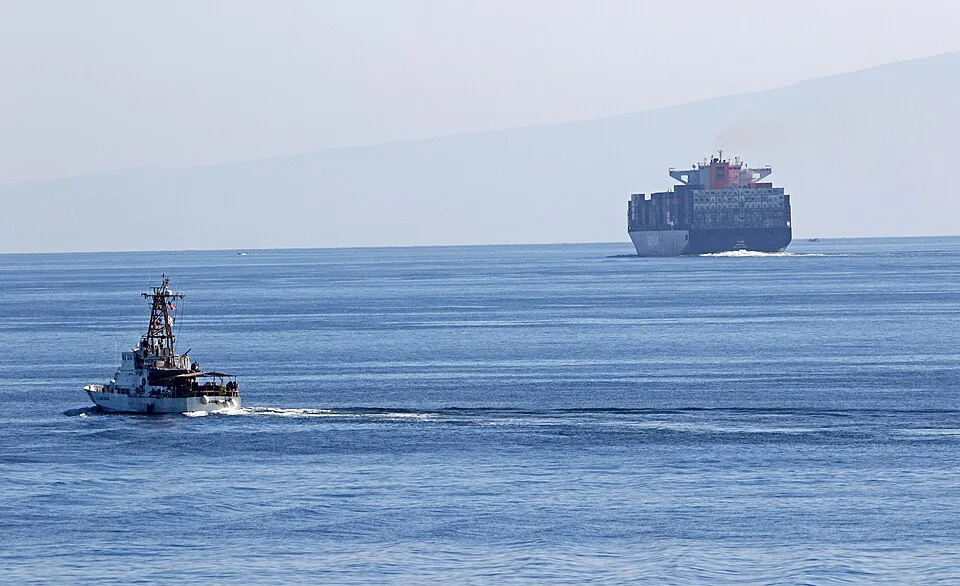
Sailors aboard tankers near the Strait of Hormuz are still in danger, still in limbo, and still waiting for a resolution that, according to the shipping industry, is nowhere close to happening. NPR reports that Tim Wilkins, who works for a tanker industry group, is calling the situation exactly what it looks like: ships stuck in one of the most strategically critical waterways on earth with no clear way out. An agreement over the strait, Wilkins says, is still far away.
The Strait That Runs the World's Energy Economy
About a fifth of the world's oil moves through the Strait of Hormuz. That is not a talking point. That is just math. When that passage is contested, unstable, or actively dangerous, the ripple effects land everywhere: at the pump, in shipping contracts, in the calculations of every navy that patrols the waters between Iran and the Arabian Peninsula.
And right now, according to NPR, transiting the strait is still dangerous. That is the blunt assessment from someone inside the tanker industry itself, not a think tank analyst or a government spokesperson with an agenda. The people who run these ships are saying out loud that the situation has not improved.
Sailors in Limbo, Ships Going Nowhere
Tim Wilkins, representing a tanker industry group, told NPR's All Things Considered that ships stuck around the waterway are in limbo. That word, limbo, is doing a lot of heavy lifting here. These are not abstractions. These are crews. Real people aboard vessels that cannot safely move through one of the most transited chokepoints on the planet.
The shipping industry has been sounding alarms about Hormuz security for years, cycling through periods of crisis and uneasy calm. Drone attacks, seizures, harassment of commercial vessels, and threats of closure have all taken turns as the headline concern depending on the month. What Wilkins is describing to NPR is a situation where none of that has been resolved, and the timeline for any kind of formal agreement remains completely open-ended.
No Deal in Sight, No Timeline on the Table
An agreement over the Strait of Hormuz is still far away. That is not editorial spin. That is a direct characterization from NPR's reporting on what Wilkins said. In diplomatic terms, 'still far away' is roughly equivalent to 'don't hold your breath.'
The Strait of Hormuz sits between Iran and Oman, and Iran has long treated the ability to threaten or close the strait as a core piece of its strategic leverage. Any durable agreement about the free passage of commercial shipping would require the kind of sustained diplomatic engagement that, in the current geopolitical climate, is an extremely tall order. Nobody in this story appears to be claiming otherwise.
What 'Dangerous' Actually Means for the People on These Ships
When industry officials describe a shipping route as dangerous, the tendency is to process it as a market risk story. Insurance premiums spike, shipping costs rise, that gets passed along eventually. That framing, while accurate, buries the human reality.
Sailors on tankers in and around the Strait of Hormuz are working in conditions that their own industry is publicly calling dangerous and unresolved. These are not people with the option to log off and wait for the diplomats to sort it out. They are on the water, on ships carrying oil, in a corridor where the threat environment has not materially improved despite whatever negotiations may or may not be happening behind closed doors.
The Dingo Take
You are supposed to believe that global commerce flows freely, that the rules-based international order keeps the shipping lanes open, and that when things get tense in places like the Strait of Hormuz, serious people in serious rooms work it out. What NPR is reporting, in the measured language of tanker industry spokespeople, is that none of that is currently true for sailors stuck near Hormuz. The agreement is far away. The danger is present. The limbo is ongoing.
The Strait of Hormuz does not care about talking points. It does not care about summit communiques or carefully worded joint statements. About a fifth of the world's seaborne oil moves through it, and right now the people whose job it is to actually move those ships are telling journalists that things are not okay. That deserves more than a brief at the bottom of a foreign policy brief.
At some point the distance between the diplomatic language applied to situations like this and the lived reality of the people caught inside them becomes its own kind of story. Wilkins did not say things are trending in the right direction. He did not say progress is being made. He said the ships are in limbo and the danger is real. Believe him.


Comments