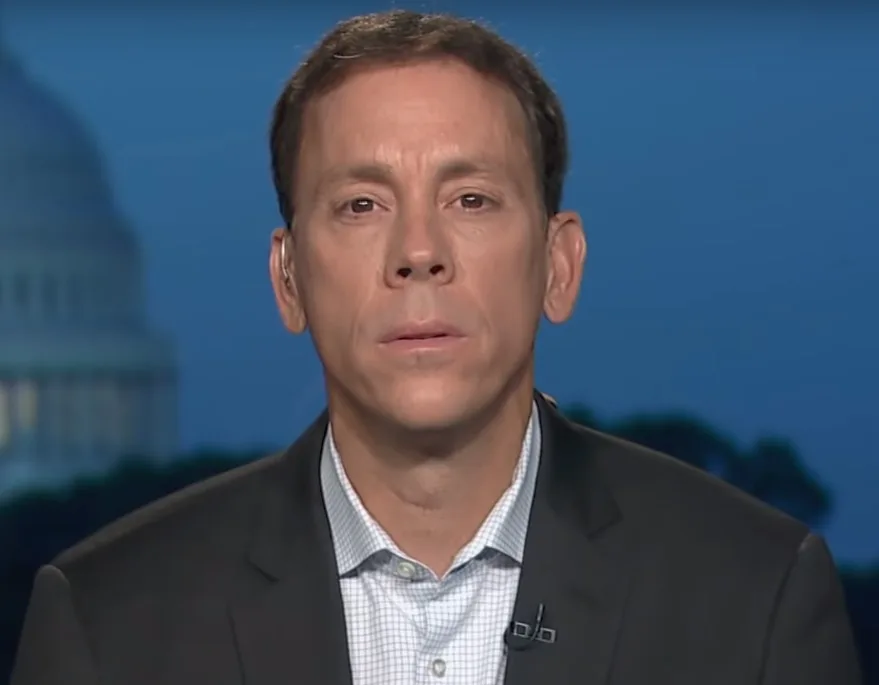
The CEO of one of the most plugged-in news organizations in America just told his own board that his confident view of the future extends exactly six weeks. Not six months. Not a quarter. Six weeks. If the guy whose job is literally to understand what's happening in the world can't see past late September, what exactly does that tell the rest of us?
The Board Meeting That Broke His Brain
Jim VandeHei, co-founder and CEO of Axios, wrote this week about a moment that stopped him cold during his own company's board meeting. The board was doing what boards do: talking about six-month horizons, planning, projecting, pretending to know things. And VandeHei found himself sitting there thinking it was pure fantasy.
He laid it out plainly in a piece published by Axios on August 9th. The company is having a great year, he said. And yet he felt compelled to warn his own board: all of this could change in a month. Not because Axios is struggling. Because the underlying ground is moving so fast that success itself has an expiration date he can no longer reliably calculate.
This is not a guy who panics for clicks. VandeHei built a media company that became required reading for Washington's political class. He's not known for doom-posting. Which is exactly why this is worth paying attention to.
What 'Post-Processable Velocity' Actually Means
VandeHei is calling this moment we've entered a period of what he describes as post-processable velocity. The phrase sounds like a consulting firm's fever dream, but the underlying idea is simple and genuinely unsettling: AI is moving faster than human institutions, human minds, or human planning cycles can actually absorb.
We have built entire economies around the assumption that the future is roughly legible. You make a five-year plan. You write a business strategy. You hire toward a vision. All of that depends on a world that changes at a speed humans can more or less track. What VandeHei is saying, and what a growing number of people in tech and finance are quietly saying alongside him, is that assumption is now broken.
Six weeks. That's the number he landed on. Not as a rhetorical flourish, but as a genuine operational reality. Past that horizon, he's admitting he doesn't know. For a CEO of a company that is, by his own account, doing extremely well right now, that's an extraordinary thing to put in writing.
This Isn't a Tech Bro Hype Problem
It would be easy to file this under Silicon Valley Guys Being Dramatic, a genre that has given us enough content to fill several libraries. But that framing misses what's actually being said here. VandeHei isn't hyping AI capability as a way to pump a stock or attract venture money. He's describing a specific, practical problem: he cannot do his job as a CEO the way CEOs have always done it, because the standard tools of strategic planning have stopped working.
Boards of directors exist to provide oversight and long-term guidance. That function requires some shared agreement that the long term is knowable. If the CEO is sitting across from the board saying he genuinely cannot see six months out with any confidence, that's not an AI hype story. That's a governance crisis playing out in slow motion across thousands of companies simultaneously, most of which haven't admitted it yet.
The Axios piece is short. VandeHei is clearly still processing. But the fact that he published it at all, the fact that a media executive chose to publicly document his own loss of strategic footing, is itself a kind of signal worth registering.
The Quiet Panic Spreading Through C-Suites
VandeHei is not alone in this, even if he's one of the few willing to say it out loud. Across the media, finance, and tech sectors, people in positions of institutional responsibility are grappling with the same vertigo. The AI tools they're adopting are genuinely useful. They are also genuinely unpredictable in what they'll be able to do three product cycles from now.
Every major industry that assumed its core function was safe from automation is currently watching that assumption get stress-tested in real time. Lawyers. Accountants. Journalists. Radiologists. The six-week horizon isn't unique to Axios. It's the new operating reality for anyone whose job involves processing and synthesizing information, which is most white-collar work.
The economic implications of this are not small. Hiring, investment, strategy, training pipelines, real estate footprints, all of it gets distorted when the people making those decisions genuinely cannot forecast six months out. VandeHei named it. The question is whether anyone with actual policy-making power is going to treat it as something other than a background condition to quietly absorb.
The Dingo Take
A CEO publicly admitting his planning horizon has collapsed to six weeks is not a newsletter item. It's a distress flare. And the fact that it's coming from someone whose company is succeeding right now makes it more alarming, not less. The traditional warning signs of institutional crisis, falling revenue, bad press, leadership chaos, are supposed to precede this kind of existential uncertainty. VandeHei isn't describing a company in trouble. He's describing a world in which the concept of 'not in trouble' has a frighteningly short shelf life.
What's missing from this conversation, and from nearly every conversation about AI velocity at the executive level, is any serious engagement with what this means for people who aren't running media companies. If a well-resourced CEO with a team of smart people and a direct line to Washington's power structure can't see six weeks out, what exactly is a mid-career accountant in Columbus supposed to do with her five-year plan? The honest answer is nobody knows, and the people who could be building policy frameworks to address that are instead arguing about which billionaire's feelings got hurt on social media.
Six weeks. Write it on a sticky note and put it somewhere you'll see it. Because VandeHei isn't predicting catastrophe. He's documenting a new normal that the rest of our institutions haven't caught up to yet, and most of them are still acting like the six-month horizon is a real thing. It isn't. And pretending otherwise isn't optimism. It's just expensive denial.


Comments