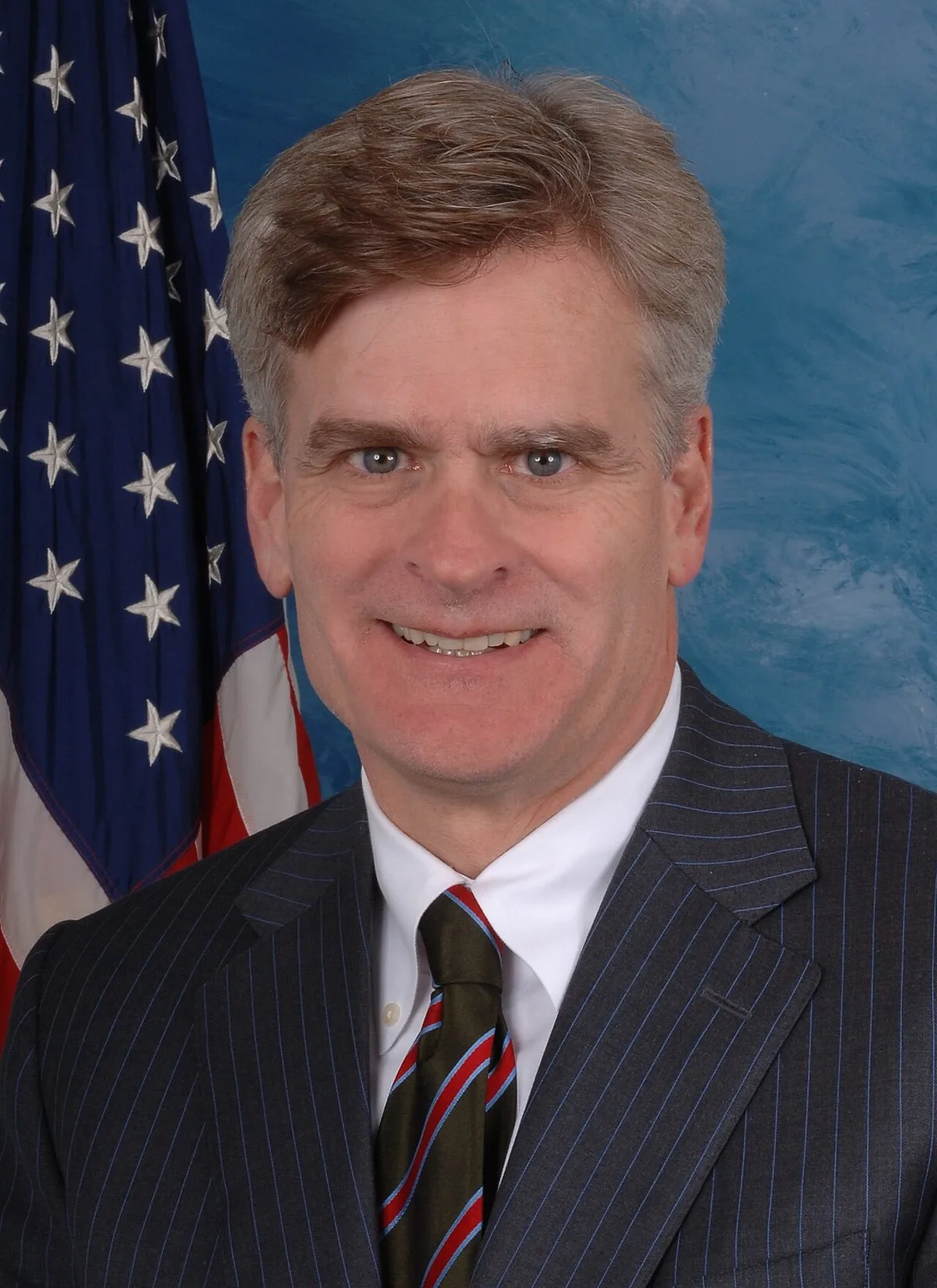
Republican Senator Bill Cassidy went on national television Sunday morning, looked into the camera, and said that giving Donald Trump's family special protection from IRS investigations is 'totally wrong' and 'no American should be above the law.' Then he explained why he voted to confirm the guy overseeing all of it anyway. Welcome to the United States Senate in 2026, where the bar for a 'yes' vote is apparently 'wrong, but not wrong enough.'
The Vote He Warned You He'd Regret
Late Friday, Cassidy confirmed Todd Blanche as Attorney General of the United States. This is the same Todd Blanche who, until recently, was Donald Trump's personal criminal defense attorney. The same Todd Blanche who, as acting AG, issued a directive shielding Trump, Don Jr., Eric, and the Trump Organization from IRS scrutiny. Cassidy had flagged that directive specifically back in June as a reason he might vote no.
Then he voted yes. CBS News captured him on Face the Nation Sunday morning explaining himself to anchor Margaret Brennan, his voice literally cracking during the floor vote the night before. He said his wife finds the emotion endearing. He finds it embarrassing. Voters in Louisiana might find a third word for it.
What He Actually Said About the IRS Thing
Give Cassidy this much: he did not pretend the IRS protection order was fine. When Brennan pressed him on giving Trump's family a shield from IRS probes, Cassidy's answer was unambiguous. 'That's totally wrong,' he said. 'Totally wrong. No American should be targeted by the law, but no American should be above the law.' He then admitted it 'almost weighed to vote no.'
Almost. That word is doing an enormous amount of work in that sentence. The Trump family gets a bespoke exemption from tax enforcement, the incoming Attorney General put it in writing, the senator from Louisiana called it 'totally wrong,' and the vote was still yes. The distance between 'almost no' and 'yes' is apparently bridgeable if you talk to enough people who tell you it'll probably be okay.
For what it's worth, Cassidy said he's relying in part on the reassurance of Senator John Cornyn, a former Texas attorney general, who eventually got comfortable with the anti-weaponization fund being rescinded. 'It took him a while to get there,' Cassidy acknowledged. Brennan pointed out that Cornyn himself had initially said you couldn't take Blanche's word for it. Cassidy agreed. Then cited Cornyn's comfort as a reason for his own.
The Anti-Weaponization Fund: Legally Dead, Probably
One of the other sticking points for Cassidy had been an order Blanche signed creating an 'anti-weaponization fund' inside the DOJ, which critics read as a slush fund for retaliating against Trump's perceived enemies. Blanche subsequently rescinded it, and Cassidy said he was told that given 'the political environment, the judicial environment, the process you would have to go back through,' reinstating it is 'effectively dead.'
Senator Dick Durbin, the top Democrat on the Judiciary Committee, told CBS News these clarifications are unenforceable. Cassidy's response was essentially: maybe, but Cornyn thinks it's fine, and I'm not a lawyer. That's a reasonable thing to say in a lot of contexts. It is a somewhat more alarming thing to say when you are one of one hundred people responsible for confirming the nation's chief law enforcement officer.
The Positive Case, Such As It Is
Cassidy did make a substantive argument in Blanche's favor, and it deserves to be reported straight. He said he spoke directly with his Louisiana U.S. attorneys, David Courcelle and Kurt Wall, who told him morale at their offices is up. According to Cassidy's account of those conversations, DOJ under Blanche has refocused federal prosecutors on violent crime, human and drug trafficking, and Medicare and Medicaid fraud, with clear metrics and resources to follow through on major cases.
That is not nothing. If true, it's the kind of nuts-and-bolts prosecutorial work that actually affects people's lives. Cassidy framed the whole confirmation as a scale, with the IRS exemption and family carve-outs on one side, and functional U.S. attorney offices on the other. He decided the scale tipped toward yes. A lot of people watching that interview are going to look at those two sides and reach a very different conclusion about where the weight falls.
On the Elections and the Anxiety That Never Goes Away
Brennan also asked whether Cassidy is confident Blanche will uphold the Constitution through the upcoming elections, given Democratic warnings that he might not. Cassidy called Democratic concerns 'existential anxiety' and said he's 'as confident as you can be about the future.' He added, in what has become something of a personal mantra, that 'this is not a black or white decision.'
He said that exact phrase, or a close variation of it, at least four times during the interview. At a certain point, 'it's complicated' starts to sound less like nuanced thinking and more like a person who has made a decision he cannot fully defend trying to explain why the math still works out. The math, for the record, is: Trump's AG, Trump's family exempted from IRS enforcement, Trump's elections coming up, and a Republican senator who called the whole thing 'totally wrong' voting yes and asking you to trust his read on the situation.
The Dingo Take
Bill Cassidy is not a stupid man. He is one of the few Senate Republicans who voted to convict Trump after January 6th, took the heat for it back home, and kept showing up anyway. He asks hard questions. He holds out longer than most. His voice cracked on the Senate floor because, by his own account, he felt the weight of the moment. All of that is real.
And then he voted to confirm the former personal attorney of the president of the United States as the Attorney General of the United States, after calling that attorney's signature policy protecting the president's family from tax enforcement 'totally wrong.' He did not get a guarantee. He did not get an enforceable commitment. He got Blanche to rescind one order, got a narrowed version of another that Durbin says is unenforceable anyway, talked to John Cornyn, talked to two U.S. attorneys in Louisiana, and decided that was enough. That is the Republican version of a moderate guardrail in 2026.
The part that should keep you up at night isn't that Cassidy voted yes. It's that this was the hard one. This was the senator who pushed back, asked the difficult questions, almost voted no, and felt bad enough about the outcome that his voice broke. If this is what rigorous Senate oversight looks like, there is no rigorous Senate oversight. There is only the theater of it, performed by people who read history books as children and grew up to wave through exactly the kind of thing those books warned them about.


Comments