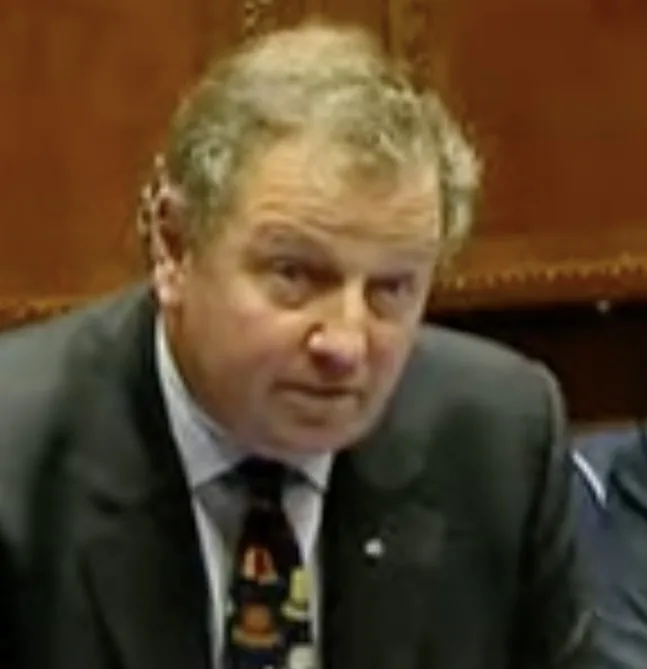
For years, Daniel Kinahan ran an international cocaine empire from a luxury base in Dubai, apparently untouchable. On Sunday, an Irish Air Corps plane landed at a military airport outside Dublin, and Ireland's most wanted alleged crime boss was on it. The chase is over. The reckoning has begun.
The Long Arm of the Law Finally Reaches the Gulf
CBS News reports that Kinahan, 49, was extradited from the United Arab Emirates after UAE courts refused to block the move. Air Tracker data confirmed the Irish military aircraft touched down Sunday evening outside Dublin. He was expected to be taken directly to the Special Criminal Court, then transferred to Portlaoise Prison, a high-security facility about 90 miles southwest of the capital, according to Irish broadcaster RTE.
This is not a small arrest. Ireland mobilized armed police, military personnel, and prison service officers to manage the transfer. RTE reports that the prison service recently acquired a bombproof escort van specifically for transporting organized crime suspects and terrorists. A bombproof van. For one man. That tells you everything you need to know about where Daniel Kinahan sits in the hierarchy of people the Irish state is afraid of.
Cocaine, Cannabis, Guns, and a Vodka Brand on the Costa Del Sol
The charges against Kinahan center on directing an organized crime group, but the scope of what authorities allege he actually ran is staggering. According to the U.S. Treasury Department, which sanctioned Kinahan and five other gang members in 2022, he oversaw the purchase of large quantities of cocaine from South America, organized its distribution throughout Ireland, and coordinated attempts to smuggle drugs into the United Kingdom. All of this, allegedly, while sitting in Dubai.
The gang's methods were creative, to put it generously. British authorities found 15 kilograms of cocaine and 220 kilograms of cannabis hidden inside asphalt removal equipment fitted with a tracking device at the port of Dover. They also allegedly registered companies across Britain, Spain, and Gibraltar and launched a vodka brand promoted in bars and nightclubs along the Costa del Sol, according to the UK's National Crime Agency, to launder the profits. Nothing says international drug lord like a signature spirits line.
In September 2022, Spanish police raided a property in Malaga and arrested an Irishman suspected of laundering money for the organization. The reach of this network, as the National Crime Agency put it at the time, "transcends national boundaries."
A Gang War With a Body Count
This is not a clean white-collar crime story. The U.S. Treasury noted in 2022 that since February 2016, the Kinahan Organized Crime Group has been locked in a violent gang war with a rival Irish criminal organization, operating in both Ireland and Spain. The conflict has resulted in numerous murders, including, the Treasury said, the deaths of two innocent bystanders.
Kinahan himself is alleged to have directed gang members to deliver money to imprisoned associates, including one who was convicted of attempting to murder someone on behalf of the organization. This is the infrastructure of violence being managed like a business, from thousands of miles away, behind the skyline of Dubai.
The Man at the Top Had Plenty of Company Going Down First
Kinahan is not the first member of his network to face consequences. In March 2022, Thomas "Bomber" Kavanagh, described by CBS News as the head of the Kinahan organization in Britain, was sentenced to 21 years in prison for orchestrating drug shipments into the UK. Two of his associates received 20 years and 19 and a half years respectively.
When police raided Kavanagh's mansion in Tamworth, northeast of Birmingham, in 2019, they found bulletproof glass, reinforced doors, numerous weapons, and 35,000 pounds of cash in multiple currencies including euros and Emirati dirhams. The dirhams are a nice detail. Even the British end of the operation had Dubai connections.
Irish and international law enforcement have been pursuing Kinahan's network for over a decade, working alongside counterparts in Britain, Spain, and the United States. The extradition of the alleged top of the chain is the culmination of that sustained multinational effort.
A Court Built for Exactly This Moment
Kinahan will face charges in Ireland's Special Criminal Court, which handles all organized crime and terrorism cases. Crucially, cases there are heard by a panel of three judges with no jury. That is not an accident. The court exists specifically for situations where prosecutors believe ordinary courts cannot adequately guarantee the effective administration of justice, including cases where jury intimidation is a genuine concern.
The Kinahan gang's history of violence makes that concern very concrete. Ireland built a legal structure for people like this. Now they have one of the biggest fish they have ever chased sitting in a cell in Portlaoise.
The Dingo Take
Let's be precise about what Dubai was doing here for however many years Kinahan was operating out of it. A man sanctioned by the U.S. Treasury Department for running a multinational cocaine empire, accused of orchestrating murders and managing gang war logistics from afar, was living comfortably in one of the world's most surveilled and controlled city-states. The UAE did eventually extradite him, which is worth acknowledging. But the question of how long that took, and what conditions made his extended stay possible, deserves a harder look than it will probably get now that everyone is focused on the perp walk.
What the Kinahan case lays bare is how genuinely global the infrastructure of serious organized crime has become. Cocaine from South America. Distribution networks in Ireland. Smuggling routes into Britain. Money laundering companies in Gibraltar. A vodka brand on the Spanish coast. And the man allegedly pulling the strings doing it all from the Persian Gulf. The National Crime Agency called it a network that "transcends national boundaries," which is technically accurate and also a staggering understatement.
Kinahan is 49 years old and facing charges in a court with no jury, in a country that built a bombproof van to drive him around. The years of operating beyond reach are done. Whether the prosecution delivers anything close to the accountability the victims of this organization deserve is the only question left that actually matters.





Comments