The Luigi Mangione murder trial is still a month away and his lawyers are already circulating letters full of claims that journalists covering the case immediately debunked. Jury selection is set for September 8th. The chaos, apparently, started without waiting for an invitation.
A Trial That Wants to Be a Spectacle
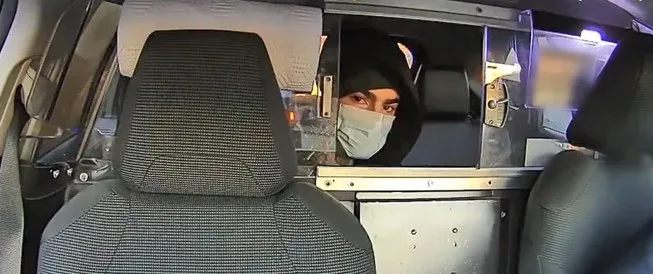
Let's set the scene. Luigi Mangione is accused of shooting UnitedHealthcare CEO Brian Thompson on a Manhattan sidewalk in December 2024, triggering a nationwide manhunt that ended at a Pennsylvania McDonald's. The killing set off a wave of public fury at American for-profit healthcare that was, depending on your perspective, either alarming or completely understandable. Mangione has a small but loud group of supporters who treat him less like an accused murderer and more like a political martyr.
The trial, as The Guardian reports, already has legitimate trial-of-the-century energy. Global interest. Social media influencers who somehow got press credentials. A defendant with a devoted fan base. None of this needed any help catching fire. And yet, here we are.
The Defense Letter That Fell Apart in Real Time
Late last week, Mangione's legal team sent a letter to Judge Gregory Carro raising what they framed as serious alarms about press access. They objected to the "partial exclusion" of the public and press. They alleged that court administrators and prosecutors were "hand-choosing" which reporters could attend, with only six journalists permitted to cover jury selection. They called this a "dramatic break from customary practice." They demanded lists of names and asked for a hearing.
They also claimed all of this happened without defense knowledge or participation, which, if true, would be a genuine sixth amendment issue. An accused person's right to a public trial is not decorative.
The problem is that the central claim, that prosecutors were involved in selecting which journalists get in, was almost immediately picked apart by the reporters actually covering the trial. The Guardian reports that news coverage of the letter "swiftly debunked" the allegations about prosecutor involvement. Manhattan prosecutors sent their own letter to Judge Carro on August 3rd stating flatly they had "no role in developing" the media access plan and "will have no role in selecting which news reporters attend the trial."
Pool Reporting Is Not a Conspiracy
Here is the thing about those "only six journalists" covering jury selection. That is just how pool reporting works, and it has worked this way in every high-profile trial in living memory. Courtrooms during jury selection are packed with prospective jurors. There is no room. A small rotating group of reporters goes in, takes detailed notes, and shares everything with all the journalists outside who did not have a seat. Everyone gets the information. Nobody is excluded.
Laura Italiano, a freelance journalist covering the Mangione case, told The Guardian this is exactly how Donald Trump's 2024 hush-money trial worked. It is how Sean Combs's 2001 nightclub shooting trial worked. "It's usually chosen by agreement of the veteran reporters who have covered that court. It's never acrimonious," she said. On the defense's claim that this breaks from customary practice, her response was direct: "No, that is absolutely false."
The defense team walked back the most explosive parts of their letter almost immediately. A follow-up letter clarified they had "no personal knowledge" about whether prosecutors and court administrators actually discussed press access, and simply wanted to know if any such conversation happened. Which, to be clear, is a very different accusation than the original one.
The One Legitimate Complaint Getting Buried in the Noise
Buried under all of this is an actual, valid criticism that virtually everyone involved seems to agree on. The court has not planned an overflow room for trial coverage. For a case with this level of domestic and international press interest, that is genuinely strange.
"There was universal shock when the state court system announced that the press plan was not to have an overflow room," Italiano told The Guardian. "Every big trial where there is this kind of demand for coverage has had overflow courtrooms." Civil rights defense attorney Ron Kuby put it even more plainly, saying the solution is not difficult and that overflow rooms are "not uncommonly" used in high-profile cases.
The defense has formally requested a video feed to an overflow courtroom. That request is reasonable. It is also getting lost in the noise of claims that have already been walked back, which is a shame, because the court's decision to skip the overflow room is the actual story here. Court administrators have not responded to requests for comment.
What September Is Going to Look Like
Jury selection begins September 8th. Mangione maintains his innocence. The case against him involves charges in both federal and New York state court over Thompson's killing, and the public attention it draws will be unlike almost anything a criminal trial has generated in years.
The press access skirmish, as The Guardian frames it, is a preview of how this whole proceeding might go. Sensational claims get made. They get debunked. Everyone moves on to the next skirmish. Disinformation flows in from every direction. And somewhere in the middle of all that noise, twelve jurors are supposed to evaluate evidence and render a verdict on whether a man is guilty of murder.
The Dingo Take
You are supposed to look at this pre-trial maneuvering and see a defense team zealously protecting their client's rights. And sure, fine, that framing has some merit. The sixth amendment guarantee of a public trial is real and important. An overflow room is a standard accommodation that the court should have planned from the start. Those are legitimate concerns.
But sending a letter to a judge accusing prosecutors of hand-picking reporters, then walking that letter back within days once journalists covering the case said it was not true, is not zealous advocacy. It is noise generation. It is manufacturing a story about media bias before the trial even starts, seeding the idea in Mangione's supporter base that the proceeding is rigged, building an atmosphere of grievance that will follow every development in the courtroom. If your client actually committed the crime he is charged with, a confused and suspicious public is a useful thing to have in your corner.
The court is not blameless here. Skipping the overflow room for a case of this magnitude was a dumb decision that created a vacuum, and vacuums get filled with exactly this kind of noise. Fix the access problem, put a camera feed in a second room, and give the press corps the tools it needs to do its job. That will not stop the circus from coming to town. But it might at least keep the clowns from running the tent.



Comments