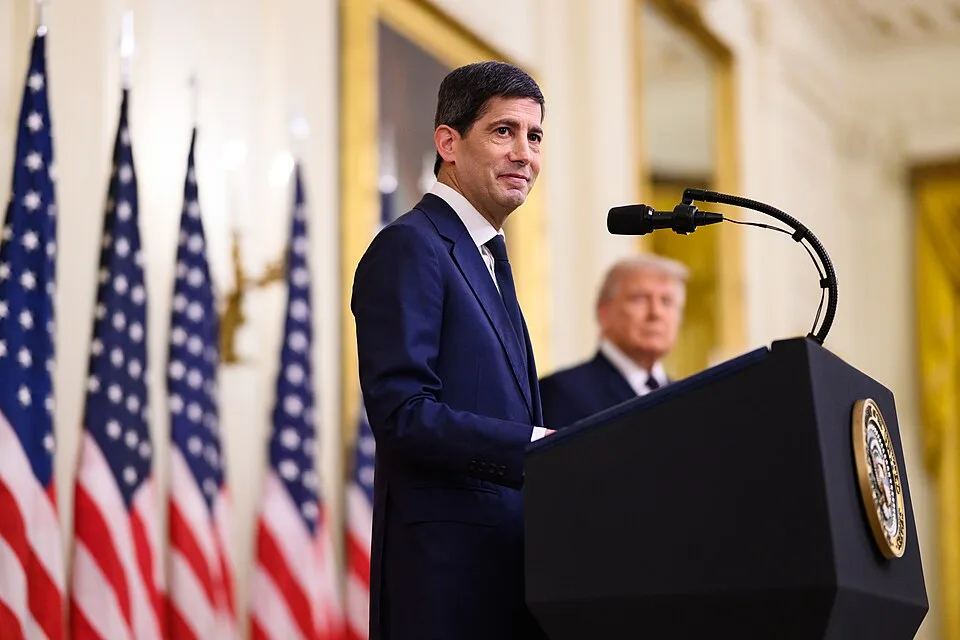
The Federal Reserve chairman managed to spook markets and embarrass himself at a single press conference last month, which is genuinely impressive when you think about how hard central bankers usually work to avoid doing either. Kevin Warsh, Trump's hand-picked replacement for Jerome Powell, is simultaneously trying to reinvent how the Fed operates AND fight stubborn inflation. According to Axios, the July 29 press conference showed exactly what happens when you attempt both at once and fumble the execution.
What Actually Happened on July 29
Warsh held a press conference. He was asked about interest rates. He was vague. Markets sold off.
That is the whole story, and it should not be a whole story, because Federal Reserve chairmen are specifically paid an enormous amount of money to not be vague about interest rates at press conferences. Vagueness is the one thing you cannot afford when every hedge fund manager on earth is hanging on your exact phrasing.
Axios reports that analysts saw Warsh's non-answer on the possibility of raising rates as evidence of a lack of commitment. When the people whose entire job is to interpret Fed-speak cannot figure out what the Fed chair is saying, that is not a communication strategy. That is a fire drill with no exits marked.
The Two-Front War Warsh Is Losing
Here is the actual problem underneath the bad press conference. Warsh is not just trying to fight inflation. He is trying to fundamentally rethink how the Fed guides the economy in the first place, all while the economy still needs guiding, right now, today.
Axios frames this as a high-wire act. That is generous. A high-wire act implies you have trained for the high wire. What Warsh appears to be doing is redesigning the wire while walking on it while also the wire is on fire.
Inflation is still stubborn. That is not a metaphor. Prices are still elevated in ways that are grinding down real wages and making ordinary purchases feel like small indignities. The Fed's primary job, the one thing it is supposed to do above everything else, is to bring that number down without cratering the economy in the process. Adding a simultaneous philosophical reinvention of the institution to that to-do list is a choice.
The MAGA Fed Experiment, Explained
Warsh was not a random pick. He is Trump's guy at the Fed, installed after a long and ugly public campaign by the former and current president to pressure, undermine, and ultimately replace Jerome Powell, who had the audacity to make monetary policy decisions based on economic data rather than political convenience.
The whole point of an independent Federal Reserve is that the chair does not have to worry about whether the president likes the interest rate. That independence is why markets trust the institution. When you install a chairman whose primary qualification in the eyes of the administration is ideological alignment, you introduce a question that the market absolutely hates: is this guy going to make the call the economy needs, or the call the White House wants?
Warsh's July 29 vagueness fed directly into that question. If he raises rates to fight inflation, that risks slowing growth and making the administration look bad. If he holds rates to keep the economy humming politically, inflation stays hot. He could not or would not say which way he was leaning. The market noticed.
Why the Commentariat Piled On
The economic commentariat, as Axios puts it, was sharply critical. This is a crowd that is professionally trained to give central bankers the benefit of the doubt. These are people who parse semicolons in FOMC statements for hidden meaning. They are not prone to panic or pile-ons.
When that crowd turns on a Fed chair, it is usually because the Fed chair gave them no choice. Vagueness at a July 29 press conference is not some rookie mistake you shake off. It compounds. Every subsequent statement gets read through the lens of that press conference. Every hedge, every caveat, every carefully worded non-answer now carries the ghost of July 29.
Warsh will get more press conferences. He will get more chances to clarify the Fed's direction. But the credibility that Powell spent years quietly building, the kind of credibility that makes markets stay calm even when the news is bad, does not come back quickly once you have burned some of it.
The Dingo Take
You are supposed to believe this is all just growing pains. That Warsh is a serious economic thinker with a bold vision, and that the July meltdown was a minor stumble on the road to Fed reform. The people who put him there will tell you that. They will tell you the critics are Powell loyalists, or establishment hacks, or just people who cannot handle change.
But there is a reason the Federal Reserve has operated with a studied, deliberate boringness for decades. Boring on purpose is a policy. When the most powerful monetary institution in the world starts surprising markets with vagueness, the surprise is not a feature. The credibility of the institution is the instrument. It is the thing that actually works. Break it while tinkering with it and you do not get to just glue it back together.
Warsh may well have a brilliant rethink of Fed policy somewhere in his head. Maybe the reinvention is worth attempting. But right now, inflation is still elevated, markets just had a blowup, and the Fed chair could not give a straight answer about interest rates at a press conference. The economy does not grade on a curve because you had ambitious intentions.


Comments