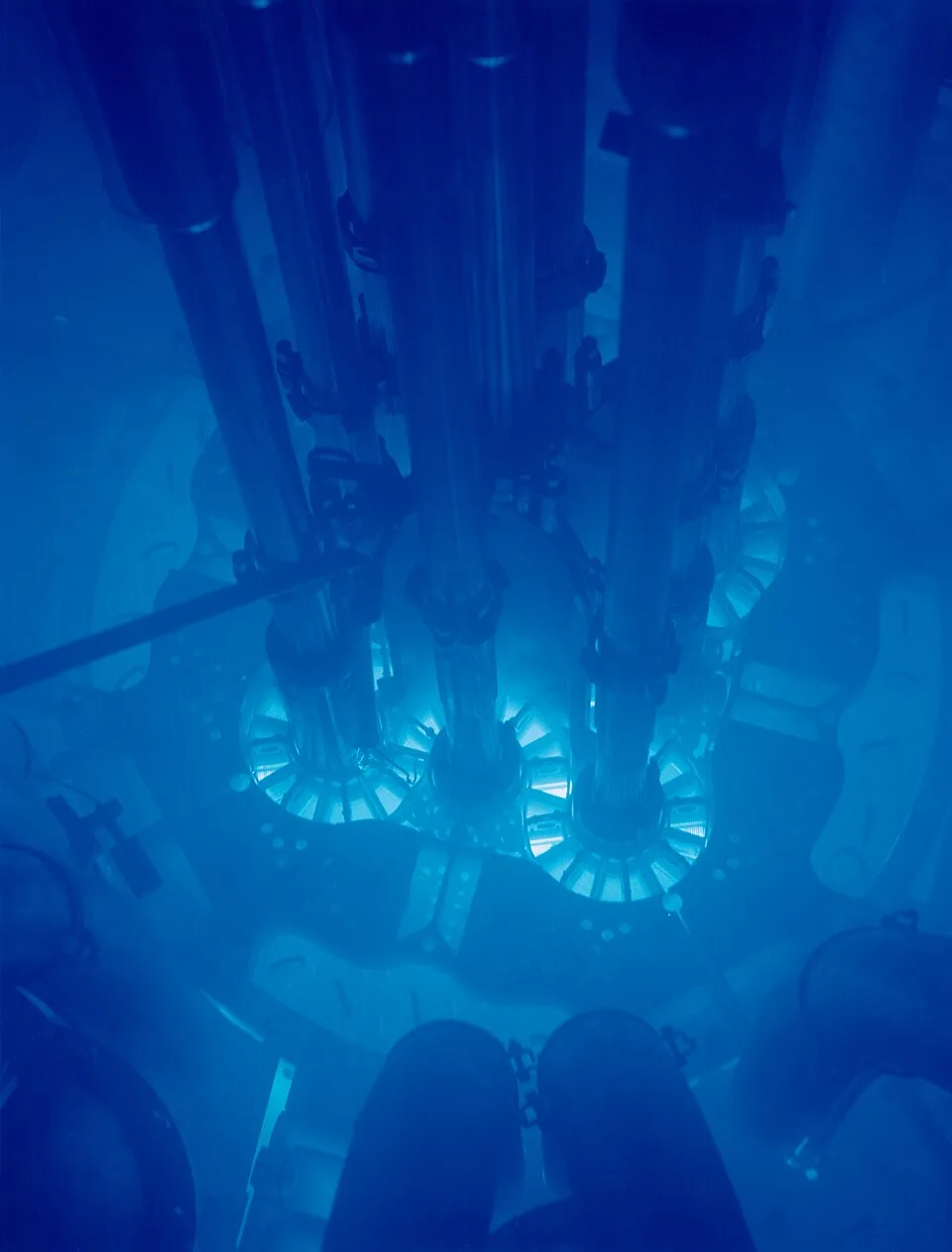
This summer, three companies at Idaho National Laboratory switched on new types of nuclear reactors, marking the first real movement in American nuclear energy in decades. Simultaneously, the federal commission responsible for approving those reactors has hemorrhaged hundreds of staff, with safety experts leading the exodus. These two facts are happening at exactly the same time, and the people in charge would prefer you not put them together.
Population 52, Zero Concerns
Atomic City, Idaho has 52 residents, a bar where you can still smoke indoors, and a Don't Tread On Me flag on the wall. The bartender knows everyone's order. The regulars drink cold beers and shots called atomic bombs, because most of them work ten miles down the road at Idaho National Laboratory, which has been America's nuclear testing grounds since 1949.
Bar owner Vickie O'Haro told NPR she's not worried about any of it. "I'm not glowing in the dark," she said. Fair enough. Local trust in a facility that employs your neighbors and your customers is real and understandable. But "Vickie at the bar isn't worried" is doing a lot of heavy lifting as a safety argument for a technology that, when it goes wrong, goes spectacularly, generationally, uninhabitablly wrong.
To be clear: the goal here isn't to scare anyone about nuclear power. The goal is to point out that the people responsible for making sure it doesn't kill anyone are being systematically dismantled while the reactors get switched on. Those are separate things, and both matter.
The Reactors Are Real and They're Actually Kind of Impressive
Set aside the safety concerns for a second, because the technology itself is genuinely worth understanding. NPR reports that one startup called Deployable Energy recently took its test reactor "critical" at INL, meaning it achieved a sustained chain reaction for the first time. That's the proof-of-concept moment. It means the design works.
The pitch from companies like this isn't the 20th-century reactor model: enormous, billion-dollar plants that take fifteen years to build and power a million homes. This is micro reactors. Small enough, according to Deployable Energy COO Lance Maul, to put on the back of a truck. Designed to power a thousand homes, a military base, a remote community, an AI data center sucking down electricity like a dying star.
Maul called it "a real moment in history for the nation," which sounds like PR speak until you remember that America hasn't successfully brought a new reactor design online in decades. Three companies doing it in one summer, in the Idaho desert, is a legitimate development. The energy demand problem is real. The carbon math is real. The technology deserves a serious look. Which is exactly why the safety oversight gutting is such a colossally stupid own goal.
The Watchdog Is Running on Fumes
Here is where it gets alarming. According to ProPublica's reporting, the Nuclear Regulatory Commission, the federal body that has to approve these reactors before they go commercial, has lost hundreds of staff. Not through routine attrition. Through Trump administration budget cuts and a wave of resignations. The people leaving are disproportionately safety experts, which is exactly the category of person you want to keep when you are in the business of approving nuclear reactors.
And NPR's own prior reporting found that the Department of Energy, which has been fast-tracking reactor permits under Trump, did it partly by eliminating hundreds of pages of regulations without telling the public. Without public notice. For nuclear energy. Let that settle.
Edwin Lyman, Nuclear Power Safety Director at the Union of Concerned Scientists, told NPR he has "no confidence in the Department of Energy and its oversight of this at all." He flagged specific concerns about reduced standards around radiation, security, and environmental contamination. This is not a fringe voice. This is someone whose entire professional existence is tracking nuclear safety, watching the guardrails come off in real time.
The Gap Between the Hype and the Homework
Trump signed executive orders last year to speed up reactor permitting, and by all accounts, it worked. The permitting moved fast. The startups are excited. The investors are excited. The people drinking atomic bomb shots in a 52-person town in Idaho are fine with it.
What didn't happen at the same pace: rebuilding the regulatory workforce to handle the new applications. The companies now switching on test reactors at INL will need to go through the Nuclear Regulatory Commission for commercial approval. That commission, per ProPublica, is a shadow of what it was. The queue is growing. The expertise is walking out the door.
A March Gallup poll shows a majority of Americans still oppose having a nuclear plant in their area, while polling also shows growing support for nuclear power broadly. That's not contradictory, that's just humans being humans: fine with the concept, less fine with the proximity. The way you move public opinion on this is by demonstrating that the safety systems are rigorous and trustworthy. Gutting the safety commission and quietly deleting regulations is the precise opposite of that.
What the Bar Can't Tell You
O'Haro's logic at the Atomic City bar is sweet and very human. "If we weren't safe, my guys would tell me." She trusts her regulars. Her regulars trust their employer. It's a chain of social trust that works great for figuring out whether the fish tacos are any good and works terribly for evaluating whether a regulatory agency has the technical capacity to catch design flaws in a novel reactor type.
The lab workers who drink at her bar are not the people running safety modeling on neutron flux. They are not reviewing the regulatory submissions. They are not tracking whether the NRC has enough staff to process applications without shortcuts. They are doing their jobs, which is hard and often genuinely impressive work, and then getting a beer.
The gap between what the locals know and what the federal oversight apparatus is equipped to catch is exactly the gap that matters in nuclear energy. It's not a gap you fix with optimism.
The Dingo Take
You are supposed to believe that the timing here is fine. That you can simultaneously fast-track a new generation of nuclear reactor approvals, gut the regulatory agency doing the approving, delete hundreds of pages of rules without public comment, and end up with a safe outcome because the market is excited and the bar in Atomic City is chill. You are supposed to not notice that the accelerator is floored at exactly the moment someone quietly removed the brakes.
Nuclear energy might genuinely be part of the answer to the energy and climate math this country faces. That's a real conversation worth having and the technology developments at INL are real. But the argument for nuclear power is predicated entirely on the idea that the safeguards are robust and the oversight is serious. Serious people who spend their careers on nuclear safety are on the record right now saying the oversight is being stripped to the studs. Those two things cannot coexist without someone eventually paying a very serious price.
The Trump administration has a consistent governing philosophy: move fast, gut the referees, declare victory, leave before the bill comes due. In most policy areas, that produces bad outcomes over years. In nuclear energy, the feedback loop is considerably less forgiving. Lyman isn't worried about paperwork. He's worried about communities. So maybe, before the next reactor goes critical, the people signing the approvals should make sure someone qualified is actually reading them.



Comments