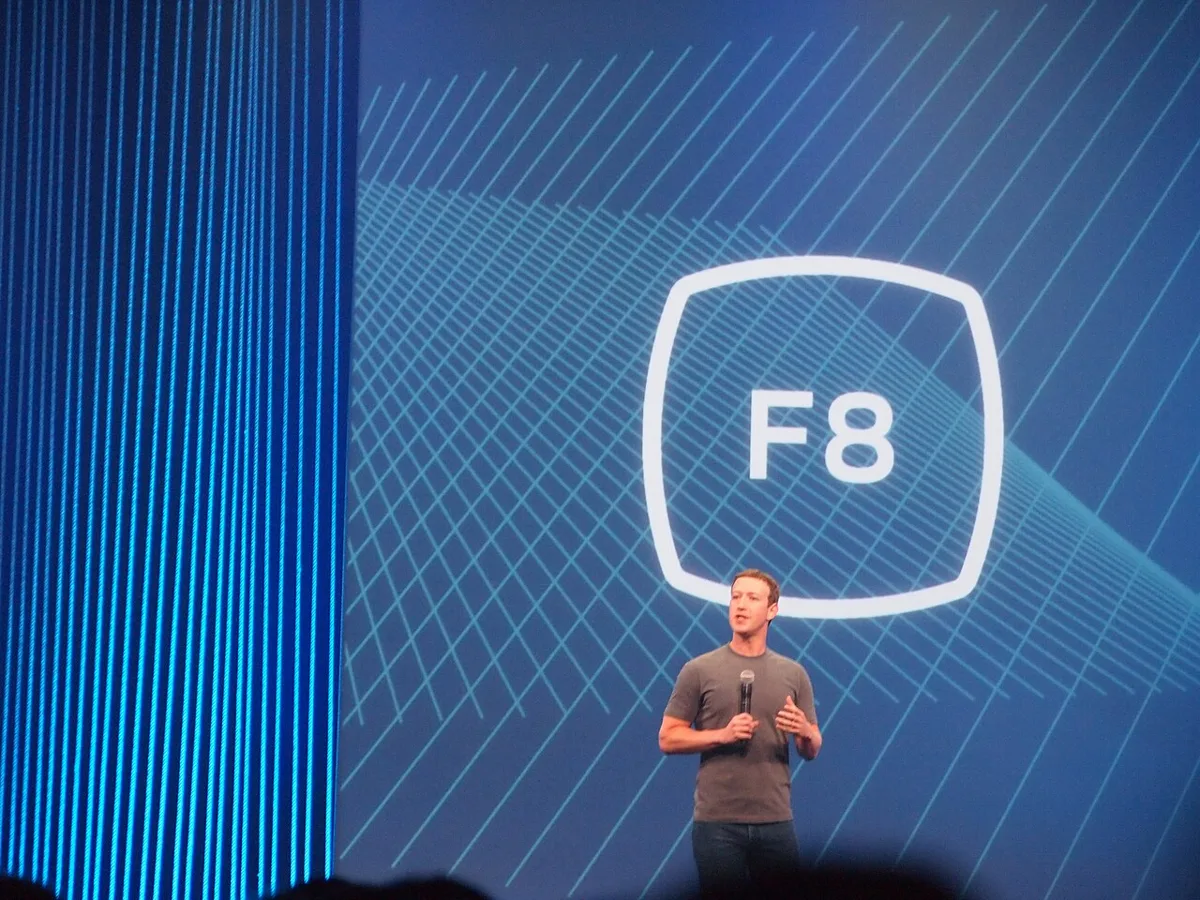
Mark Zuckerberg would like you to know that superintelligence is coming, it's going to be great, Meta is going to lead it, and you definitely shouldn't be worried. He needed 6,500 words to say this. CBS News reports the essay went up Monday on Meta's own website, which is a little like asking someone to review their own restaurant, but here we are.
The Vision, Briefly: Everyone Gets a Robot Best Friend
The core pitch, according to CBS News, is that Zuckerberg wants AI tools shared with "as many people and businesses as possible." Meta will offer free versions of its tools to "billions of people" and aim for the "lowest price possible" on AI access. He also envisions every person having a personal AI agent to help with health, finances, relationships, and career decisions.
Let that last part sink in. The man who built a platform that actively degraded teenage girls' mental health for profit and had to be dragged before Congress to explain it now wants to be the one managing your relationship advice. Through a free app. That he controls.
To his credit, Zuckerberg did promise a "fully private mode" for these personal agents that would stop Meta and other providers from seeing your information. Whether you believe that promise probably depends on how much you enjoyed the Cambridge Analytica years.
Don't Worry About Your Job, He Says From His Yacht
One of the essay's main rhetorical goals is to pre-emptively defuse fears about mass unemployment. Zuckerberg told CBS News he believes AI will create new kinds of jobs that don't exist today, calling superintelligence a "tool of invention" rather than automation. Companies may get smaller, he argues, but there will just be more of them.
"Company sizes may shrink — just as they did in the transition from industrial giants to tech companies," Zuckerberg wrote. "But this doesn't mean fewer jobs overall. It implies a larger number of companies with fewer people each."
This is technically possible. It is also the kind of argument that sounds very clean in a 6,500-word essay and considerably less clean when you are the specific person whose specific job just got automated away. Economists who study labor displacement are considerably less breezy about the transition period, but sure, vibes-based futurism, let's go with that.
A Billion Dollars to Make the Neighbors Feel Better About the Data Centers
Meta is spending $145 billion on capital expenditures in 2026, the vast majority of it on data centers, CBS News reports. Data centers are large, loud, hot, water-hungry infrastructure projects that communities around the country have been fighting hard against, over legitimate concerns about environmental impact, electricity costs, and water usage.
Zuckerberg's solution is a fund. Specifically, what he is calling the "Future is for Everyone Fund," a $1 billion pool to benefit communities where Meta is building its facilities. The Wall Street Journal first reported the fund's size. He also pledged to keep electricity prices low and restore local water supply.
One billion dollars sounds like a lot of money. It is, in fact, less than one percent of Meta's 2026 infrastructure budget. This is the corporate equivalent of demolishing your neighbor's backyard to build a parking garage and leaving a fruit basket on the stoop. The gesture is noted. The proportion is telling.
Open Source, But Make It Patriotic
Zuckerberg used a chunk of the essay to advocate for lowering barriers to U.S. open-source AI development, framing it explicitly as a national security and competitiveness issue. The argument, as CBS News summarizes it, is that locking AI models up as proprietary tools would be worse than the risks of releasing them openly, especially if foreign competitors are not playing by the same rules.
Meta is walking the walk here, at least on paper. The Wall Street Journal reports that Meta plans to soon launch a new open-weights model called Muse Glimmer, along with an open-weight version of Muse Spark 1.2, its most advanced AI coding model. Open weights essentially means sharing the underlying numerical architecture that determines how the model behaves.
This is a legitimate and genuinely contested debate in AI policy circles, and Zuckerberg is not wrong that there are real tradeoffs. Where it gets complicated is that Meta's business interests and the "open source benefits everyone" argument happen to align perfectly, which doesn't make the argument wrong, but does make it worth reading with both eyes open.
Working With the Government, Which Is a Thing He Now Wants to Do
Perhaps the most striking section of the essay, at least for anyone who remembers Zuckerberg's early libertarian tech-bro years, is his call for AI companies to actively cooperate with the federal government. He proposed that labs share "intermediate training checkpoints" of new models with authorities so security issues can be caught early. He also said AI companies should work directly with law enforcement to stop bad actors from misusing the tools.
This is a meaningful shift in posture, even if it is partly self-serving. Inviting government oversight before the government mandates it is a classic play for an industry trying to avoid being regulated on someone else's terms. If you shape the oversight framework, you shape the oversight. Zuckerberg has been in Washington enough times now to know exactly how that game works.
The Dingo Take
You are supposed to read a 6,500-word document written by one of the wealthiest and most powerful men in human history, published on his own company's website, arguing that his company's products will benefit all of humanity, and take it at face value. That is the ask. And look, some of what Zuckerberg writes is defensible. The open-source arguments have real merit. The policy cooperation proposals are at least directionally serious. The personal AI agent vision, if it actually works the way he describes, could genuinely help people who currently can't afford professional advice on their health or finances.
But context exists. This is the same company that knew Instagram was harming teenage girls and kept going. The same platform that repeatedly promised privacy reforms and repeatedly failed to deliver them. The same executive who spent years resisting meaningful content moderation before the politics changed and suddenly he was fine with it. The "Future is for Everyone Fund" is a billion dollars against a $145 billion construction spree. The private mode promise comes from a company with a two-decade track record of deciding your data is actually their data.
None of this means AI is doomed or that Zuckerberg is lying through every sentence. It means a press release is not a policy, and a blog post is not accountability. The essay is well-written and genuinely worth reading if you follow this space. Just read it the same way you'd read any other document produced by a corporation trying to get ahead of a regulation cycle. With interest. And a raised eyebrow.



Comments