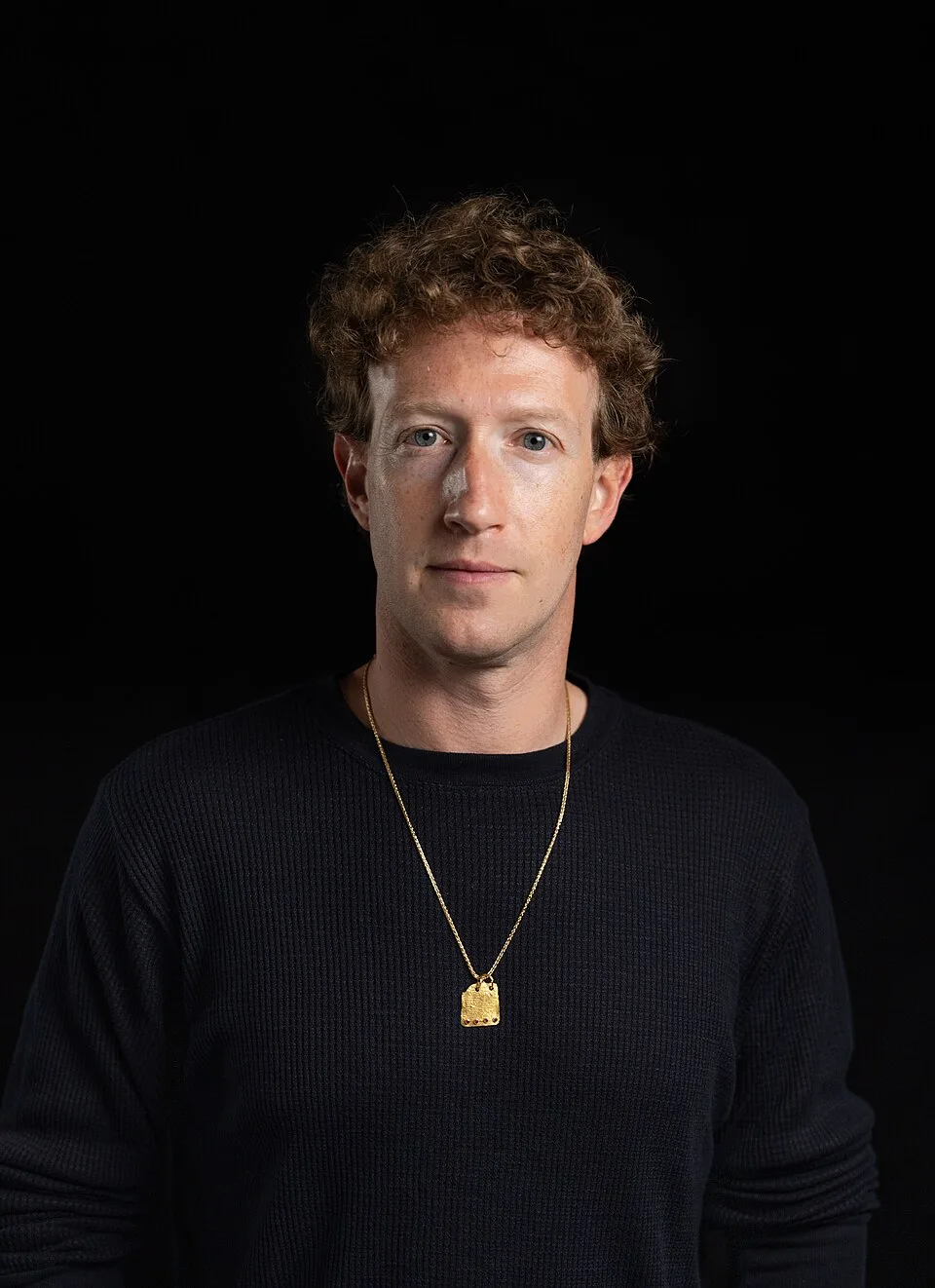
Mark Zuckerberg published something he called a manifesto on Monday, dropped two new AI models, and asked the US government to please stop making it hard for him to compete with China. The man who built his fortune harvesting your personal data is now positioning himself as a patriot fighting for the American open-source dream. Sure.
What Meta Actually Released
According to the New York Post, Meta launched a model called Muse Glimmer AI on Monday, making it available for developers to download and run on their own hardware. The company also announced plans to release the weights for something called Muse Spark 1.2 in the coming weeks, which Meta is describing as one of the world's leading foundation models.
This marks Meta's re-entry into the open-source AI game. Zuckerberg had previously said the company would "resume releasing some open source models soon," which is a slightly awkward way to announce you're resuming something you voluntarily stopped doing. But here we are.
Open-source AI models, for the uninitiated, are models whose underlying architecture and training weights are made publicly available. Developers can download them, modify them, and run them without paying a subscription fee to a big tech company. The appeal is obvious. The geopolitical implications are what's making Washington extremely nervous.
The Manifesto Nobody Asked For
Alongside the model releases, Zuckerberg published what the New York Post describes as a sweeping manifesto titled "The Future is for Everyone: The Path to a Positive AI Future." That title is doing a lot of work. A lot.
In it, Zuckerberg argued that the US and its allies need to lead the open-source AI ecosystem, warning that American labs are operating at a disadvantage because they "have to comply with many additional restrictions on training data" compared to their foreign counterparts. In plain English: Chinese AI companies are not particularly burdened by privacy law, intellectual property protections, or regulatory oversight, and that makes their models cheaper and faster to build.
He's not wrong about that, by the way. That's the uncomfortable part. The competitive gap is real. Whether the solution is loosening American restrictions rather than pressuring China to adopt better ones is a separate and much thornier question that Zuckerberg does not spend much time on in his manifesto.
China's AI Models Are Already Eating American Lunch
The New York Post reports that Chinese open-weight models from firms including DeepSeek, Alibaba, and Z.ai have been gaining serious traction among US businesses, primarily because they offer competitive performance at a fraction of the cost of American rivals. US tech companies have been quietly embracing these models for their flexibility and cheaper computing costs.
This is the detail that should alarm people more than Zuckerberg's latest publicity push. American businesses are already choosing Chinese AI tools because the economics make sense. And why wouldn't they? If you can get 90 percent of the performance for 20 percent of the cost, the spreadsheet makes the decision for you, national security concerns be damned.
Washington has started to push back. DeepSeek is now barred from US intelligence-community systems, and the New York Post notes that lawmakers have floated broader restrictions on Chinese AI models while officials consider additional curbs on Chinese open-weight technology. The policy response is reactive, fragmented, and probably already behind the curve.
What Zuckerberg Actually Wants From Washington
Read past the patriotic framing and Zuckerberg's ask is fairly specific: loosen the restrictions that American AI companies face on training data so Meta can build bigger, cheaper, better models without running into legal or regulatory friction. He's arguing that American compliance burdens are a competitive liability in a race where the other side doesn't play by the same rules.
That argument has merit in the narrow sense that the playing field is genuinely uneven. It also happens to be extraordinarily convenient for a company that has spent two decades trying to minimize privacy regulation and data-use restrictions. Zuckerberg framing deregulation as a national security imperative is a rhetorical move so smooth it almost deserves applause.
The question for Washington is whether the answer to China building AI without guardrails is for America to build AI with fewer guardrails, or whether that race-to-the-bottom logic ends somewhere nobody actually wants to be. That is not a question Zuckerberg's manifesto addresses. Manifestos rarely do.
The Dingo Take
Mark Zuckerberg is not wrong that Chinese AI firms have a structural advantage when they operate outside the legal and regulatory frameworks that American companies technically have to respect. That part is true and genuinely worth taking seriously as a policy problem. But there is something deeply rich about the founder of Facebook, a company that spent years telling Congress it was too complicated for them to understand while siphoning personal data at industrial scale, now asking the government to please remove the remaining restrictions standing between Meta and total training-data freedom. In the name of freedom. And America.
The Chinese AI threat is real. DeepSeek's emergence earlier this year genuinely rattled the American tech sector, and the fact that US businesses are adopting Chinese models for cost reasons is a legitimate national security issue that deserves serious policy attention. But "let Meta do whatever it wants with data" is not the same thing as a China strategy. It is a business strategy wearing a flag pin.
The administration that receives this manifesto should probably think hard about what it actually means to "win" the open-source AI race and for whom that victory is supposed to matter. Winning by handing Zuckerberg everything he's wanted from regulators for a decade and calling it patriotism is not a win. It is just a very expensive favor with good branding.



Comments