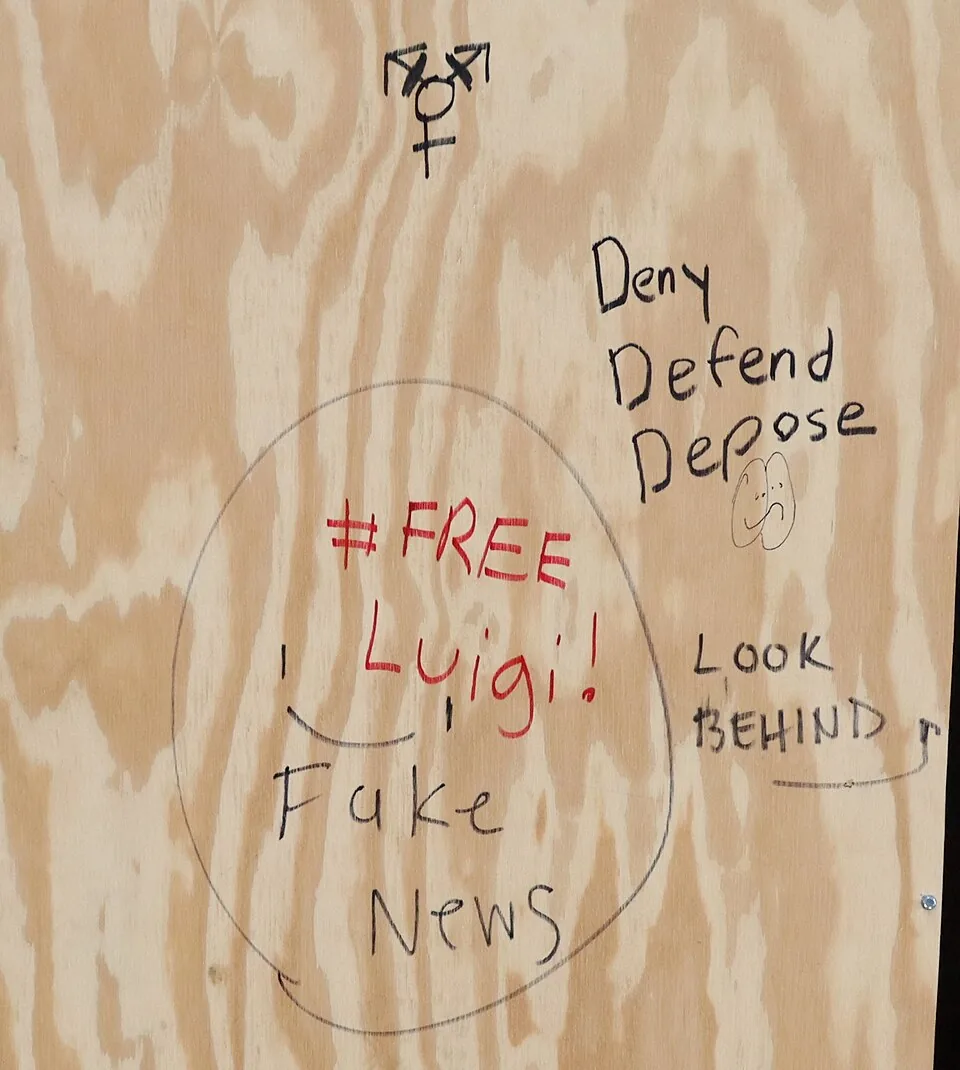
Less than a month out from the most-watched murder trial since O.J. Simpson wore that glove, Luigi Mangione's defense team still hasn't told anyone what their actual defense is. Jury selection begins September 8 in a Manhattan courtroom, and the prosecution has surveillance footage, a gun, and a notebook full of the defendant's own writings. The defense, as best anyone can tell, has vibes.
What Prosecutors Actually Have on Him
The state's case, as the BBC reports, is not subtle. Prosecutors have surveillance footage showing the moment UnitedHealthcare CEO Brian Thompson was shot from behind by a hooded figure in Midtown Manhattan in 2024. They have ballistics evidence. They have fingerprints. And crucially, after a hard-fought evidentiary battle, they have a gun and a notebook containing what they describe as Mangione's own writings.
Judge Gregory Carro ruled earlier this summer that both the firearm and the notebook are admissible at trial, dealing a significant blow to Mangione's legal team, which had argued that Pennsylvania state police improperly seized items from his backpack and failed to properly advise him of his rights. The defense did win some exclusions: a gun magazine, cell phone, passport, wallet, and computer chip are all out. But the gun and the notebook stayed in, and those two items are widely considered the prosecution's most important physical evidence.
The surveillance footage alone is damaging enough. Prosecutors used it not just to show the shooting itself but to reconstruct Mangione's alleged movements in the aftermath, building a timeline they say connects him definitively to the crime scene. That is a lot of rope for a defense team to deal with.
The Defense Strategy, Such As It Is
Here is where things get genuinely strange. Mangione has pleaded not guilty to all charges, including second-degree murder and related weapons offenses. His lawyers have attacked the prosecution's evidence collection. What they have not done, with trial weeks away, is offer any coherent alternative account of what actually happened.
As former federal prosecutor Mitchell Epner told the BBC, with refreshing bluntness: "We do not have, like in 'The Fugitive,' the idea of the one-armed man who's the real killer." That is a legal expert's way of saying the defense has no competing theory of the crime. There is no mystery suspect. There is no alternate timeline.
Earlier this summer, Mangione's lawyers floated an "extreme emotional disturbance" argument, which under New York law could potentially reduce a murder charge to manslaughter if the jury believes the defendant acted under overwhelming psychological pressure with a reasonable explanation. They then withdrew it almost immediately. Legal experts questioned whether an insanity plea might follow, but Cheryl Bader of Fordham University's Criminal Defense Clinic told the BBC that without a showing of genuine delusion or a complete failure to understand one's own actions, an insanity defense rarely succeeds.
What is left? According to Epner, the defense's best play may not be about the facts of the killing at all. It may be about healthcare. The theory being that if Mangione's lawyers can make the trial feel like a referendum on the American insurance industry, they might find at least one juror who can't bring themselves to convict. "The more it's about the other peripheral issues, the harder it is for the prosecution," Epner said. That is a real legal strategy. It is also, let's be honest, a hell of a Hail Mary.
The Circus Is Coming to Town
Mangione has attracted a fervent online following since his arrest, with a significant portion of the internet treating him less as an alleged murderer and more as a folk hero who did something about a healthcare system that has ground millions of Americans into dust. That energy is going to collide with a Manhattan courtroom in a very chaotic way.
His supporters have already been lining up for hours to attend pre-trial hearings. When jury selection starts September 8, the BBC reports that the frenzy is expected to go into overdrive. Mangione's own lawyers have pushed for better media access, questioned how journalists are being credentialed, and formally requested that the trial be broadcast live. New York state courts do not allow public live streams, so that request went nowhere.
The Manhattan DA's office said in a Monday night filing that it would defer to the court on access questions but flagged security concerns about people covertly recording proceedings from an overflow room. The court's spokesman told the BBC they are "actively finalising" plans including an overflow room setup, while promising "the greatest possible access for both the media and the public." In other words, the logistics of this thing are still being figured out weeks before the gavel drops.
What Tuesday's Hearing Is About
Before the September trial begins, Mangione is due back in court Tuesday for a hearing that is expected to address additional ground rules and procedural questions. Expect lines around the block.
Judge Carro will likely hash out remaining logistics, and the hearing could clarify aspects of the trial that are still unresolved, including how courtroom access will be handled and whether any further evidentiary questions need settling before jury selection. Given how much of this case has already been litigated in pre-trial filings, it is possible Tuesday produces more headline-grabbing moments before the main event even starts.
The Dingo Take
Brian Thompson was a father of two who was shot in the back on a Manhattan sidewalk. That fact tends to get lost in the discourse around this case, buried under memes and healthcare grievances and arguments about whether Luigi Mangione is a symbol or a killer. He is accused of being a killer. The trial will determine whether the state can prove it beyond a reasonable doubt. Both of those things can be true at once, and the American legal system is specifically designed to handle exactly that tension.
What the Mangione trial is going to force this country to sit with, whether it wants to or not, is the gap between those two conversations. One is a legal proceeding with evidence and jury instructions and a specific dead man at the center of it. The other is a cultural argument about why so many people reacted to Thompson's death with something closer to satisfaction than grief, and what that says about the state of American healthcare. The defense clearly intends to drag the second conversation into the first one. Whether that works on twelve Manhattan jurors is genuinely unknowable.
What we do know is this: the prosecution has a gun, a notebook, surveillance footage, ballistics, and fingerprints. The defense withdrew its only named legal strategy before trial even started. If Mangione's lawyers are planning something clever, they are keeping it very close to the vest. September 8 is going to be one hell of a morning.




Comments