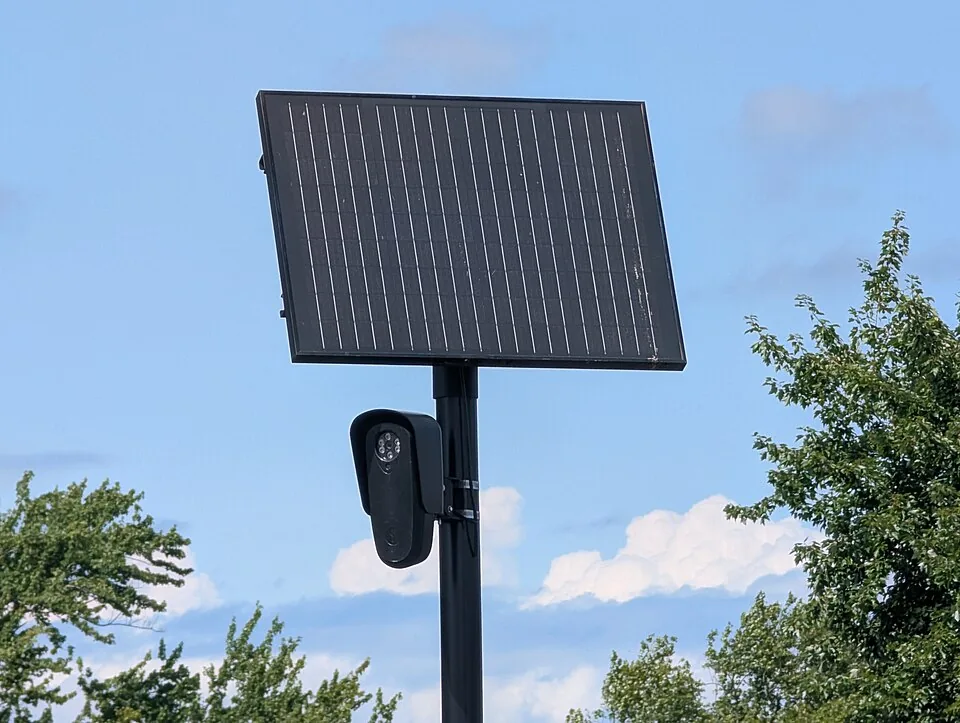
Flock Safety, the company quietly logging the movements of virtually every car in America, announced this week that it will hold your location data for one week instead of one month. The American Civil Liberties Union would like you to understand that this is not the win it sounds like. Flock is scanning billions of license plates every single month, and trimming three weeks off a retention period is a little like a casino offering to drive you home after you've already lost the house.
Here's What Flock Actually Is
In case you've been lucky enough not to think about this yet: Flock Safety operates a nationwide fleet of Automatic License Plate Readers. These are pole-mounted cameras positioned along popular roads and intersections that log your car's license plate number, make, model, and the exact time you drove past. Every time. They build a massive, searchable database of where American cars go and when.
According to NBC News, law enforcement agencies that contract with Flock do not need a warrant to access any of this travel information. They can also opt to share the data with other law enforcement offices, locally, statewide, or nationally. The result is a database of real-time American movement data accessible to a wide range of police officers across the country, no judge's signature required.
Flock and its law enforcement partners argue the system is an invaluable tool for tracking suspects and reducing the time officers spend on investigations. That argument is not wrong on its face. The problem is that the cameras don't only track suspects. They track everyone.
The 'Reforms' on the Table
NBC News reports that Flock announced Thursday it would implement several new safeguards. The headline change: default data retention drops from one month to one week. If a police officer wants to hold onto your location data for longer than that, they'll now be prompted to enter a case number first. A small speed bump. Better than nothing, technically.
Flock also plans to fully roll out a system called Audit Assistance, which it began testing earlier this year. The system is designed to flag and lock out users whose searches show "abnormal activity," the company said in its press release. The idea is to catch officers who might be abusing the database, something that has happened before. Police officers have been repeatedly accused of using license plate reader data to stalk people, which is exactly as horrifying as it sounds.
The company told NBC News these changes are a direct response to growing privacy concerns and a wave of backlash that has included some cities canceling their Flock contracts entirely, alongside a national pattern of vandalism targeting the cameras themselves. People, it turns out, have feelings about being tracked everywhere they drive.
What the ACLU Actually Thinks of This
Chad Marlow, senior policy counsel at the ACLU, was not moved. "My biggest concern was and will continue to be that they are a mass surveillance company that collects billions and billions of license plate scans every month on people who have done nothing wrong," he told NBC News. That's a pretty clear statement of position.
Marlow acknowledged the reduction in default retention time as a minor positive. He has a benchmark in mind, though: the ACLU recommends a 48-hour retention window. One week is seven times longer than that. Going from one month to one week is progress in the same way that going from a Category 5 hurricane to a Category 4 is progress. You're still underwater.
His larger critique cuts right to the bone. "Flock collects location data on virtually every car in America every month and then facilitates the nationwide sharing of that data where it can be used to target members of vulnerable and disfavored communities and to undermine the privacy and chill the behavior of everyone in America," Marlow said. In 2026, with the political environment being what it is, the phrase "vulnerable and disfavored communities" does not need much unpacking.
The Part Where This Gets Bigger Than Flock
The vandalism wave NBC News references is worth sitting with for a moment. People across the country have been physically destroying Flock cameras. That is not a normal consumer response to a product you dislike. You don't smash your phone because you hate the terms of service. The cameras are getting hit because a meaningful number of Americans have looked at the system, understood what it does, and decided that breaking it is a more satisfying option than filing a public comment.
Some cities have arrived at similar conclusions through official channels, canceling their contracts after public pressure mounted. Flock's announcement this week reads at least in part as a company trying to stop the bleeding, both literally and financially. When your product is getting vandalized in the street and municipalities are canceling contracts, you put out a press release about safeguards.
None of this changes the underlying architecture. Flock's cameras are still out there. The database is still being built. The warrantless access is still the law of the land, or more accurately, the absence of a law of the land. Congress has not passed comprehensive federal privacy legislation governing license plate readers. States have patched together varying levels of protection. The federal vacuum remains.
The Dingo Take
You are supposed to look at a company cutting its data retention from 30 days to 7 days and feel reassured. Flock Safety is counting on it. The press release exists precisely to give nervous city councils and credulous local reporters something to point to: see, reforms. The ACLU is pointing out, patiently and correctly, that you can rearrange the furniture all you want inside a panopticon and it is still a panopticon.
The core issue here isn't retention windows. It's that a private company has built the infrastructure for tracking the physical movements of virtually every American driver, sold access to law enforcement without requiring warrants, enabled nationwide data sharing, and then watched as officers used it to stalk people. That last part already happened. Multiple times. The Audit Assistance rollout is Flock acknowledging that its product has been used to harm people, while doing the absolute minimum to address it.
The cameras are spreading. The database is growing by billions of scans a month. The federal government has shown no serious appetite for regulating any of this, particularly not the current administration, which has demonstrated a pretty consistent enthusiasm for surveillance tools when they're pointed at the right people. If the choice is between taking Flock's press release at face value and listening to the people whose car is currently in that database for no reason other than the fact that they drove somewhere, the ACLU is making the more honest argument. Seven days is still six days longer than it needs to be.





Comments