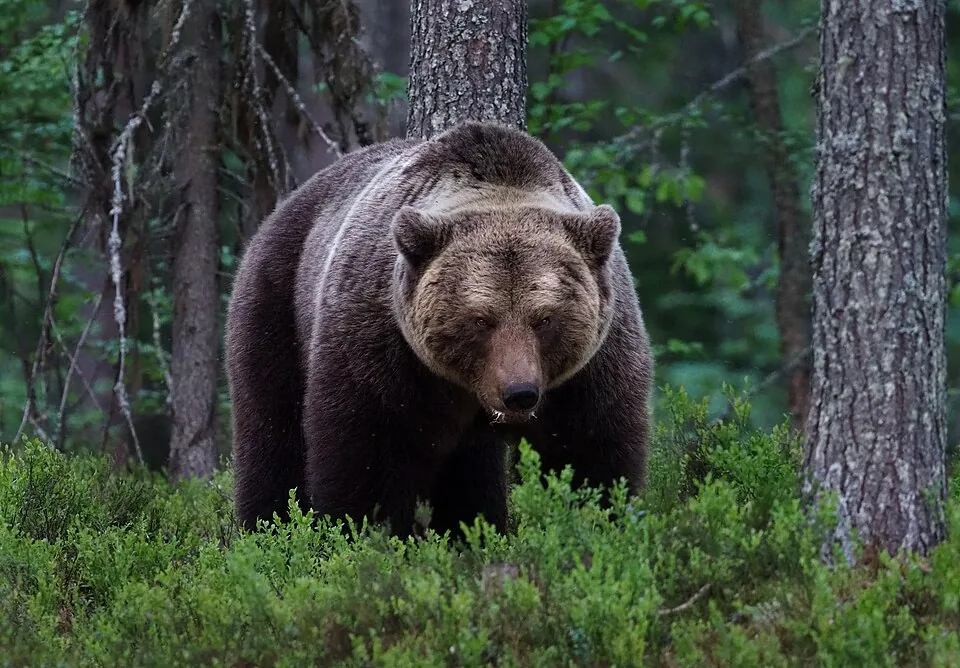
A woman went for a solo trail run in Anchorage this week and came back in an ambulance, which is honestly still a better outcome than it sounds. She survived a brown bear attack on the Wolverine Bowl trail at Prospect Heights by deploying bear spray, and the bear, apparently unsatisfied with the interaction, left. This is the second bear attack in Anchorage in less than a month.
What Actually Happened Out There
According to the Alaska Department of Fish and Game, the woman was running alone when a brown bear made contact. She used bear spray, which worked. She was then taken to a local hospital for treatment. The department sent biologists to collect samples at the site, but no bears were found, because bears do not wait around after losing a fight to a woman with a can of pressurized capsaicin.
Warning signs have now been posted at the Prospect Heights trailhead. The department is reminding hikers to stay off closed trails, carry deterrents, make noise while hiking, and try very hard not to surprise a bear, especially one sitting on a food cache or accompanied by cubs. These are, in the department's phrasing, bears that "may react in a threatened or defensive manner." This is the kind of understatement you can only pull off if you work for a state wildlife agency.
The Foliage Is Also Working Against You
The department flagged something worth understanding about why these encounters keep happening this time of year. "Thick, dense summer foliage can block sightlines, making surprise encounters more likely," they said, which translates plainly to: the trail can look totally clear right up until there is a bear on it.
They are specifically recommending that hikers choose routes with good visibility and avoid trails near salmon-bearing streams, because salmon attract bears the way free samples attract the rest of us. In August in Alaska, that narrows the options somewhat, but the advice is sound.
This Happened Last Month Too
The New York Post reports that less than a month ago, another woman was mauled by a bear in Anchorage. That victim was walking with a friend and three dogs in the Bear Valley residential neighborhood, right next to Chugach State Park in south Anchorage, when a bear came out of dense alders and made contact. She suffered non-life-threatening injuries and was expected to recover.
The department noted that those hikers were on an unofficial, user-made trail with heavy vegetation and poor visibility. The setup in both cases is basically identical: dense cover, low visibility, a person moving through terrain where a bear was also moving through terrain, and then a very bad moment for everyone involved.
What the Experts Say You Should Do If This Happens to You
The Alaska Department of Fish and Game has detailed guidance, and it is worth taking seriously because it is counterintuitive in the way that survival advice usually is. The core rule: do not run. Running triggers a chase response. A brown bear can hit 35 miles per hour. You cannot.
If a bear charges, stand your ground. Talk calmly. Move slowly. Use your bear spray when it is within range, which the department specifies means close, not at a comfortable distance. If the bear is stationary and you have a moment, back away slowly without breaking eye contact. The entire framework is built around convincing an animal that outweighs you by several hundred pounds that you are boring and not worth the energy. It requires a level of composure that most people do not have while a bear is running toward them, which is exactly why they recommend practicing and carrying deterrents before you need them.
The Part About Carrying a Firearm
The department mentions, without any drama, that hikers should carry "a deterrent such as bear spray or a firearm." That is Alaska for you. Both options have legitimate use cases. Bear spray has a strong track record and is effective at a closer range than most people assume. Firearms require a level of proficiency that most trail runners do not have and that adrenaline makes significantly worse.
The consensus among people who study bear encounters is that bear spray is more reliable in most situations, not because a firearm cannot stop a bear, but because actually stopping a charging bear with a gun, in the dark or in a panic or in dense brush, is a much harder thing to execute than the concept suggests. The woman who survived this week had bear spray. It worked.
The Dingo Take
Two bear attacks in one month in one city is the kind of statistic that should probably make you reconsider your solo trail running habit, at least until September. That is not victim-blaming. The women in both cases did a lot of things right. One of them had bear spray and used it correctly and survived because of that. The other was in a heavily vegetated unofficial trail in an area that borders a state park, which is a combination that wildlife officials have been warning about for years.
The Alaska Department of Fish and Game is out here doing actual public safety work, posting signs, sending biologists, writing detailed plain-English guidance about how to not die near a bear. Read it. Carry the spray. Go with a friend. Make noise on blind corners. These are not dramatic asks. The alternative is a bear encounter with no deterrent, which is a situation where the odds shift considerably toward the bear.
Anchorage is a city of 290,000 people built on the edge of some of the most intact bear habitat in North America. The bears are not coming into town. The town is in the bears' backyard, and has been since the beginning. Respecting that fact is the minimum required to keep running the trails, which, to be clear, are worth running. Just not alone, and not without the spray.





Comments