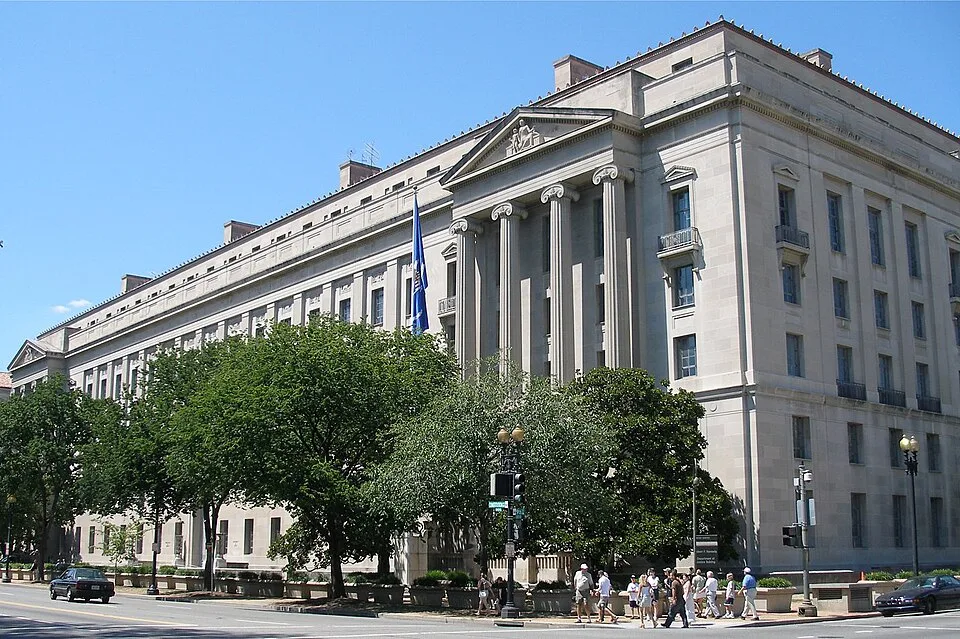
The Department of Justice launched antisemitism investigations into Ivy League universities with the outcomes already decided, according to a new whistleblower complaint reported by The Hill. Investigators allegedly found no violations in some cases and the Trump administration demanded settlements anyway. That's not a law enforcement agency. That's a shakedown with a government letterhead.
What the Whistleblower Actually Said
The complaint, as reported by The Hill, accuses DOJ officials of having "predetermined" outcomes before investigators even finished their work. In some cases, the whistleblowers say, investigators concluded there were no actual violations of the law. Didn't matter. The Trump administration reportedly wanted settlements, so the pressure went on regardless.
The complaint also accuses the administration of deliberately accelerating the investigation timelines. Which, if you've ever watched a law enforcement process get rushed for political reasons, you already know what that means: cut corners, skip inconvenient findings, get to the answer you wanted before anyone can object.
This is a specific and serious allegation. The DOJ doesn't get to just demand that universities hand over concessions when its own investigators can't find anything wrong. That's not how prosecutorial authority is supposed to work. That is, however, exactly how political pressure campaigns disguised as legal processes tend to work.
The Broader Context You Need to Hold in Your Head
The Trump administration has been using antisemitism as a cudgel against elite universities since the campus protest wave of 2024. The stated logic was always that schools harboring pro-Palestinian demonstrators were creating hostile environments for Jewish students, which is a legitimate civil rights concern worth investigating properly.
Key word: properly. An investigation that starts with the answer and works backward isn't protecting Jewish students. It's using Jewish students as a pretext to punish universities the administration politically despises. Those are two very different things, and conflating them is exactly what the administration has been banking on.
Harvard, Columbia, and other schools have faced federal funding threats, task force scrutiny, and a relentless pressure campaign from the White House. The Hill's reporting on this whistleblower complaint suggests at least some of that campaign was being driven not by evidence of actual civil rights violations, but by political appetite for scalps.
The Whistleblower Mechanism and Why It Matters Here
Whistleblower complaints from inside the DOJ are not filed casually. Career attorneys and investigators who go this route know they are torching their own professional comfort, possibly their careers, and certainly their relationships with colleagues who'd rather look the other way. When someone does it anyway, that tells you something about what they saw.
The Trump administration has also spent considerable energy trying to shrink the space for exactly this kind of internal dissent. Officials who raised concerns were pushed out. The civil service protections that historically insulated federal investigators from political pressure have been systematically attacked. The fact that someone filed this complaint in that environment makes it worth taking seriously.
It also raises the obvious follow-up question: how many other DOJ investigations, in how many other areas, were being run on the same predetermined logic?
What the Universities Were Facing
The Ivy League schools in question were not simply being asked politely to improve campus safety. They were facing threats to billions of dollars in federal funding, which for research universities is not an abstraction, it is the difference between operating and not operating. That's a coercive lever of extraordinary size.
When you hold that kind of financial gun to an institution's head and then, according to this whistleblower, demand settlements that your own investigators couldn't justify with actual findings, you have left the territory of law enforcement and entered the territory of extortion. The word is unpleasant. The description fits.
Some universities buckled and negotiated. Others fought back in court. The whistleblower complaint, if accurate, suggests the ones who buckled may have paid a price for violations that DOJ's own people couldn't substantiate.
DOJ Response, or the Lack of One
The Hill's reporting does not include a substantive DOJ rebuttal to the specific allegations in the complaint. The Trump administration has consistently framed its university pressure campaign as vigorous civil rights enforcement, a necessary corrective to years of institutional failure to protect Jewish students on campus.
That framing does real work in public debate, because the underlying concern about campus antisemitism is genuine and widely shared. Using a real problem as cover for a predetermined political prosecution is a much harder thing to explain on a bumper sticker. Which is probably part of why the administration has stuck to the bumper sticker.
The Dingo Take
You are supposed to believe the Department of Justice investigated Ivy League universities for antisemitism violations, and whatever conclusions career investigators reached about the actual evidence simply didn't factor into what happened next. That is what the whistleblowers are describing. Not overzealous prosecution. Not aggressive but well-intentioned enforcement. A process where the outcome was locked in before the investigation finished, and settlements got demanded even when investigators found nothing to hang them on.
Antisemitism is real. Campus hostility toward Jewish students during the 2024 protest wave was documented, serious, and worth federal attention. But a DOJ that uses a civil rights mandate as a blank check to squeeze politically inconvenient institutions out of predetermined conclusions isn't enforcing civil rights law. It's cosplaying as a law enforcement agency while running an influence operation. The distinction matters enormously, both for the integrity of actual civil rights enforcement and for the universities being pressured.
Someone inside that agency apparently decided they'd seen enough and filed a complaint knowing full well what it would cost them. Congress should be demanding every document, every communication, and every internal assessment related to these investigations. And anyone who spent the last two years praising this pressure campaign as principled civil rights enforcement owes themselves an honest look at what they were actually cheering for.



Comments