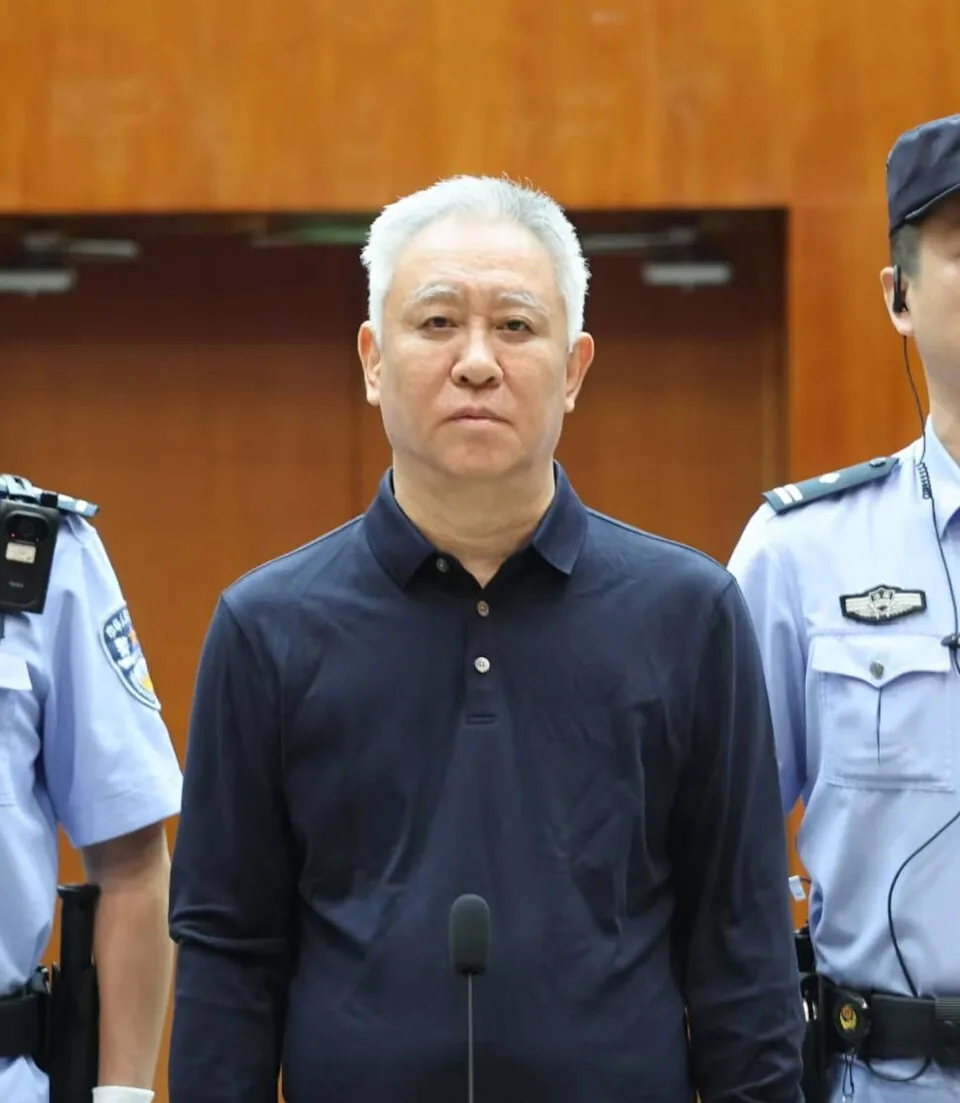
The founder of Evergrande, the real estate developer that collapsed with over $300 billion in liabilities and helped crater the Chinese property market for half a decade, has been sentenced to life in prison. A court in Shenzhen convicted Hui Ka Yan on Thursday for orchestrating one of the largest financial frauds in modern history, including inflating the company's revenues by roughly $80 billion over just two years. The companies were fined a combined $2.3 billion, which, relative to the damage done, is a little like fining the Titanic for littering.
What the Court Actually Found
The Shenzhen Intermediate People's Court convicted Hui, also known as Xu Jiayin, of large-scale financial fraud, abusing his position, and misappropriating company assets, according to the Associated Press. Several other senior Evergrande executives were also handed prison terms of up to 18 years on charges including illegally taking public deposits and fraud.
The fraud itself was breathtaking in its scale and its brazenness. According to the court, Evergrande manipulated its financial data by prematurely booking revenue from property sales before the apartments were even completed or handed over to buyers. Revenues were overstated by roughly $80 billion over 2019 and 2020 alone. That is not a rounding error. That is a whole different company.
Hui pleaded guilty back in April to a range of charges including illegal absorption of public deposits, fraud, and bribery. The court on Thursday made it official, and then some. Life in prison is not a sentence Chinese courts hand down lightly, and the fact that Hui got it tells you something about how Beijing wanted this story to end.
How Evergrande Blew Up and Took the Market With It
Evergrande, founded in 1996, was once the world's most heavily indebted real estate developer. When Chinese authorities cracked down on excessive borrowing in the property sector in 2020, the whole rotten structure came apart. The company defaulted on its debts in 2021, and was eventually ordered to liquidate its assets. Hong Kong's stock exchange delisted it last August.
The numbers are staggering even by the standards of modern corporate catastrophe. More than $300 billion in liabilities. Hundreds of thousands of Chinese homebuyers who paid deposits on apartments that were never finished. A property market downturn that, as NPR reports, has weighed on China's broader economy ever since. One company, one fraud, years of economic damage.
This was not some complicated, obscure financial scheme that only a forensic accountant could find. Authorities in Hong Kong and mainland China found that Evergrande had been booking revenue from apartments before they were built, let alone sold. That is not sophisticated fraud. That is the accounting equivalent of counting your chickens before the eggs exist.
The $2.3 Billion Fine That Sounds Big Until You Do the Math
The Shenzhen court fined Evergrande group 8.82 billion yuan, or about $1.31 billion, and fined Evergrande Real Estate Group a separate 7 billion yuan, around $1.04 billion, according to the Associated Press. Combined, that comes to roughly $2.3 billion in corporate penalties.
For context: the company overstated revenues by approximately $80 billion. The fine is about three cents on the dollar for the fraud, assessed against a company that has already been liquidated and has no money. The executives who walked away with their personal fortunes intact during the good years are not, as far as anyone has reported, writing large checks back to the people they burned. The fine is essentially symbolic. Beijing is sending a message, not recovering damages.
The real punishment is Hui's life sentence. That is the part that is meant to concentrate minds.
Why Beijing Is Making an Example Here
China's property sector remains a mess years after the Evergrande collapse triggered a broader developer crisis. Dozens of other real estate companies have faced debt crises of their own, millions of presold apartments remain unfinished, and consumer confidence in the property market has taken years to claw back even partially.
Sentencing Hui to life in prison is part of Beijing's effort to demonstrate that it is holding someone accountable for all of that damage. The Chinese Communist Party cannot easily admit that its own regulatory failures allowed a $300 billion liability bomb to sit in plain sight for years. But it can put the founder in prison and call it justice.
That is not nothing. A life sentence is a genuinely severe consequence. But it is also a very convenient way to make one man the singular villain of a systemic crisis that involved lenders, regulators, and years of willful blindness from every direction.
The Dingo Take
Hui Ka Yan is going to prison for the rest of his life, and the Chinese property market is still broken, and hundreds of thousands of people are still waiting on apartments they already paid for, so let us not pretend this verdict fixes very much. The courtroom got its villain. The system that enabled him got a pass.
The eighty billion dollar revenue inflation did not happen in a vacuum. Auditors signed off on financial statements. Regulators looked the other way or looked nowhere at all. Lenders kept extending credit to a company whose balance sheet, we now know, was a work of fiction. Nobody is sentencing the institutional framework that greenlit all of this for a decade. Just the guy at the top, which is tidy and satisfying and solves nothing structural.
Still. Life in prison for financial fraud is a sentence that does not exist anywhere in the American legal system, and the next time a U.S. executive signs off on a fraudulent prospectus and walks away with a fine smaller than his bonus, it might be worth thinking about what genuine accountability actually looks like. Not that we're advocating for anything. Just noting the contrast.




Comments