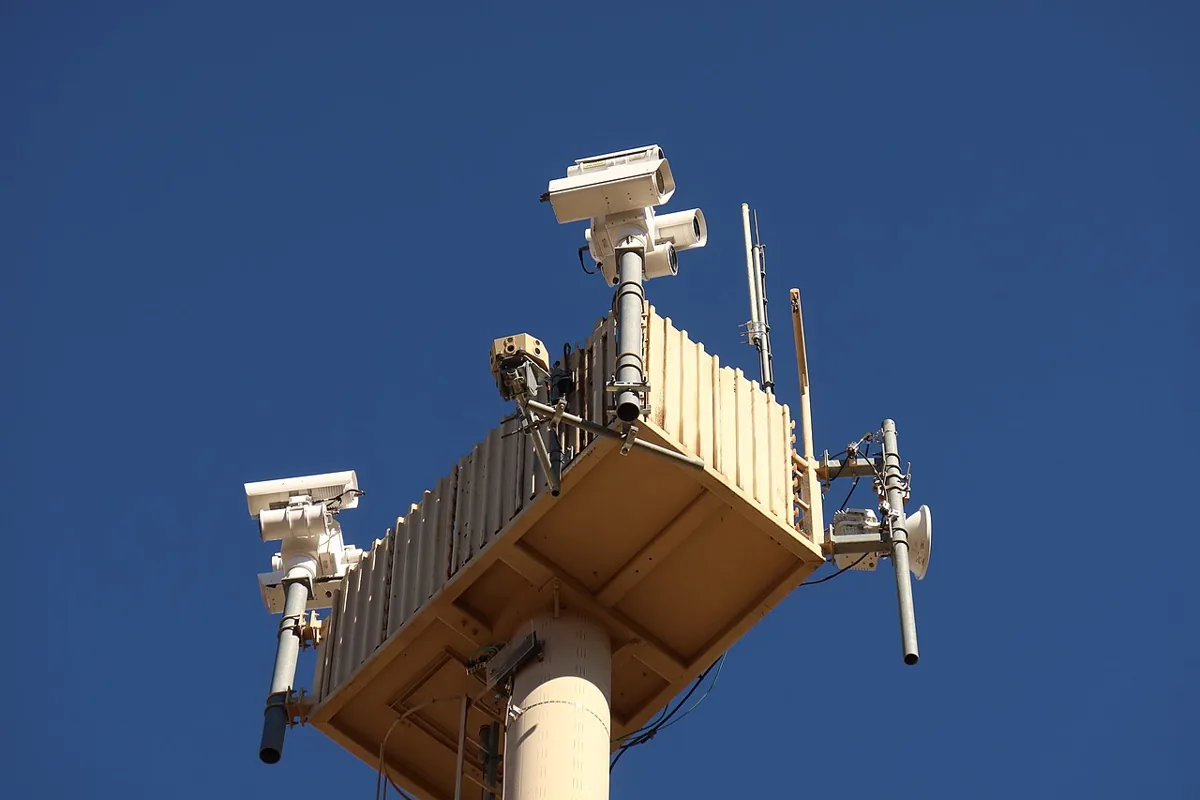
Residents in Longmont, Colorado spent months organizing against Flock Safety's mass license plate surveillance, won a city council vote, and then watched their city council unanimously hand the contract to a $48 billion company that already makes the Tasers in their cops' holsters. The cameras are still going up. The data is still being collected. The only thing that changed is the logo.
The Victory That Wasn't
When Longmont's city council voted in December to let its contract with Flock Safety lapse, local privacy advocates thought they had actually done it. They had fought the cameras, built a coalition, applied pressure, and won. That feeling lasted about three months.
In March, the council voted unanimously to approve a new license plate reader contract, this time with Axon. The Guardian reports that the Axon contract hasn't been fully finalized yet, but the council already blessed the deal. Resident Andrew Palmer, one of the people who had been fighting Flock's cameras, put it plainly: 'They expected us to go away.'
They did not go away. And it didn't matter.
Who Is Axon and Why Should You Be Worried
Axon is not some scrappy startup trying to steal Flock's lunch money. This is a $48 billion company that already manufactures Tasers, body cameras, and digital evidence storage systems used by police departments across the country. According to The Guardian, Axon has stepped in to replace Flock in at least seven municipalities across five states.
The ACLU's senior policy counsel Chad Marlow was not subtle about it. 'We've absolutely seen them lurking in the shadows, waiting for Flock to fail and then rushing in,' he told The Guardian. That quote should probably be the company's new investor pitch.
Axon's president Josh Isner essentially confirmed the strategy on an earnings call in February, telling investors that customers were choosing Axon specifically because of Flock's bad press. He framed it as an ethics win. Privacy experts frame it as a company that simply hasn't faced the same level of scrutiny yet.
Flock Had 120,000 Cameras. The Problem Was Always Bigger Than Flock.
Here is the part that the vendor-swap framing obscures entirely. Flock Safety currently operates more than 120,000 cameras on American roads, scanning license plates billions of times every month, according to The Guardian. None of those searches require a warrant. Officers can query data across state lines. The cameras capture information on anyone who drives past, not just people suspected of crimes.
Privacy advocates have documented police officers using this tech to stalk romantic interests. Federal immigration enforcement has gotten its hands on the data. At least 56 municipalities have canceled, deactivated, or rejected Flock contracts this year, according to the national advocacy group DeFlock. Flock announced new policies last week around auditing and data sharing, though critics described those changes as inadequate.
But even where Flock officially lost, the cameras sometimes stayed up. Cities have had to hood devices with trash bags while waiting for Flock to remove them. Private businesses that had their own Flock cameras on their premises? Nobody's contract covers those. The surveillance ecosystem doesn't disappear just because a city council changes its mind.
The Public Hearing That Wasn't One
In Longmont, residents didn't even get a real shot at pushing back on Axon before the vote happened. The Guardian reports that law enforcement gave a brief presentation on the new cameras before the council moved, and by the time the public had a chance to speak, the motion had already passed.
Palmer stood up and told the council directly: 'You gave us no chance to rebut.' A software engineer named Kellen Lask said he normally gets 'days or weeks' to analyze a system like Axon's before a decision is made, and tried to raise questions about encryption and data ownership. A buzzer cut him off.
A Russian-born resident named Pavel Ivanov, who said this kind of mass surveillance was part of what he left behind, simply said: 'Absolutely agree.' When your city's surveillance rollout is being compared unfavorably to conditions in the country someone fled, that's a sign something has gone sideways.
The AI Layer Nobody Is Talking About
The vendor-swap story is unsettling enough on its own. Then there's Fusus. The Guardian flags that Axon operates an AI-driven platform called Fusus that combines Axon cameras with other city-owned or private visual feeds to, in the company's own words, 'connect the dots across your entire' surveillance network.
Axon already has deep roots inside police departments nationwide. They have the Tasers. They have the body cameras. They have the evidence repositories. Now they want to add street-level license plate readers and an AI layer that stitches all of those feeds together. Privacy experts quoted in The Guardian say Axon's expanded infrastructure could pose a significantly larger surveillance threat than Flock ever did, precisely because Flock was newer and noisier about marketing its product.
Axon has flown under the radar by being the boring incumbent. That, it turns out, is an excellent strategy when your business model depends on governments not thinking too hard about what they're buying.
The Dingo Take
You are supposed to believe that the problem here was always Flock Safety specifically. A bad company with bad policies and a bad reputation, and if you just swap in a more established, more trusted vendor, the underlying practice is fine. That is not what's happening. The practice is mass warrantless surveillance of everyone who drives a car in your city. The practice does not become acceptable because a $48 billion company with better PR is running it.
The Longmont situation is going to replicate itself dozens of times across the country over the next year. Activists win a council vote. Cops pivot to Axon. The cameras go back up. Someone gets cut off by a buzzer. Reformers who spent months building coalitions have to start over fighting a company that most people have never heard of and that, unlike Flock, has a decade of goodwill baked into every precinct in America. That's not a coincidence, as the ACLU noted. That's a market strategy.
Flock built the dragnet. Axon is monetizing the backlash against it. And cities across the country are so eager to look responsive to public pressure that they're handing a company with more power, more data infrastructure, and more AI capability the keys to the exact same system, just with different branding on the box. Every activist who successfully killed a Flock contract should be reading everything they can find about Fusus right now. The cameras are not the end of this story.





Comments