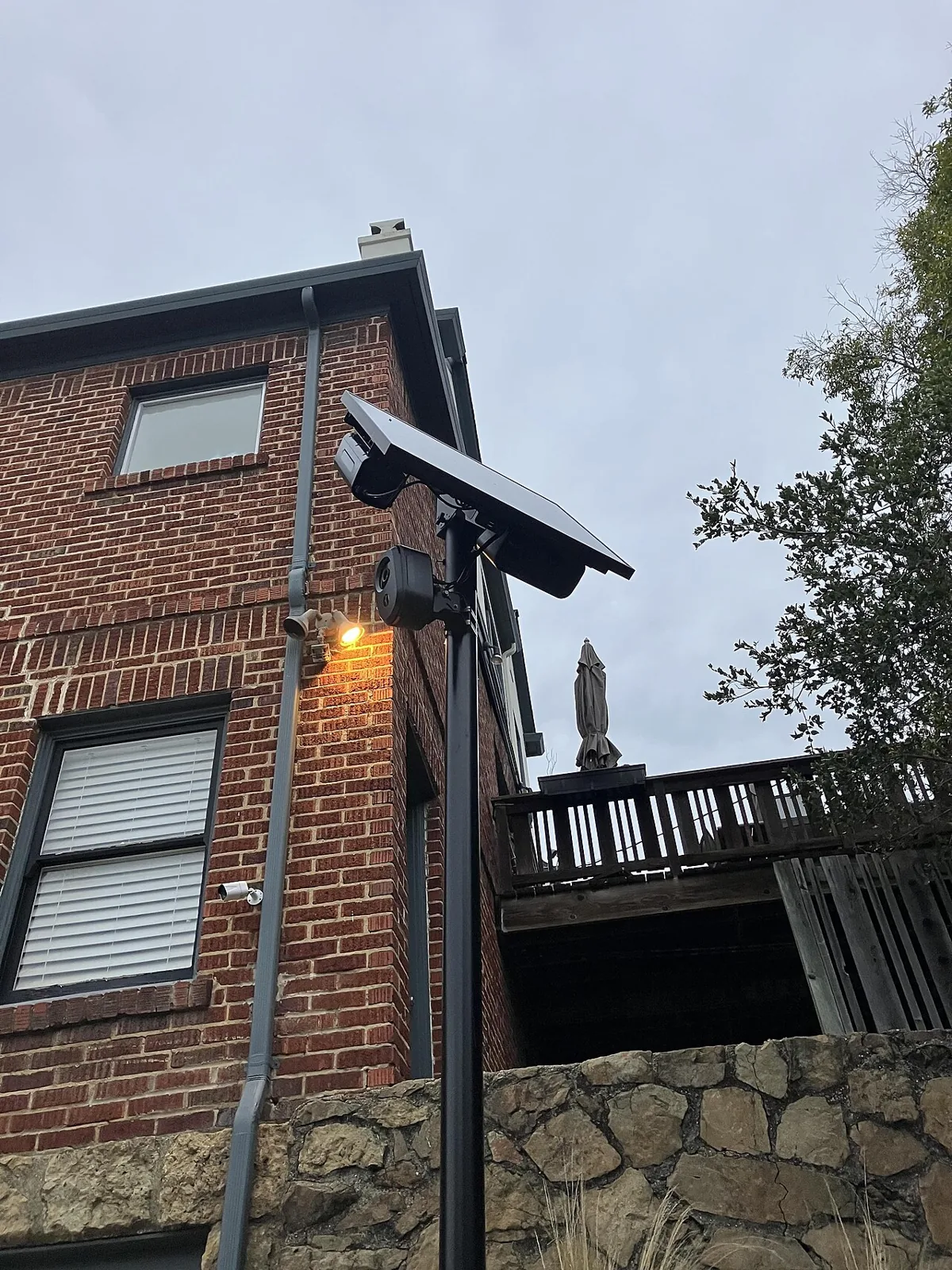
A man in Crystal, Minnesota, has been walking to his nearest Flock surveillance camera several times a week carrying a roof rake with a bright yellow sign taped to the end, just to block it. He is far from alone. According to NPR, people across at least 36 states have been stealing, sawing down, painting over, crashing cars into, and shooting at the automated license plate readers that now blanket American roads.
130,000 Cameras and Counting
Here's the scale of what we're actually talking about. According to DeFlock, an advocacy group that tracks the technology, there are more than 130,000 AI-powered automated license plate readers currently deployed on American streets. Flock Safety, the Atlanta-based company that makes many of them, says more than 5,000 law enforcement agencies are customers.
Every month, those cameras capture billions of license plates. Not just the plates, either. Makes, models, colors, modifications. A running dossier on where your car has been, assembled without your knowledge, without a warrant, without you ever being suspected of anything. As Clare Garvie, deputy director of technology law and policy at NYU's Policing Project, told NPR: "They monitor, quite simply, when we go to and from work, where we go to the doctor, where we drop our kid off at daycare."
This is not a hypothetical threat. This is what is happening right now, on your street, every time you drive past one of these things.
How It's Already Been Misused
Police leaders, predictably, say the cameras are great. The executive director of the Minnesota Chiefs of Police Association told NPR, "There's no question that license plate readers can be very helpful tools for law enforcement." And fine, sure, some stolen cars get found. That's real.
But here's what else is real. NPR reports that some officers have used Flock data to stalk ex-partners. Agencies have accessed it for immigration enforcement without local government approval. A Texas sheriff's office used the system to track a woman who may have had an abortion. These are not edge cases or theoretical risks. These are documented abuses that have already happened.
And here's a detail that should end the conversation about accuracy: a 2024 analysis by a California police department found that Flock misread license plates in 71% of the alerts it sent to officers. Seventy-one percent. That's not a surveillance tool. That's a random accusation machine with a camera attached.
The Man With the Roof Rake
Brady O'Rourke of Crystal, Minnesota, is the face NPR chose for this story, and honestly, it's a perfect choice. A few times a week, he hauls a roof rake to his nearest Flock camera and holds up a yellow sign to block its view. Drivers smile. People honk. He was inspired by a Florida man who did the same thing with a pool skimmer.
"I don't want to pay to be surveilled," O'Rourke told NPR. "My tax dollars are funding cameras at the end of my block. I don't want to live like that. I don't think anybody should have to live like that."
This man is blocking a surveillance camera with a snow removal tool. That's where America is in 2026. That's the whole story, in one image.
From Protest Signs to Power Saws
O'Rourke is keeping things legal. Others are not. NPR's review of local news reports found Flock cameras vandalized in at least 36 states, with methods ranging from paint and stickers to, yes, saws. People have crashed cars into the poles. People have shot at them. Social media is full of tutorial videos on how to discreetly saw through a camera mounting pole, and comments sections on local news Facebook posts are, per NPR, "rife with snark."
Flock held its annual conference this week, right in the middle of all of this. The company's CEO, Garrett Langley, told NPR: "We are so transparent about the business. We don't own this data. We don't sell this data. Cities have control over how long it's stored. And who it's shared with." Last week, Flock also updated some features to cut off officers who appear to be misusing the system and shorten recommended data retention windows.
So the company's answer to documented stalking, abortion tracking, and a 71% false alert rate is: a shorter data storage recommendation and a new terms of service. Great. That should do it.
The Fourth Amendment Problem Nobody in Power Wants to Touch
Jay Stanley, senior policy analyst at the ACLU's Speech, Privacy and Technology Project, laid it out plainly for NPR: "The potential for police fishing expeditions is unlimited." The problem with mass data collection, he says, is that it sweeps up enormous numbers of innocent people simply by existing.
Garvie at NYU's Policing Project goes further, arguing the indiscriminate collection of location data raises serious Fourth Amendment concerns. Her framing of it is worth reading carefully: "We did not set up a system of governance in this country that says, 'Just don't do anything wrong and you won't have anything to worry about.' What we said is, 'No, actually, law enforcement is affirmatively restricted against getting up in our business as we go about our daily lives.'" She wants legislative oversight. So far, crickets.
Congress has shown approximately zero urgency about the fact that 130,000 cameras are building a permanent, searchable record of where every American car has ever been. The cameras keep going up. The data keeps accumulating. And the people with the power to do something about it are busy with other things.
The Dingo Take
You are supposed to believe that blanketing 130,000 locations with AI cameras that capture billions of license plates a month, retain that data indefinitely, and have already been used to track abortion patients and stalk ex-partners is a reasonable public safety measure that just needs a few policy tweaks. You are supposed to be reassured that the CEO of the company selling this technology says the cities technically own the data. You are supposed to trust the system.
What's actually happening is that Americans are responding to a surveillance infrastructure that grew faster than any law, any oversight mechanism, or any democratic debate, and they are doing it with pool skimmers and power tools because nobody in government is doing anything. When the legal channels produce nothing and the documented abuses pile up, people start sawing down cameras. That's not a mystery. That's cause and effect.
The 71% false alert rate alone should have triggered congressional hearings, product recalls, and a serious national conversation about whether this technology should exist at all in its current form. Instead, Flock held a conference and updated some settings. A man in Minnesota carries a roof rake to work. Cameras keep going up. Nobody in charge seems especially bothered.





Comments