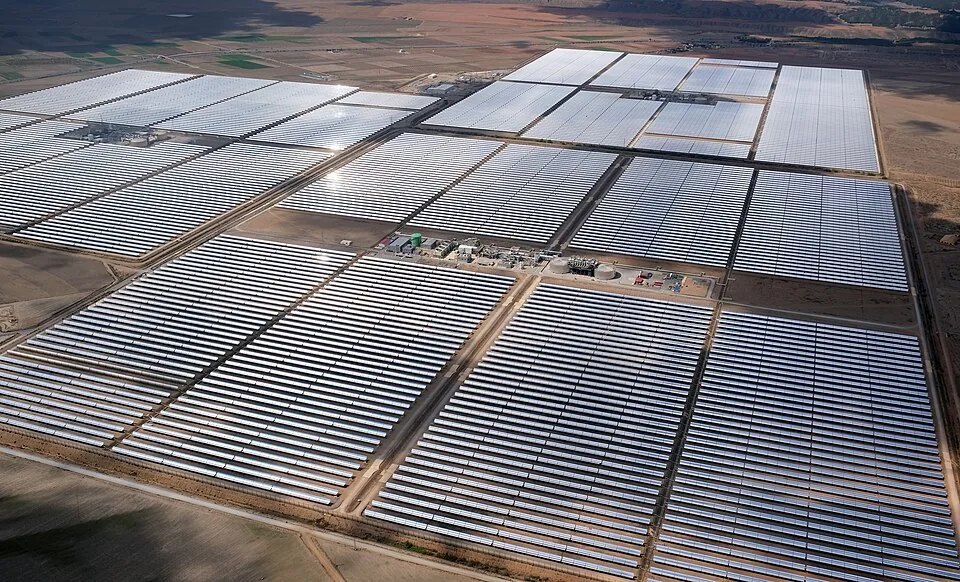
A French oil supermajor just switched on the largest hybrid renewable energy and storage plant on an entire continent, and somehow this is not the lead story everywhere. TotalEnergies inaugurated the Hydra Project in South Africa's Northern Cape province last week, a facility combining a 216-megawatt solar farm with a 500 megawatt-hour battery system capable of powering roughly 200,000 homes. That's real energy. That's real infrastructure. That's real.
What the Hydra Project Actually Does
Here's the thing about big renewable energy announcements: they often come with numbers so large they stop meaning anything. So let's slow down and make this concrete.
According to Good News Network, the Hydra Project will deliver 75 megawatts of continuous, dispatchable renewable electricity to South Africa's national grid from 5:00 a.m. through 9:30 p.m., every day, under a 20-year power purchase agreement. Dispatchable is the operative word there. This isn't power that only flows when the sun cooperates. The 500 megawatt-hour battery storage system is precisely what makes that possible, storing excess solar generation and feeding it to the grid on demand.
The facility is projected to generate 400 gigawatt-hours of electricity annually. That is not a rounding error. That is a serious chunk of power for a country where rolling blackouts, locally known as load-shedding, have been grinding daily life to a halt for years.
Who Built It and Why That's Complicated
TotalEnergies is not a scrappy green startup. It is one of the largest oil and gas companies on the planet, a French energy supermajor that has spent over a century extracting fossil fuels and selling them to the world. Its fingerprints are on refineries, pipelines, and liquefied natural gas terminals across six continents.
And yet here it is, managing just under 36 gigawatts of gross renewable power generation capacity globally, according to Good News Network. That number keeps climbing. The Hydra Project was developed alongside South African partners Hydra Storage Holding, an independent power producer with over a gigawatt of renewable projects already delivered in South Africa, and Reatile Renewables.
Magali Pailhé, TotalEnergies' Managing Director for Southern Africa, said the project "enables us to supply dispatchable renewable power to the South African grid, thereby strengthening the country's energy security while decarbonizing its electricity generation." That is a careful and accurate sentence. It is also the kind of sentence a corporation says right before it goes back to drilling somewhere else. Both things can be true.
South Africa Needed This Yesterday
South Africa runs primarily on coal. Eskom, the state-owned utility, has been in a managed crisis for the better part of a decade, producing chronic power shortfalls that have forced scheduled blackouts lasting up to ten hours a day in some periods. The economic damage from load-shedding runs into billions of dollars annually. Small businesses close. Hospitals run on generators. Families sit in the dark.
Against that backdrop, a facility that can reliably pump 75 megawatts onto the grid during daylight and early evening hours is not just a feel-good statistic. It is direct infrastructure relief for the continent's largest power market by electricity consumption, as Pailhé noted. South Africa has been aggressively courting private renewable investment precisely because the state utility cannot meet demand on its own, and the Hydra Project is one of the more significant results of that strategy.
The Record Won't Stand Long
The Hydra Project holds the title of Africa's largest combined renewables and storage facility, but that record has an expiration date. Good News Network reports that Egypt is developing a genuinely enormous project along the Red Sea coast, a joint venture signed in March between Egyptian firm Orascom Construction, French utility Engie, and Japanese conglomerate Toyota Tsusho.
That complex is planned to include 6,000 megawatts of combined solar, wind, and battery capacity. To put that in perspective: 6,000 megawatts against 216 megawatts. The Hydra Project is an impressive regional achievement. The Egyptian project, when it comes online, will be a different category of thing entirely.
Egypt already holds the record for Africa's largest solar installation, the Benben Solar Park, which started generating 1.8 gigawatts of solar power back in 2019. The continent is clearly not short on ambition when it comes to this stuff. The financing and execution are always the harder part.
What This Means for the Bigger Picture
The global energy transition is not happening in a straight line, and it is not happening evenly. Sub-Saharan Africa still has roughly 600 million people without reliable electricity access. A 400 gigawatt-hour project in the Northern Cape is a meaningful step, not a solution.
But the Hydra Project matters as a proof of concept. Large-scale solar plus battery storage, built and operated by a mix of international capital and local partners, delivering firm power under a long-term contract, is exactly the model that development economists and energy analysts have been pushing for years as the way to expand grid access across the continent. It works in theory. Now there's a 216-megawatt real-world example of it working in practice, sitting in the South African desert, feeding electrons to the grid every morning at five o'clock.
The Dingo Take
An oil company doing something genuinely useful for clean energy does not make it a good oil company. Let's be precise about that. TotalEnergies is simultaneously expanding renewable capacity and continuing to invest in fossil fuel extraction. That is not hypocrisy so much as it is a business strategy, one designed to keep them profitable through whatever energy future actually arrives. The Hydra Project is real and it is good and TotalEnergies absolutely built it because it pencils out financially over a 20-year power purchase agreement. Motives and outcomes are separate questions.
What actually deserves more attention here is the South African side of this story. A country that has been economically strangled by its own power grid failures for nearly a decade is slowly, painstakingly assembling an alternative. Not through some grand nationalized plan, but through deals like this one, private capital chasing long-term contracts, local developers building track records, international firms parking money in infrastructure that cannot be offshored. It is unglamorous and incremental and it is working at the margins.
The African energy story in Western media is almost always told as crisis, as shortage, as the place where things haven't happened yet. The Hydra Project is a thing that has happened. Africa's largest hybrid renewable facility is sitting in the Northern Cape, running, right now, at five in the morning, and it will still be running in 2046. That's not nothing. That's actually a lot.



Comments