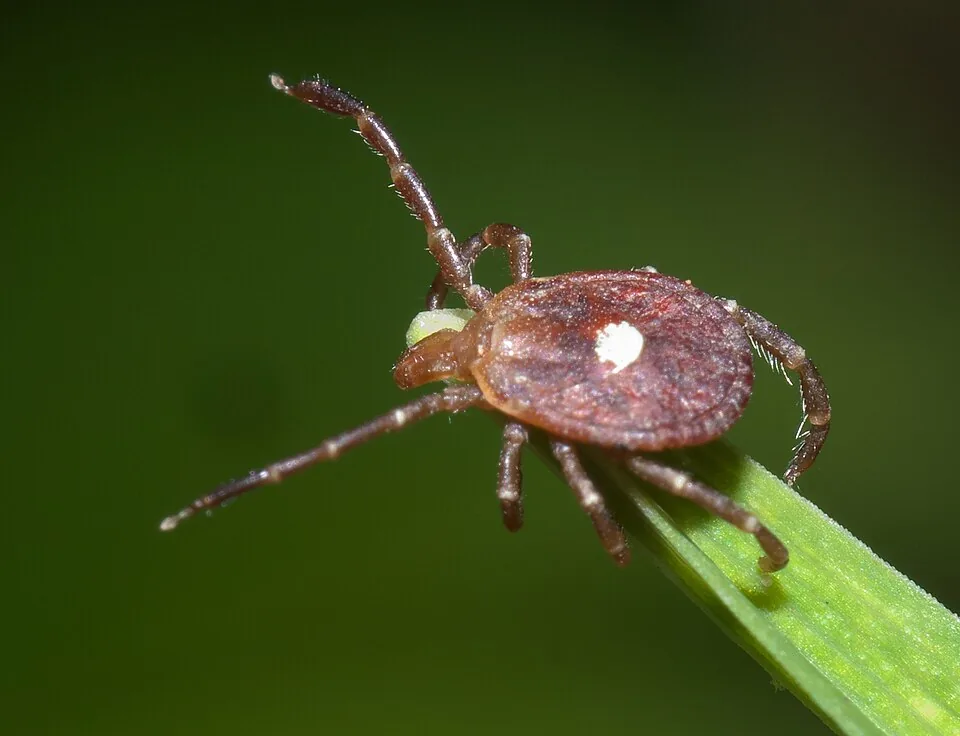
A single bite from a lone star tick can permanently rewire your immune system so that eating a hamburger sends you into anaphylactic shock. Emergency room visits for tick bites are surging this year, and the allergy they leave behind — Alpha-gal syndrome — is becoming a genuine public health crisis that most Americans have never heard of. Martha's Vineyard, of all places, is now ground zero for figuring out what to do about it.
What Alpha-Gal Syndrome Actually Does to You
Here's the thing about Alpha-gal syndrome: it doesn't just give you an upset stomach. One bite from a lone star tick injects a sugar molecule called alpha-gal into your bloodstream. Your immune system, reasonably furious about this intrusion, builds antibodies against it. The problem is that alpha-gal also exists in the flesh of most mammals — beef, pork, lamb, venison. Eat any of it afterward, and your body treats dinner like an attack.
The reactions range from hives and gastrointestinal misery to full anaphylaxis, the kind that requires an EpiPen and a very fast drive to the hospital. CBS News reports that ER visits for tick bites have increased dramatically this year, with AGS rising alongside them. The condition can be permanent. There is no cure. The treatment is, essentially, never eat red meat again.
To be completely clear about the cruelty of this: you do not know you have it until you eat something you've eaten your entire life and your throat starts closing. The tick bite often happens weeks or even months before the first allergic reaction. By the time you connect the dots, you've already scared yourself half to death at the dinner table.
Martha's Vineyard Is Drowning in Ticks
CBS News correspondent David Pogue traveled to Martha's Vineyard, which has become an unlikely epicenter of the AGS crisis. The island's combination of dense woodland, abundant deer, and close human-wildlife contact makes it a perfect tick habitat. The Tick Center at Martha's Vineyard Medical is now a real, operating institution. There is an Instagram account called TickWiseMV. There is an organization called Tick Free Martha's Vineyard. This is where American public health crises go to get beachfront property.
The island's residents aren't waiting around for the federal government to sort this out, which, given the current state of federal public health infrastructure, is probably wise. Local experts and community organizations are running education campaigns, distributing tick-repellent resources, and trying to get people to take the threat seriously before they find out the hard way.
Thomas Mather, director of the Center for Vector-Borne Disease at the University of Rhode Island, and Sam Telford III, a professor of Infectious Disease and Global Health at Tufts University's Cummings School of Veterinary Medicine, are among the experts trying to get out ahead of what looks increasingly like an expanding epidemic rather than a regional oddity.
Why This Is Getting Worse, Not Better
Lone star ticks are not new. AGS is not new — it was first identified around 2009. What is new is the scale. Tick populations have been exploding for years, driven by warming winters that no longer kill off tick populations the way they used to, expanding deer ranges, and suburban sprawl pushing humans into habitats where ticks thrive. This is, in the most literal sense, a climate-adjacent public health problem, though good luck getting that framing onto certain cable news networks.
The CDC has documented tens of thousands of suspected AGS cases in the United States, but researchers believe the real number is substantially higher because the condition is so poorly understood that many doctors don't think to test for it. A patient comes in with a mysterious meat allergy, gets told to avoid beef, and never learns why. The tick that started the whole thing is long gone.
Awareness is genuinely the first problem here. People can't protect themselves from something they don't know exists. And the prevention advice — tuck your pants into your socks, do full-body tick checks, use DEET, stay on trails — is the kind of guidance that sounds simple until you've ever actually spent time outdoors anywhere in the eastern United States in the summer.
The Part Where Red Cat Kitchen Comes In
Among the resources CBS News listed for the segment is Red Cat Kitchen on Martha's Vineyard, which suggests the local food community is adapting menus and conversations around a clientele increasingly wary of red meat for very specific medical reasons. That detail is small but it tells you something: when a local restaurant becomes part of the public health response infrastructure, the problem has reached a stage well beyond "a few unlucky hikers."
This is a food allergy with no label warning system, no standardized medical protocol, and no pharmaceutical fix waiting in the wings. If you get AGS, you find out about it the worst possible way, and then you spend the rest of your life reading every menu twice and explaining to well-meaning relatives at barbecues why no, you really cannot have a burger, it's a whole thing, please don't look at me like that.
The Dingo Take
A tick the size of a sesame seed can permanently end your relationship with red meat, ER visits are spiking, and most Americans still have no idea this condition exists. That's not a niche science story. That's a public health failure hiding in plain sight. The lone star tick's range has been expanding northward for years, well-documented by researchers who have been raising flags about exactly this scenario, into a policy environment that treats vector-borne disease surveillance as a line item to cut rather than a system to strengthen.
The Martha's Vineyard community building its own tick-response infrastructure is admirable and also completely damning. When a vacation island has to develop its own Instagram-based public health campaign because the national apparatus isn't picking up the slack, something has gone badly wrong at a structural level. The CDC's capacity to track, communicate, and respond to emerging conditions like AGS has not exactly been a funding priority for the people currently running the federal government, and that should probably be part of this conversation.
Meanwhile, the lone star tick does not care about any of this. It is out there right now, in the tall grass at the edge of every hiking trail and backyard on the eastern seaboard, doing exactly what it has always done. Check yourself. Check your kids. Tuck your damn pants in. This one is not going away.




Comments