Luigi Mangione admitted in open court that he killed UnitedHealthcare CEO Brian Thompson, then technically pleaded guilty to a charge that doesn't require him to have intended to kill anyone. Now the state murder trial scheduled for September may never happen at all. This is either legal genius or the world's most elaborate way of still going to prison for the rest of your life.
What He Pleaded To, and What That Actually Means
On August 14, Mangione pleaded guilty to two federal stalking charges in Manhattan federal court. Not murder. Stalking. The distinction sounds absurd on the surface, because everyone in America watched this case unfold and knows what happened on those streets in December 2024. Brian Thompson is dead. Mangione is the one who killed him.
But as The Guardian reports, the federal stalking statute does not require the government to prove that the defendant intended to kill anyone. It requires proof that the stalking caused death. Mangione admitted to killing Thompson. He did not, under the terms of his plea, admit that killing Thompson was his specific intent. That gap, small as it sounds, is apparently wide enough for a defense team to try to drive a truck through.
The state case, meanwhile, charges Mangione with second-degree murder, which requires proving intentional killing. According to former prosecutor Jeremy Saland, who spoke to The Guardian, the Manhattan DA's office will likely plant its flag on exactly that distinction when arguing the state case should survive. One charge says you stalked someone and it ended in death. The other says you meant to kill them. Different elements, different harm, potentially different legal footing.
Double Jeopardy, New York-Style
The reason any of this matters is New York's state double jeopardy law, which says you cannot be prosecuted in state court for something that stems from "the same underlying criminal transaction" for which you've already been convicted federally. Mangione's defense filed a motion to dismiss the state case the moment his federal plea landed. Judge Gregory Carro, overseeing the state proceedings, postponed the September 8 trial date and scheduled a December 10 hearing to sort out the legal arguments.
The problem for the defense is that double jeopardy protections are not absolute, and New York law carves out exceptions when the crimes have different elements and the legislature was trying to prevent different kinds of harm. The Guardian spoke to defense attorney Saland, who laid it out plainly: stalking-resulting-in-death and intentional murder are legally distinct enough that the DA's office has a credible argument to keep swinging.
So the state case is not dead. It is just on a gurney, which is an uncomfortable place to be when you are the one who put someone else in a coffin.
The Sentence Looming Over All of This
Here is the part that punctures any narrative about Mangione pulling off a masterful legal escape. Prosecutors disclosed in court that the federal sentencing guidelines produce a range of 292 to 365 months. For those doing the math at home, the top of that range is just over 30 years. And prosecutors said flat out they intend to seek a life sentence.
Former federal prosecutor Joseph McNally, who now directs emerging litigation at McNicholas and McNicholas, told The Guardian he expects Mangione will receive a life sentence or something close to it. Mark Chutkow, a former federal prosecutor now practicing at Dykema, was grimly direct: "At this point, it seems like his goal is to try to get out of prison sometime in his 50s, but even that path is narrowing as we speak."
Jeffrey Greco, who runs defense firm Greco Neyland, put the whole chess game in its starkest terms when speaking to The Guardian: "At the end of the day, there is a very good chance Mangione is still doing life in prison. The only difference: is he doing it in a federal lockup, or is it a state facility upstate?"
Why Federal Prison Is the Prize, Such As It Is
So why risk the complexity of this maneuver if the sentence is likely to be life either way? According to McNally, the answer is where you serve it. Federal prisons, while hardly the resort facilities critics sometimes sarcastically invoke, operate under different conditions than state facilities. Better programming, more consistent treatment, generally safer environments. When The Guardian asked McNally to put it simply, he did: "If you ask somebody: would you rather serve your time in state custody or federal custody? An inmate would say that they'd rather serve their sentence in federal custody."
The defense may also have been calculating something else. Judge Carro, who oversees the state case, is widely described in legal circles as tough on crime and sympathetic to victims. Chutkow told The Guardian that Mangione's team likely factored that reputation into their math. A federal judge might be more inclined toward the lower end of the guidelines range. A judge like Carro, presiding over a murder case in a city that watched Brian Thompson die on its streets, probably would not.
The Manhattan DA's office, for its part, is not going anywhere. Their post-plea statement made clear they are prepared to litigate the defense motions and said they remain "committed to seeking justice for Mr. Thompson and his family." They did not sound like people who consider this case resolved.
The Folk Hero Problem, Revisited
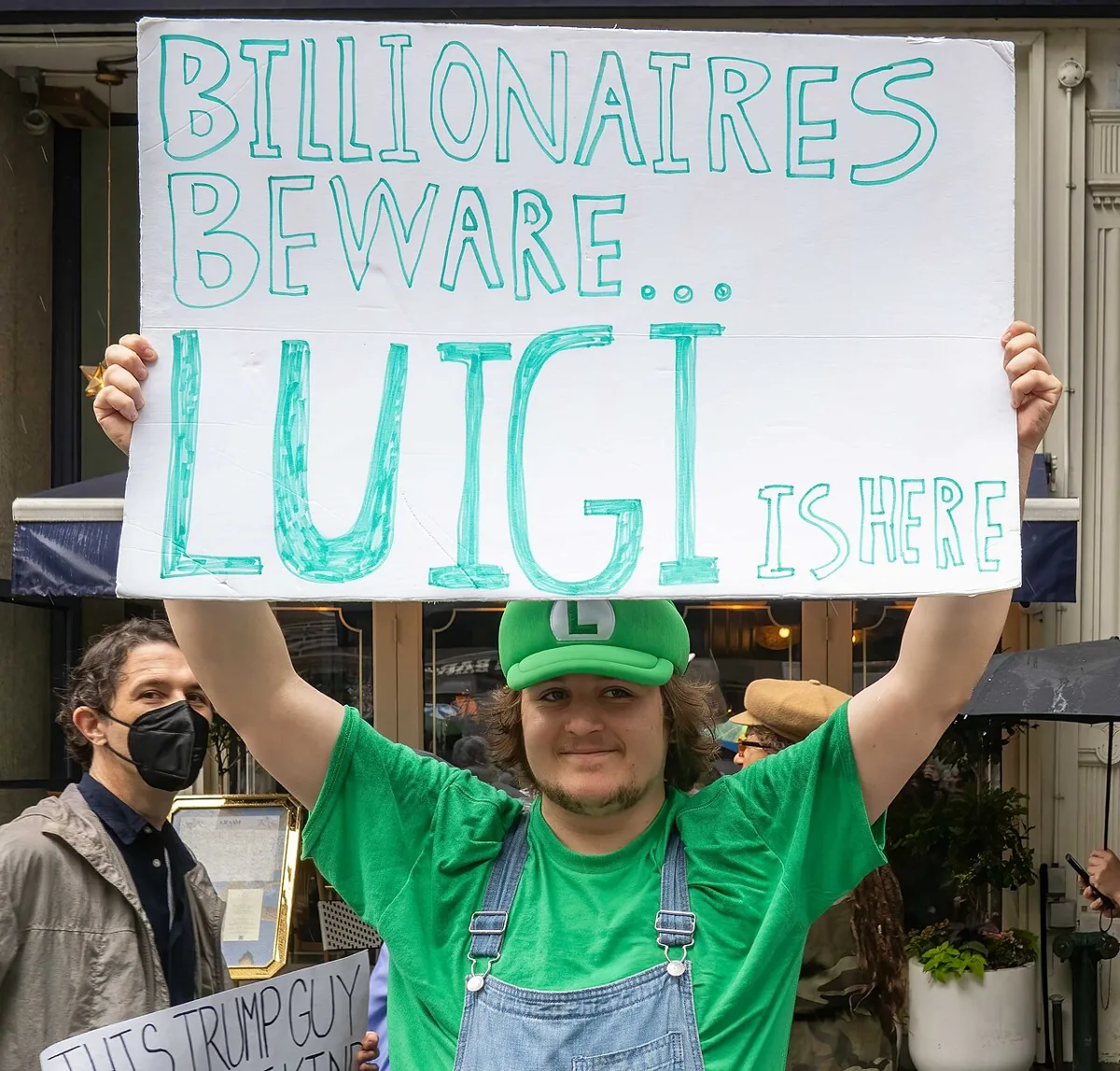
It is worth stepping back and acknowledging what this case has been for the past year and a half, because the legal maneuvering does not exist in a vacuum. Thompson's killing became a cultural flashpoint almost immediately, igniting a raw and furious national conversation about the American healthcare industry, insurance denials, and the price people pay for a system built to generate profit from illness. Mangione became, to a hard core of supporters, something close to a symbol of that rage.
That framing was always complicated by the fact that a man is dead, that he had a family, and that extrajudicial violence against executives is not a healthcare policy. But the sentiment underneath it was real and it did not come from nowhere. The Guardian notes that the case launched Mangione to near folk-hero status among his supporters, and that status has followed every development in this prosecution.
Now the case enters a strange legal purgatory, with a state trial postponed indefinitely and a federal sentencing process that may produce life in prison regardless of what happens in state court. The discourse will continue. The outcome, in terms of where Mangione sleeps for the next several decades, appears to be narrowing fast.
The Dingo Take
You are supposed to look at this plea deal and see a savvy legal strategy. And fine, maybe it is. Pleading to a federal charge with more flexible sentencing guidelines, potentially dodging a murder conviction under a judge known for throwing the book at defendants, angling to serve time in a federal facility instead of an upstate state prison. On paper, as legal maneuvering goes, it is not stupid. But the destination is still life in prison. The route just changed.
What is genuinely strange about this case is how much public energy has been spent on Mangione's fate versus how little policy has changed about the industry that inspired the national wave of sympathy for him. UnitedHealthcare is still UnitedHealthcare. Claim denial rates have not dropped. The executives got security upgrades. The rest of the country got a discourse. That is not Mangione's fault or credit, but it is worth sitting with as the lawyers file their motions and the trial date slips toward December.
Mangione's lawyers bought him a few more months of legal uncertainty and possibly a shot at marginally better prison conditions. That is the prize at the end of this particular rainbow. Chutkow said it best: his goal now is to get out of prison sometime in his 50s, "but even that path is narrowing." Whatever you thought this case was about, it ends the same way: a very long time behind a locked door.





Comments