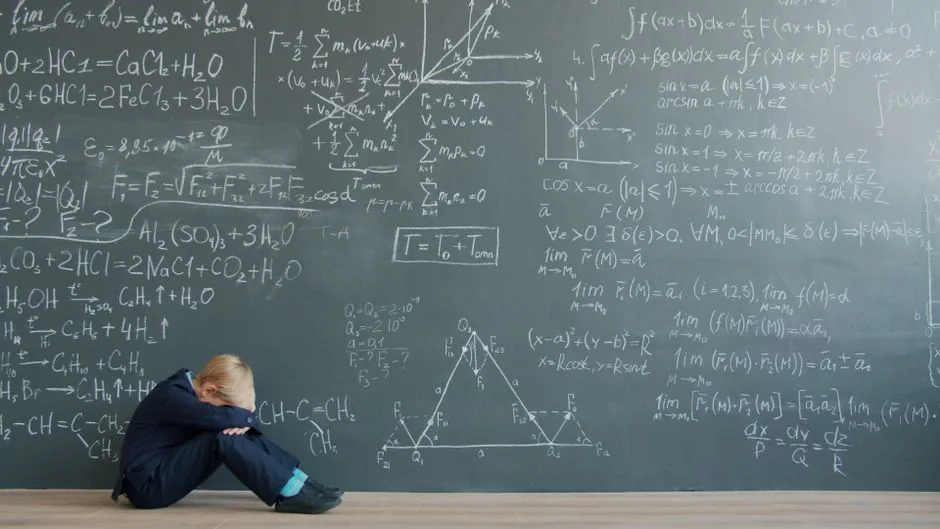
Forty of the world's top mathematicians walked into OpenAI's offices earlier this month for a meeting so uncomfortable they made it off-the-record. The agenda, reading between the lines: is our entire profession about to get eaten alive? The answer, according to two researchers who've thought hard about it, is probably not yet — but the "yet" is doing a lot of heavy lifting in that sentence.
What AI Has Already Done, And It Is Not Nothing
Let's go through the scorecard, because it reads like someone's science fiction novel draft. In mid-May, OpenAI announced its frontier model disproved the unit distance conjecture, a problem that had resisted mathematicians for eighty years. In July, Anthropic published two AI-derived results in academic cryptanalysis. Earlier this month, OpenAI dropped ten new mathematical results from its latest model. And Anthropic's Claude took a formal swing at proving the Riemann hypothesis, one of the most famous unsolved problems in all of mathematics, a problem that has defeated every human who has ever touched it for 167 years.
That is a genuinely staggering run of results in about three months. And it is why a room full of brilliant people with PhDs and tenure and decades of published work are quietly terrified about what happens next.
The Guardian published a piece from Bruce Schneier, the security technologist who teaches at the Harvard Kennedy School and the University of Toronto's Munk School, and Kasra Rafi, a mathematics professor at the University of Toronto. Their argument is that the fear, while understandable, is somewhat premature. They are probably right. The operative word, again, is somewhat.
How AI Is Actually Solving These Problems
Here is the thing that makes this more interesting than a simple "robots are coming for your job" story. According to Schneier and Rafi's analysis in The Guardian, these AI breakthroughs fall into two distinct buckets, and understanding the difference matters.
The first bucket is counterexamples: cases where an AI searches through enormous solution spaces and finds the one example that blows up a conjecture everyone thought was true. The unit distance conjecture fell this way. Most mathematicians had assumed it was provable, so they kept trying to prove it. The AI had no such assumption. It pulled in ideas from algebraic number theory, a seemingly unrelated corner of mathematics, and found the wreckage of the conjecture sitting there. A human expert with exactly that background might have found it too, Schneier and Rafi note, but why would someone with precisely that expertise have been looking at this particular problem? They wouldn't have been. The AI's total lack of professional tunnel vision turns out to be a superpower.
The second bucket is novel applications of known techniques: seeing a connection between existing mathematical tools and an existing problem that no one had thought to try. Again, this is a form of creativity. It is the same kind of pattern-recognition that let AI systems master Go and, as The Guardian piece points out, do Nobel-prize-level work on protein folding. We should not pretend this is trivial just because it is not conjuring entirely new mathematics from thin air.
The Line AI Cannot Yet Cross
What these systems have not done, and this is the crux of Schneier and Rafi's argument, is build something genuinely new from scratch. Real mathematical progress often requires inventing the conceptual framework you need to even ask the question properly, not just searching for answers within an existing one. Think of how calculus had to be invented before physics could describe motion, or how abstract algebra had to exist before cryptography could become what it is today. That kind of foundational theory-building, the work of identifying what objects actually matter and constructing the language to talk about them, remains beyond what current AI can do.
Current AI is, as the authors put it in The Guardian, creative in the recombination sense. It is not yet creative in the invention sense. It can find surprising connections between things that already exist. It cannot yet build the room those things would live in.
That is the distinction that is keeping mathematicians employed this year. Whether it keeps them employed in five years is a genuinely open question that Schneier and Rafi freely admit they cannot answer. They write that these mathematical capabilities were not explicitly designed for, that they are emergent properties of increasingly capable models, and that their honest guess is the gap will close sooner rather than later.
Why The Off-The-Record Meeting Tells You Everything
Go back to that meeting at OpenAI's offices. Forty top mathematicians. Off the record. That detail is not incidental. These are people whose entire professional culture is built on public discourse, on publishing results and submitting to peer review and arguing in journals. The fact that they went somewhere private to discuss this suggests they are scared enough that they did not want their fear on the record.
That is not a profession calmly assessing a new tool. That is a profession doing the equivalent of pulling the blinds before having a conversation they do not want overheard.
Recent articles by mathematicians, as The Guardian piece references, have been mostly grim. The anxiety is not irrational. It is the anxiety of people who are very good at pattern recognition watching a pattern they do not like emerge in real time. The fact that Schneier and Rafi's more optimistic read is also plausible does not make the fear silly. Both things can be true: AI is not there yet, and the trajectory is alarming.
What This Actually Means For Everyone Else
Mathematics is not just an academic discipline that happens to a small number of people in universities. It is the foundational layer underneath cryptography, which is the foundational layer underneath everything from your banking app to classified government communications. Anthropic's AI-derived results in cryptanalysis are not an abstract achievement. They are a proof of concept that AI can find vulnerabilities in cryptographic systems.
This is the part of the story that should probably be getting more attention than the question of whether math professors will still have careers in 2035. Schneier himself is a security technologist, which is presumably not an accident in terms of who The Guardian chose to write this piece. He knows what it means when AI starts doing original work in cryptanalysis. It means the attack surface for every encrypted system in the world just got significantly larger.
The Riemann hypothesis piece is remarkable as spectacle but abstract in consequence. The cryptanalysis results are immediately, practically relevant in ways most people are not thinking about.
The Dingo Take
You are supposed to read "AI can't yet build new conceptual frameworks" as reassuring. It is not reassuring. It is a very specific and time-limited comfort, offered by two smart people who themselves admit the timeline to crossing that line could be months, not decades. The history of AI capability development over the last several years is a history of "it can't do X yet" aging very badly, very fast. Text, then images, then video, then Go, then protein folding, then passing the bar exam, then PhD-level mathematics. Each one of these was supposed to be the thing AI couldn't do. Each one fell.
The mathematicians in that off-the-record room at OpenAI know this. They have watched the same pattern from closer up than anyone. The meeting was not the behavior of people who read the Schneier-Rafi piece and felt fine. It was the behavior of people trying to figure out what to do with the years they have left before the answer changes.
And meanwhile, somewhere in a server farm, an AI just found a counterexample to an eighty-year-old problem by reaching into a completely unrelated branch of mathematics and pulling out the key. It did not know it was not supposed to look there. That is the whole point.


Comments