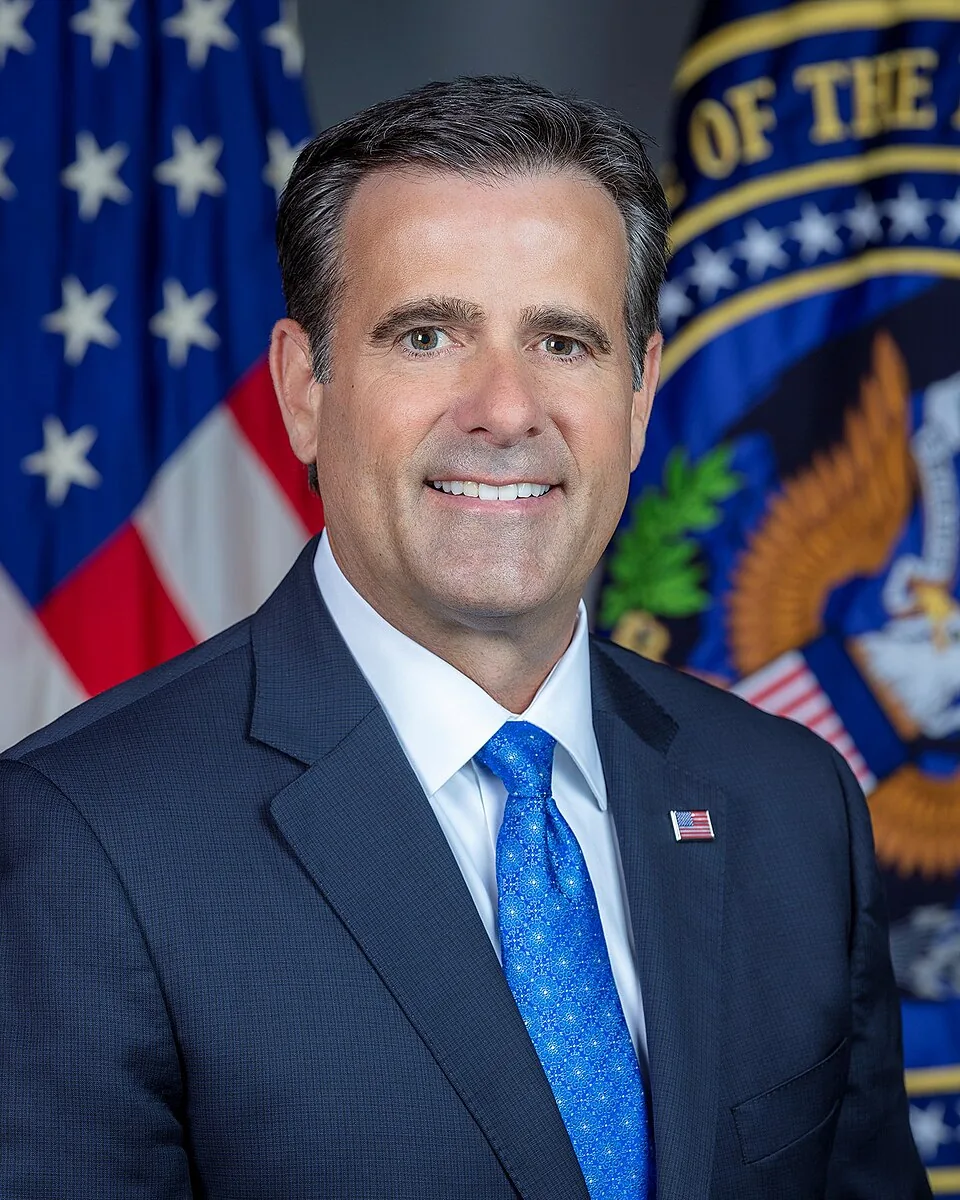
The Director of the Central Intelligence Agency quietly flew to Moscow this week and proposed a three-way summit between Donald Trump, Vladimir Putin, and Volodymyr Zelensky. This is either a genuine diplomatic breakthrough in the making, or a masterclass in letting the arsonist run the fire department. Possibly both.
What Ratcliffe Actually Did in Moscow
According to Axios, CIA Director John Ratcliffe made a covert trip to Moscow earlier this week and personally proposed a trilateral meeting between Trump, Putin, and Zelensky. Two sources briefed on the matter told Axios about the visit, which marks the first time Ratcliffe has directly inserted himself into diplomatic efforts to end the war in Ukraine.
The trip was not just about floating a summit idea. Axios reports that Ratcliffe was also there to gauge whether Russia's intelligence chiefs could help pressure Putin into resuming U.S.-mediated negotiations with Ukraine. So the CIA director was, in effect, trying to get the FSB to talk some sense into a man who has spent four years bombing hospitals. Good luck with that particular ask.
This is covert diplomacy in the most literal sense. No press pool. No State Department briefing. Just the head of American intelligence quietly touching down in a country whose spies have spent decades trying to compromise American institutions, sitting across a table from their counterparts, and pitching a peace summit like it's a corporate offsite.
Why This Is a Big Deal (And Why It Might Not Be)
Let's be clear about what makes this significant. Senior U.S. intelligence officials don't just pop over to Moscow for tea. A covert CIA director visit to Russia, while the two countries are functionally adversaries backing opposite sides of an active war, is a genuinely unusual and high-stakes move. This is the kind of thing that shows up in the third act of a diplomatic memoir.
The fact that it was Ratcliffe personally, rather than a lower-level envoy, signals that the Trump administration wants Putin to know this outreach has weight. It also signals that formal diplomatic channels, you know, the ones involving the State Department and actual career diplomats, are apparently decorative at this point.
But here's the thing about proposing a summit as a peace mechanism when one party has been shelling civilian infrastructure for years and the other is fighting for national survival: the optics of sitting Trump, Putin, and Zelensky in the same room do not automatically produce a just outcome. The question is never just whether a meeting happens. It's what gets traded away to make it happen.
The Ratcliffe Factor
Ratcliffe is not a diplomat. He's a former Texas congressman and a loyal Trump ally who served as Director of National Intelligence in the first Trump term before being tapped to run the CIA in the second. He has no particular background in Russia-Ukraine affairs, no fluency in the relevant languages, and no prior track record in complex multilateral negotiations.
What he does have is Trump's trust. And in the current administration, that is the only credential that actually matters for any job, foreign policy or otherwise. The message being sent to Moscow is essentially: this guy speaks for the president. Whatever Ratcliffe put on the table in that room, Trump signed off on it.
That matters a lot when you're trying to understand what Zelensky might eventually be asked to accept. Because any summit framework sketched out in a covert CIA meeting in Moscow was not sketched with Ukraine's interests as the starting point.
Where Ukraine Fits Into All This
Ukraine was not represented in the Moscow meeting. That is not a small footnote. The country whose territory is being actively occupied, whose soldiers are dying, and whose cities are being bombed was not at the table when the CIA director sat down with Russian intelligence figures to discuss the parameters of a potential peace framework.
This is a pattern that has defined Trump-era Ukraine diplomacy since the beginning of the second term. Axios and other outlets have documented repeatedly how U.S.-Russia conversations about Ukraine's future have happened without Ukraine, with Kyiv often learning about key discussions from press reports rather than direct communication. Zelensky has complained about this dynamic publicly and through diplomatic channels.
Proposing a trilateral summit that would include Zelensky is better than the alternative of a bilateral deal struck entirely over his head. But if the terms of that summit were pre-cooked in Moscow before Zelensky got an invitation, it is worth asking what role the trilateral format actually plays beyond providing a photo op with a patina of Ukrainian buy-in.
What Happens Next
Axios's sources did not detail what response, if any, the Russian side gave to Ratcliffe's summit proposal. Whether Putin is genuinely interested in a negotiated settlement, or is running out the clock while his forces consolidate territorial gains, is the central question that every piece of Ukraine diplomacy has to answer eventually.
The Trump administration has been visibly frustrated that its early efforts to end the war quickly have not produced results. That frustration has sometimes translated into pressure on Ukraine rather than Russia, which is a diplomatic approach you could charitably describe as unusual. Ratcliffe going to Moscow personally suggests a fresh push, or at minimum a recognition that whatever had been tried before wasn't working.
The summit, if it happens, would be one of the most consequential meetings in recent geopolitical history. A lot depends on whether it is a genuine negotiation or a staged capitulation with better catering.
The Dingo Take
You are supposed to believe that sending the CIA director on a secret flight to Moscow is a sign that the United States is serious about peace. And maybe it is. But serious about whose peace, on whose terms, is the question nobody in the room with Ratcliffe was positioned to answer on Ukraine's behalf.
The covert meeting structure tells you something about the administration's priorities. Real diplomacy, the kind that produces durable outcomes, tends to involve the people whose land and lives are on the line. What Axios is describing sounds more like the U.S. and Russia working out the broad contours of a deal and then presenting it to Zelensky as an opportunity he'd be foolish to refuse. That is not mediation. That is pressure with extra steps.
Ratcliffe might pull this off. Stranger things have happened in international diplomacy, and a stopped clock and all that. But if the price of a Trump-branded peace summit turns out to be Ukraine accepting terms that were drafted in a covert CIA meeting in the Russian capital, without Ukrainian representation, while Russian troops sit on occupied Ukrainian soil, then the word 'peace' is doing an enormous amount of heavy lifting in this story.


Comments