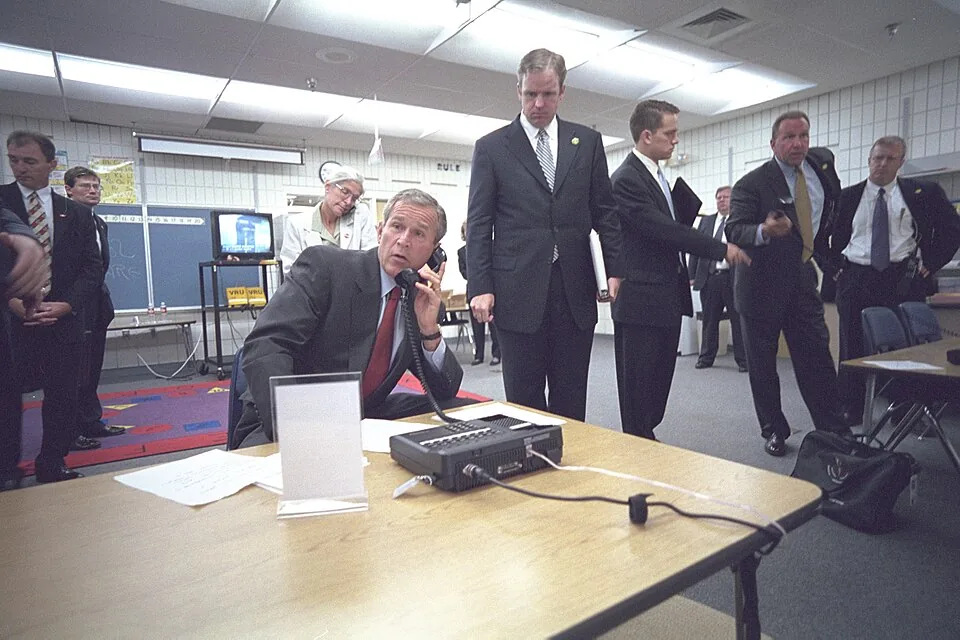
A September 1998 CIA briefing delivered to President Bill Clinton warned that bin Laden's supporters 'may fly an explosive-packed airplane into a US city.' The World Trade Center would fall three years later. On the 25th anniversary of September 11th, the CIA released more than 100 pages of previously classified presidential briefings that make the question 'how did this happen' significantly harder to answer.
What Got Released and When
CIA Director John Ratcliffe authorized the release of 71 presidential daily briefs on Friday, September 11, 2026, calling it 'the single largest release of CIA analysis related to 9/11 ever.' The documents, now posted on the CIA's website, span from February 1998 to September 12, 2001 — covering the final stretch of the Clinton administration and the first eight months of Bush's.
The briefings amount to more than 100 pages of intelligence that was being funneled to the highest levels of the U.S. government in the years before the attacks. Many are still heavily redacted. But what's visible is damning enough.
The Warnings Were Not Subtle
Start with that September 1998 memo. Written just weeks after Al Qaeda bombed U.S. embassies in Kenya and Tanzania, and days after a failed U.S. missile strike on bin Laden's camps in Afghanistan, the briefing explicitly floated the possibility of operatives flying a plane packed with explosives into an American city. The same document hedged, noting that 'intelligence provides no conclusive information on bin Ladin's intentions for future attacks.' That caveat has not aged well.
Three months later, a December 4, 1998 presidential daily brief reported that 'some members of the bin Ladin network have received hijack training' and that operatives had already conducted a dry run at an unidentified New York airport, according to Fox News. The plotters, that briefing noted, were aiming to use hijacked planes to demand the release of imprisoned extremists including Sheikh Omar Abdel-Rahman and Ramzi Yousef.
Throughout 1998, NBC News reports, the intelligence community was also tracking bin Laden associates operating inside the United States across multiple states: New York, California, Texas, Michigan, and Florida. This was not a foreign threat being monitored from a safe distance. It was a domestic infrastructure being assembled in plain sight.
By August 6, 2001 — five weeks before the attacks — the CIA delivered a briefing to President Bush titled, without any ambiguity whatsoever: 'bin Ladin determined to strike in US.' That document noted that the FBI had uncovered suspicious activity consistent with preparations for hijackings, including recent surveillance of federal buildings in New York. Weeks after that, Bush received another brief reporting that the FBI was running approximately 70 field investigations it believed were connected to bin Laden.
The Part Where the Missiles Failed and Nothing Changed
After the August 20, 1998 missile strikes on bin Laden's camps — the Clinton administration's big counterpunch following the embassy bombings — a CIA brief eight days later told the president that bin Laden and other terrorist leaders 'survived the US strikes and their communications network remains intact' and that militant training at camps had already resumed. The strikes, in other words, accomplished approximately nothing.
The documents also show that the intelligence community consistently assessed that the Taliban had zero intention of handing bin Laden over. A March 26, 2001 memo was blunt about the price tag: 'The Taliban is not likely to give up bin Ladin for less than full diplomatic recognition and significant reconstruction aid.' That assessment came six months before the towers fell.
No Bombshells, Which Is Its Own Kind of Bombshell
Here is the uncomfortable truth the release makes unavoidable: none of this is new. NBC News notes that the documents 'included no major new revelations,' since congressional inquiries and published accounts from government officials had already established that intelligence agencies were fully aware of the growing Al Qaeda threat. The 9/11 Commission's 2004 report said the failure was one of communication, coordination, and — its exact words — 'a failure of imagination.'
Which means the story here is not a hidden secret finally coming to light. It's a documented, detailed, years-long paper trail of warnings that two administrations received and that, for a constellation of reasons the Commission spent years analyzing, did not produce the action that might have prevented the deaths of nearly 3,000 people. The paper trail now has 71 more entries in it. The story it tells has not changed.
A 9/11 Widow Breaks Protocol and Says the Quiet Part Out Loud
The document dump landed on the same day that 9/11 widow Terry Strada broke sharply from the long-standing tradition of keeping politics out of September 11 ceremonies. Strada, who lost her husband Tom in the attacks and raised their three children alone, used her platform at the Ground Zero ceremony to directly address Vice President JD Vance, who represented the administration in lower Manhattan while Trump attended the Pentagon memorial.
'Tell the Saudis to stop lying,' Strada said. 'Tell them if they want to be friends with the USA they cannot continue to deny all of this.' Fifteen of the 19 hijackers were Saudi nationals, and Strada is part of a coalition of families who believe Saudi officials were complicit in the attacks and have filed suit against the Saudi government. The Saudis deny the claim and are fighting the lawsuit. Strada told NBC News last year that evidence gathered by the FBI in the days after the attacks — connected to two Saudi nationals in California tracked in what the bureau called 'Operation Encore' — was never properly analyzed or shared with the 9/11 Commission.
The Dingo Take
You are supposed to look at these documents and feel like something was finally revealed. That's the framing the CIA release invites — Ratcliffe's statement on X, the 25th anniversary timing, the language of transparency and accountability. But the thing that should stop you cold is the opposite realization: we already knew almost all of this. The 9/11 Commission knew it. Journalists knew it. The families knew it. What these documents confirm, with fresh and sickening specificity, is that the government received a 1998 memo speculating about someone flying an explosive-packed plane into an American city and then watched 9/11 happen anyway.
The Saudi thread is also sitting right there and has been for two decades. Fifteen of nineteen hijackers were Saudi nationals. The FBI opened Operation Encore. Evidence allegedly sat unexamined. A coalition of families has been in court for years while the U.S. government maintained a warm relationship with Riyadh. Trump, whose business ties to Saudi Arabia are extensive and well-documented, attended the Pentagon ceremony while his vice president stood at Ground Zero and got an earful from a woman who has been demanding answers since 2001. Whether that message gets 'carried back' is, to put it generously, an open question.
Five weeks before September 11, 2001, the president of the United States received a document with the words 'bin Ladin determined to strike in US' on the cover. The FBI was running 70 related field investigations. And then the planes hit. Releasing the paper trail on the anniversary is not accountability. It's a filing system.


Comments