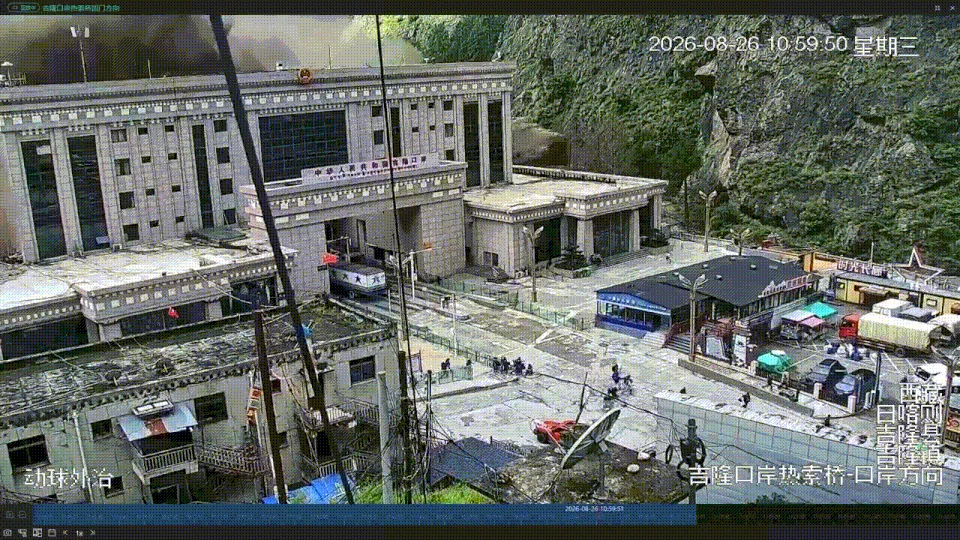
A catastrophic flood near the Nepal-Tibet border has killed at least 750 people, swallowed entire villages whole, and left 85 Americans unaccounted for, the State Department confirmed Sunday. Nine Americans have been safely evacuated. More than 3,000 people total are still missing, and rescue teams are sifting through mud trying to find them.
What Happened at the Border
The disaster struck near the Rasuwagadhi border post, where a landslide sent floodwaters tearing through the region with enough force to erase villages from the map. The New York Post reports that rescue teams are now working around the clock in muddy terrain along the Nepali-Tibetan border, searching for survivors among the more than 3,000 people reported missing.
The area is remote. That word gets thrown around a lot, but in this case it means that getting reliable information in and getting rescue workers out to the right places are genuinely hard problems. This is not a flood that hit near an airport. This is high-altitude, border-region terrain that was already difficult to access before a wall of water and debris came through it.
State Department spokesman Tommy Pigott told ABC News' "This Week" on Sunday morning that 85 Americans are currently unaccounted for, with nine confirmed safely evacuated. "We are currently unaware of any US citizen deaths at this time," Pigott said, which is the kind of carefully worded statement that tells you they know the news may still get worse.
Who Was There and Why
This wasn't a vacation gone wrong in any ordinary sense. Many of the Americans caught in the flood were there on a sacred pilgrimage to Mount Kailash, a site of profound significance in both Hindu and Buddhist traditions. Thousands of pilgrims had gathered in the region before the disaster hit.
Among the missing, Newsday reports, are New Yorkers Amita Amin, 67, and Jitendra Manubhai Patel, 63, as well as Tejal Vyomesh Patel, 64, of New Jersey. These are real people, retiree-aged, traveling somewhere spiritually meaningful, who are now part of a missing persons count that a government spokesman is reading off a list on a Sunday morning news show.
That context matters. This is not a group of adventure tourists who ignored a travel warning. This is a religious pilgrimage that draws large numbers of South Asian Americans every year to one of the holiest sites on earth. The disaster did not discriminate.
The Diplomatic Scramble
Because the flood hit a border region between Nepal and Tibet, the US is coordinating through two separate embassies in two separate countries. The New York Post reports that US embassies in both Beijing and Kathmandu are working around the clock to communicate with local officials and piece together reliable information about what happened and who is where.
Pigott described it plainly: "Our embassies in Beijing and Kathmandu are working 24/7 in terms of communicating and coordinating with local officials, trying to get that reliable information." Coordinating a search-and-rescue operation across a Chinese-administered border region, through diplomatic channels, in terrain that just got hit by a catastrophic flood, is exactly as complicated as it sounds.
The State Department has activated $3.6 million in emergency humanitarian assistance for the region, according to the Post. That money is targeted at helping 10,000 affected households and rebuilding roads that the flood destroyed, which is a practical priority given that you cannot reach survivors if the roads to them no longer exist.
The Scale of This Is Hard to Sit With
Seven hundred and fifty confirmed dead. Three thousand missing in total. Eighty-five Americans unaccounted for. These numbers are large enough that they start to blur, which is exactly the wrong response to them.
The Mount Kailash pilgrimage route draws thousands of people at a time during the pilgrimage season. A flood that hits a gathering point on that route during peak season is not going to spare anyone based on nationality or faith. The missing 85 Americans are a fraction of a much larger humanitarian catastrophe that has already claimed hundreds of lives and may claim more.
Rescue teams are still searching. The mud is still being moved. The 750 confirmed dead is, in all likelihood, not the final count.
The Dingo Take
Eighty-five Americans missing in a foreign country after a disaster that killed 750 people should be wall-to-wall coverage. The families of Amita Amin, Jitendra Manubhai Patel, and Tejal Vyomesh Patel are waiting for news right now, along with the families of dozens of others whose names we do not yet know. That is what is actually happening while the cable news chyrons cycle through whatever domestic political drama landed this morning.
The $3.6 million in emergency assistance the State Department activated is worth mentioning, not because it is a large number relative to the scale of the catastrophe, but because it is at least a concrete action in a situation where the US government's ability to act is genuinely limited by geography and diplomacy. You cannot dispatch a rescue team to Chinese-administered Tibetan border territory like you're ordering an Uber. The embassies are working with what they have. Whether what they have is enough is a different question.
What we know right now is this: nine people made it out. Eighty-five are still somewhere in the mud and the mountains. Three thousand total are missing. And the number that will matter most, the death toll, is still being written. Pay attention to this one.



Comments